 how-to
Urgent Bed Bug Treatment for Rentals: A Step-by-Step Guide
Table of Contents
- How to Report Bed Bugs to Your Landlord
- Landlord Responsibility for Bed Bugs in Rental Units
- Identifying an Active Infestation
- Preparing for Professional Bed Bug Treatment
- Professional Treatment Methods: Chemical vs. Heat
- DIY vs. Professional Treatment Efficacy
- Emergency Escalation When Your Landlord Won't Act
- Monitoring and Prevention After Treatment
- Frequently Asked Questions
Last Updated: September 1, 2026
How to Report Bed Bugs to Your Landlord
Send a written notice, email works, but a registered letter is stronger, that clearly describes what you've observed. Include the date you first noticed signs, which rooms are affected, and any bites or stains you've found. Keep the tone factual, not emotional. Request a written response within 7 to 14 days to establish a paper trail. If your landlord ignores the notice or refuses to act, that documentation becomes critical if you need to escalate later.
Many tenants assume they caused the problem and hesitate to report it. That assumption is often wrong. Bed bugs travel through walls, shared ventilation, and common areas in multi-unit dwellings. Your landlord is legally responsible for maintaining habitable premises, which includes pest control for infestations that aren't caused by tenant negligence.
Landlord Responsibility for Bed Bugs in Rental Units
Your landlord has a legal obligation to address bed bug infestations in rental properties. In most provinces, residential tenancy acts require landlords to maintain rental units in a state of good repair and fit for habitation. A bed bug infestation violates that standard.
The landlord's responsibilities typically include arranging and paying for professional pest control treatment, coordinating access for inspections and treatment, providing written notice about treatment schedules, ensuring thorough treatment, and following up with monitoring and additional treatments if necessary.
Your landlord cannot legally pass the cost of professional treatment to you unless your tenancy agreement explicitly addresses pest control caused by tenant negligence. A bed bug infestation originating in shared spaces or adjacent units is the landlord's financial responsibility.
Bed bugs reproduce rapidly, a single female can lay hundreds of eggs, and the infestation spreads to adjacent units if left untreated (the CDC). Professional intervention is the only effective solution. If your landlord refuses to arrange treatment or claims you must pay for it, contact your local residential tenancy authority or housing rights organization.
Identifying an Active Infestation
Before you can effectively communicate the problem to your landlord, you need to confirm you actually have a bed bug infestation.
Active bed bug infestations show specific signs. Look for small dark insects, about the size of an apple seed, in seams of mattresses, box springs, and bed frames. Bed bugs are reddish-brown and flat, which allows them to hide in cracks and crevices. You're most likely to spot them at night or early morning when they're feeding.
Bed bug bites typically appear in clusters or lines on exposed skin: arms, legs, neck, and face. Not everyone reacts to bites the same way; some people develop visible welts while others show no reaction at all. Look for rust-colored or dark stains on bedding and mattress seams, these are fecal matter and digested blood. You may also notice a sweet, musty odor in heavily infested areas.
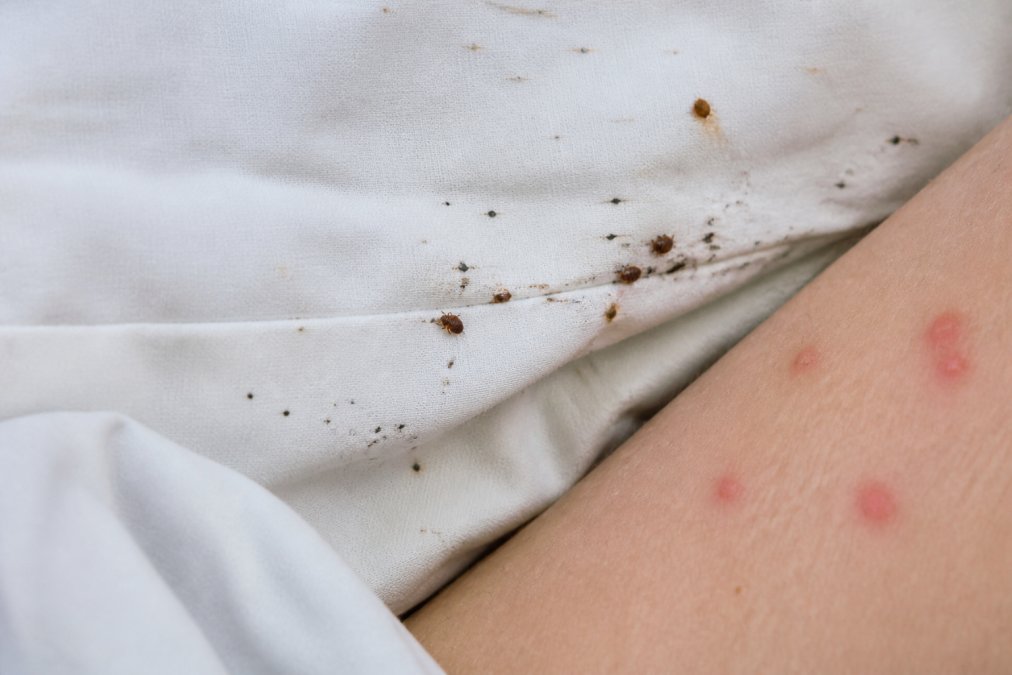
If you're unsure, take clear photos of any insects you find, bite patterns, and stains. If you can capture a live specimen in a sealed container, that's definitive proof. A professional pest control inspector can confirm the infestation through a thorough unit inspection, which is often the fastest way to get certainty and action.
Preparing for Professional Bed Bug Treatment
Once your landlord arranges professional treatment, your preparation directly affects how effective that treatment will be.
Your pest control professional will provide a preparation checklist. Follow it exactly. Common steps include washing all bedding, clothing, and soft furnishings in hot water (at least 60°C) and drying on high heat; vacuuming all carpets, rugs, and upholstered furniture; decluttering the unit so the technician can access all surfaces; moving furniture away from walls; sealing or removing pet bedding and food bowls; and notifying the landlord and neighboring units of the treatment date (the EPA).
The preparation phase typically takes 24 to 48 hours before the scheduled treatment. After treatment, your landlord should provide clear re-entry instructions. Most chemical treatments require 2 to 4 hours of ventilation before the unit is safe to occupy.
Professional Treatment Methods: Chemical vs. Heat
Professional pest control companies use two primary approaches: chemical treatment and heat treatment.
Chemical Treatment
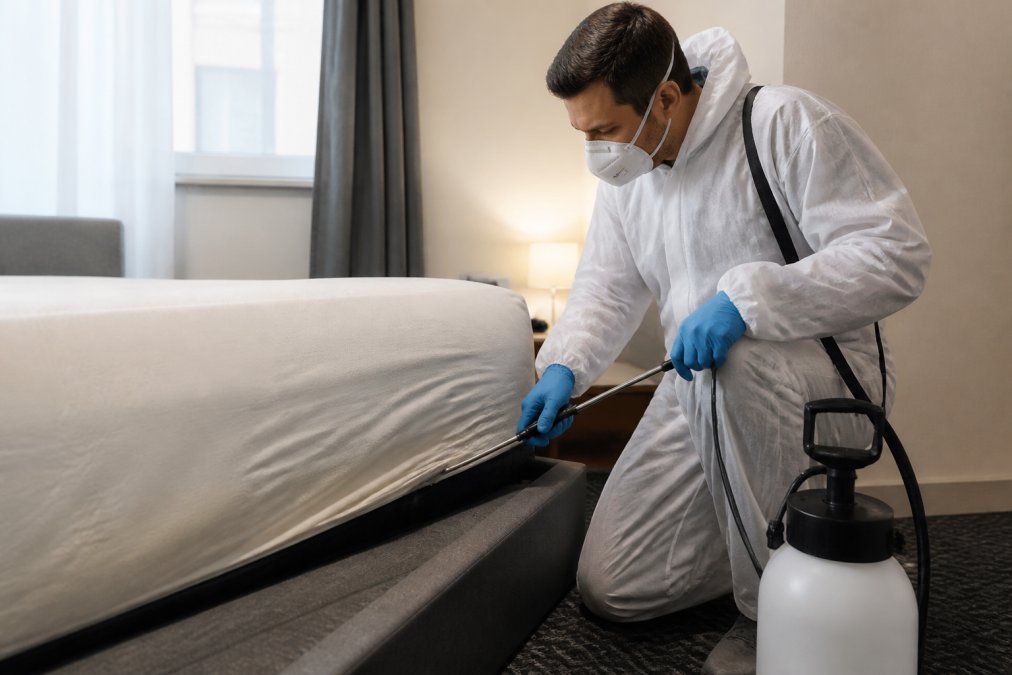
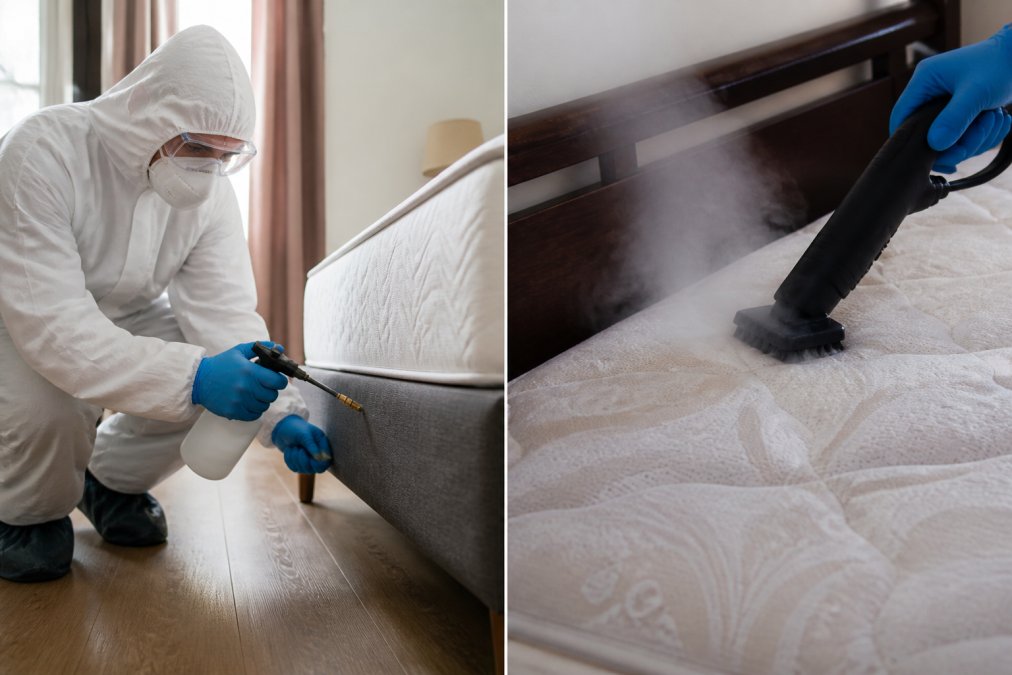
Chemical treatment uses insecticides applied as sprays, dusts, or aerosols to infested areas. The technician applies residual pesticides to mattresses, furniture, baseboards, wall voids, and other harborage areas. These chemicals remain active for weeks or months, killing bed bugs that contact treated surfaces.
Chemical treatment is typically faster than heat treatment and costs less for small infestations. The limitation is that it requires multiple applications. Most professionals recommend a follow-up treatment 7 to 14 days after the initial application to catch insects that hatch from surviving eggs.
Heat Treatment
Heat treatment raises the temperature throughout the entire unit to 48-56°C, maintaining that temperature for several hours (peer-reviewed research). This kills bed bugs at all life stages, adults, nymphs, and eggs, in a single treatment.
Heat treatment eliminates the need for multiple applications and is particularly effective for severe infestations or situations where chemical resistance is suspected. The trade-off is cost and logistics. Heat treatment is significantly more expensive and requires the unit to be vacated during the process (typically 6 to 8 hours). Sensitive items like electronics and certain medications must be removed or protected.
Many pest control professionals use an integrated approach: heat treatment for the primary infestation followed by chemical treatment in adjacent units as a preventive measure.
DIY vs. Professional Treatment Efficacy
Many tenants attempt DIY bed bug treatment before calling a professional, hoping to save money. The reality is that DIY approaches rarely work and often delay effective treatment.
Over-the-counter sprays have lower concentrations of active ingredients than professional-grade products and are applied inconsistently. Diatomaceous earth works only if applied correctly and in sufficient quantity, and it's easily disturbed by cleaning or normal activity. Steamers and heat guns don't reach the temperatures necessary to kill bed bugs in all life stages.
The result is predictable: DIY treatments kill some bed bugs but leave survivors, which quickly reproduce and re-establish the infestation. Many tenants spend hundreds of dollars on failed DIY attempts before finally calling a professional, by which time the infestation is often worse.
Professional treatment is more effective because it uses higher concentrations of proven insecticides, applies them systematically to all potential harborage areas, and follows up with monitoring and additional treatments if necessary.
Emergency Escalation When Your Landlord Won't Act
If your landlord ignores your written notice or refuses to arrange professional treatment, you have legal remedies. Most jurisdictions allow tenants to take action after 7 to 14 days of non-response.
Contact your provincial residential tenancy authority or local housing rights organization. Many provinces have free dispute resolution services that can mediate between you and your landlord. A formal complaint from a government agency often motivates landlords who ignore tenant requests.
If mediation fails, you may have the right to arrange treatment yourself and deduct the cost from your rent (in some provinces, with proper notice), break your lease without penalty due to uninhabitable conditions, file a formal complaint with your provincial housing regulator, or pursue compensation for damages.
In most provinces, landlords are legally prohibited from retaliating against tenants who assert their rights. If your landlord threatens eviction or raises rent after you report a bed bug problem, that's likely illegal retaliation, which you can challenge through your residential tenancy authority.
Monitoring and Prevention After Treatment
Professional treatment doesn't end when the technician leaves. Monitoring and prevention are critical to confirm the treatment worked and to catch any surviving bed bugs before they re-establish.
For the first two weeks after treatment, inspect your mattress, furniture, and bedding regularly for signs of surviving bed bugs. Look for live insects, fecal matter, or new bite marks. If you see any signs of activity, contact your pest control company immediately.
After treatment, use mattress and box spring encasements designed to trap bed bugs; reduce clutter in your bedroom; inspect secondhand furniture and clothing before bringing them into your unit; seal cracks and crevices in walls and baseboards; and maintain communication with your landlord about neighboring units. In multi-unit dwellings, the landlord should coordinate treatment across multiple units simultaneously to prevent bed bugs from migrating back into your space.
Prevention is far easier and cheaper than treatment. Once you've successfully eliminated a bed bug infestation, maintaining vigilance prevents costly re-infestation.
Dealing with an urgent bed bug treatment for rentals situation is stressful, but understanding your rights and the treatment process gives you control over the outcome. Your landlord is legally responsible for arranging professional treatment, and you have escalation options if they refuse. Meridian Bed Bug Treatment specializes in eliminating infestations in rental properties across the Lower Mainland, working directly with landlords and property managers to ensure rapid, discreet treatment that protects tenant privacy while solving the problem completely. Don't let a bed bug infestation linger, professional treatment is the only effective solution, and your landlord's delay is not your burden to accept.
Frequently Asked Questions
Q: Are landlords responsible for treating bed bugs in rental units?
A: Yes. In most provinces, landlords are legally required to maintain rental units in a habitable condition, which includes addressing pest infestations like bed bugs. Under residential tenancy acts, landlords must provide treatment at no cost to tenants. The infestation is typically considered a housing standard violation. If your landlord refuses, you can file a complaint with your provincial residential tenancy board or withhold rent (following proper notice procedures). Document everything in writing.
Q: What's the difference between DIY bed bug treatment and professional treatment?
A: DIY treatments using aerosol sprays or diatomaceous earth rarely eliminate an entire infestation because they don't reach bed bugs hiding deep in walls, mattress seams, and furniture. Professional pest control uses integrated pest management combining chemical insecticides, heat treatment, or pressurized carbon dioxide, methods that target the full breeding cycle. Professional treatment is generally more effective than DIY approaches.
Q: How quickly can professional bed bug treatment be completed?
A: Most professional treatments can be scheduled within 2-7 days of initial contact. The actual treatment typically takes 2-4 hours per unit. Heat treatment may require 24-48 hours for the unit to cool before re-entry. Chemical treatments usually require a 24-hour ventilation period. For urgent situations in short-term rentals or multi-unit dwellings, some providers offer expedited scheduling. Contact Meridian Bed Bug Treatment for current availability and turnaround times in your area.
Q: What happens if bed bugs return after professional treatment?
A: Reputable pest control providers typically guarantee their work. If bed bugs reappear within this period and proper preparation and monitoring steps were followed, the company will retreat at no additional cost. Bed bugs can return if: new infestations enter from neighboring units (common in multi-unit dwellings), preparation steps weren't completed, or monitoring protocols weren't followed. Your tenancy agreement or treatment contract will specify guarantee terms, always clarify this before treatment begins.
This article was written using GrandRanker


