how-to
How to Identify Bed Bug Bites on Skin
Table of Contents
- What Do Bed Bug Bites Look Like
- Common Bite Symptoms and Patterns
- Where Bed Bugs Bite Most on Your Body
- Bed Bug Bites vs Mosquito Bites and Other Lookalikes
- How Long Do Bed Bug Bites Last
- Signs of Bed Bugs in a Mattress and Bedding
- Step-by-Step Skin Self-Check for Bed Bug Bites
- When to Seek Professional Help
- Frequently Asked Questions
Last Updated: October 9, 2026
What Do Bed Bug Bites Look Like
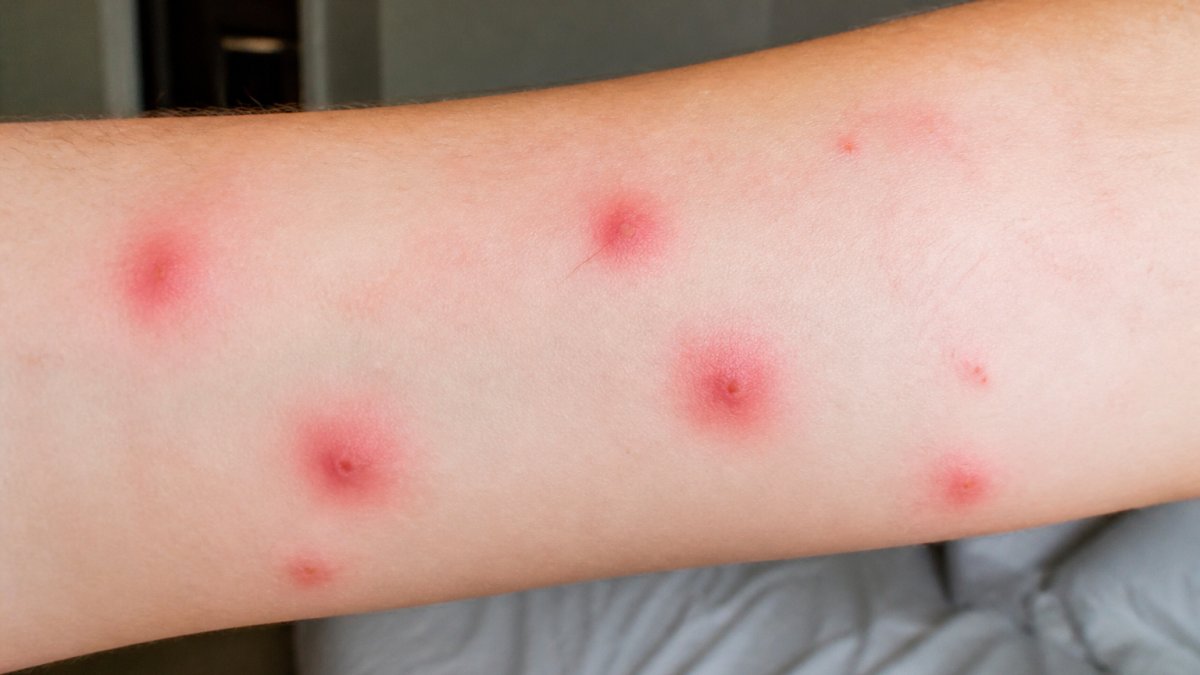
Bed bug bites appear as small, raised red bumps, often with a darker center and inflamed tissue. They may look flat or slightly raised, and they're usually itchy.
Appearance on light skin
On light skin, bed bug bites show up as bright red or pink bumps, often with a small dark red or purple center, plus swelling and inflammation.
Appearance on darker skin tones
On darker skin, bed bug bites are harder to see. They may appear purple, dark red, or skin-colored, with swelling present but less color contrast. Look for raised bumps with a slightly darker or lighter center than surrounding skin; the area may feel warm or tender. Post-inflammatory hyperpigmentation can darken the bite area for weeks after the itch fades.
Common Bite Symptoms and Patterns
Recognizing bite patterns: lines, clusters, and zigzags
Bed bug bites often appear in distinctive patterns. The most common is a straight line of three bites, because the bed bug moves across your skin, feeding multiple times in one night. Multiple bites in one area, especially in a line or cluster, suggest bed bugs rather than a single mosquito or flea.
Where Bed Bugs Bite Most on Your Body
Bed bugs bite exposed skin left uncovered at night: most commonly the arms, hands, legs, neck, and face, with shoulders, back, and chest also frequent. Because they bite through thin fabric, covered areas can be affected too. They prefer areas where blood vessels are close to the surface, making the neck, wrists, and inner arms attractive targets.
Bed Bug Bites vs Mosquito Bites and Other Lookalikes
Bed bug bites are frequently confused with other skin reactions. The table below summarizes the most useful distinctions, but no single feature is definitive, timing, location, and pattern together matter more.
| Feature | Bed bug bites | Mosquito bites | Flea bites | Hives | Contact dermatitis | Scabies |
|---|---|---|---|---|---|---|
| Typical shape | Small raised bump, often with a darker center | Puffy, soft welt with a pale center | Tiny red bump with a red halo | Raised, pale or red welts that change shape | Red, dry, or blistered patch | Tiny burrow lines or pimple-like bumps |
| Pattern | Lines of three, clusters, or zigzags | Random, single bites | Random, often grouped on ankles | Widespread, migratory | Follows contact area (waistband, wrist, face) | Lines or webs between fingers, wrists, waist |
| Onset | Often noticed on waking; may take hours to days to appear | Within minutes | Within minutes to hours | Minutes to hours | Hours to days | Weeks after first exposure |
| Itch intensity | Moderate to intense, often worse at night | Intense, peaks quickly | Intense, especially at night | Intense, burning | Burning or stinging more than itching | Intense, worse at night |
| Location | Any exposed skin during sleep: arms, neck, face, hands, legs | Any exposed skin, often ankles and arms | Lower legs, ankles, feet | Anywhere, often trunk and limbs | Areas in contact with the trigger | Fingers, wrists, waist, genitals |
| Duration | Days to two weeks; dark spots may linger | Hours to a few days | Days to a week | Hours to days, may recur | Days to weeks if exposure continues | Weeks to months without treatment |
| Key clue | Bites appear overnight in a line or cluster; no bite felt | Bite felt or seen at the time; mosquito present | Pets scratching; bites on ankles | Welts move and fade within a day | Rash matches a product, fabric, or plant | Intense itch, burrow lines, spreads person-to-person |
Mosquito bites
Mosquito bites are usually single, soft, and puffy, with a pale center and red rim, and you often feel the bite or see the mosquito. Bed bug bites are firmer, smaller, and more likely to appear in a line or cluster on skin covered by sheets. Mosquito bites appear on skin exposed outdoors; bed bug bites on skin exposed during sleep.
Flea bites
Flea bites are smaller than bed bug bites and cluster around the ankles and lower legs, often with a tiny red halo. Fleas bite pets, so if your pet is scratching and you have bites only on your ankles, fleas are more likely. Bed bugs bite humans regardless of pets and target the upper body and face as often as the legs.
Hives
Hives are raised, pale or red welts that change shape and move to new areas within hours. They are an allergic reaction, not an insect feeding, and usually fade within a day. Bed bug bites stay in one place and persist for days to two weeks. If welts appear and disappear in different spots over a few hours, hives are far more likely.
Contact dermatitis
Contact dermatitis produces a red, dry, or blistered rash matching the shape of whatever touched your skin, a waistband, watch strap, new detergent, or plant. It does not appear in lines of three or clusters. A rash that stops at the edge of a fabric or product points to contact dermatitis.
Scabies
Scabies causes intense itching and tiny burrow lines or pimple-like bumps, most often between the fingers, wrists, and waist, and spreads person-to-person through prolonged skin contact. Bed bug bites do not spread between people and do not form burrows. If multiple household members develop an itchy rash without bed bug evidence, consider scabies.
A practical lookalike check
- Note when the marks appeared, on waking suggests bed bugs; during the day suggests mosquito or contact dermatitis.
- Note where they are, ankles and lower legs suggest fleas; fingers and wrists suggest scabies; any exposed sleep area suggests bed bugs.
- Note the pattern, lines of three or clusters suggest bed bugs; random single bites suggest mosquito; a rash matching a product suggests contact dermatitis.
- Note how they change, welts that move within hours suggest hives; marks that stay put for days suggest bites.
- Check the bed, droppings, shed skins, or live bugs confirm bed bugs regardless of how the bites look.
Health Canada information on insect bites and when to seek care
How Long Do Bed Bug Bites Last
Reaction timelines and individual variability
Bed bug bites fade at different rates depending on your body's reaction. Most stop itching within a few days, and the red bumps may take one to two weeks to disappear. Scratching delays healing and can lead to infection. Older bites may leave dark spots on darker skin tones that fade over weeks or months, while lighter skin may show slight discoloration that fades within a few weeks.
Signs of Bed Bugs in a Mattress and Bedding
Look for small dark spots on your mattress, sheets, or pillowcases, these are bed bug droppings. You may also find shed skins that look like empty brown shells. Live bed bugs are small, flat, and reddish-brown, hiding in mattress seams, under the bed frame, and behind headboards; check these areas carefully, since bed bugs are most active at night.
Step-by-Step Skin Self-Check for Bed Bug Bites
This self-check takes about ten minutes, ideally in the morning before you shower or dress, and focuses on location, shape, pattern, and timing. No single finding confirms bed bugs, the goal is to gather enough clues to decide whether a professional inspection is warranted.
Before you start
- Use bright, natural light if possible; a phone flashlight works for shadowed areas.
- Use a hand mirror or a helper for your back, shoulders, and the back of your neck.
- Take photos of any marks at the same time each morning to make patterns easier to see.
Step 1: Scan for location
Start with skin exposed while you slept, checking in this order:
- Arms, tops, undersides, and inner elbows.
- Hands, backs of hands and between fingers.
- Neck and face, including behind the ears and along the jawline.
- Legs, fronts, backs, thighs, shins, and ankles.
- Shoulders, back, and chest, use a mirror or a helper.
Bed bugs bite exposed skin but can bite through thin fabric, so also check areas covered by a light sheet or pajama sleeve.
Step 2: Note the shape and color
On light skin, look for small raised bumps that are red or pink, often with a darker center. On medium and darker skin tones, redness may appear purple, dark brown, or a shade darker than surrounding skin, and swelling may be easier to feel than see. In all skin tones, feel for warmth, firmness, or tenderness.
Step 3: Look for a pattern
The most recognizable pattern is three bites in a straight line, often called the breakfast, lunch, and dinner pattern. Clusters and zigzags are also common. Random single bites are possible, so pattern alone is not proof. What matters is whether multiple bites appeared in one area overnight, especially in a line or cluster.
Step 4: Track the timing
Bed bug bites often do not appear immediately. A common pattern is noticing marks on waking, with new bites appearing on subsequent nights. Most stop itching within a few days and fade within one to two weeks; larger welts may take longer. If new bites keep appearing after you have treated the room, the infestation is likely not resolved.
Step 5: Check the bed for evidence
Skin findings are suggestive, not diagnostic. Move to the bed and look for:
- Small dark spots on the mattress, sheets, or pillowcases, bed bug droppings.
- Shed skins that look like empty brown shells.
- Live bed bugs: small, flat, reddish-brown insects hiding in seams, under the bed frame, and behind the headboard.
Evidence checklist
Use this checklist to organize what you find. Bites alone do not confirm an infestation, physical evidence does.
- Multiple bites appeared overnight
- Bites form a line, cluster, or zigzag
- Bites itch, especially at night
| Evidence type | What it looks like | How strongly it confirms bed bugs |
|---|---|---|
| Bites on skin | Raised bumps in lines or clusters | Suggestive only |
| Dark spots on bedding | Small black or brown dots | Strongly suggestive |
| Shed skins | Brown, empty shell shapes | Strongly suggestive |
| Live bed bugs | Flat, reddish-brown insects | Definitive |
| Blood spots | Small red marks on sheets | Strongly suggestive |
When to Seek Professional Help
Self-diagnosis of bed bug bites is helpful, but professional confirmation is important.
At Meridian Bed Bug Treatment, we help homeowners and property managers in Vancouver and the Lower Mainland identify and eliminate bed bug infestations.
Contact a professional if:
- You've tried multiple DIY treatments without success
- Bites continue appearing after two weeks
- You find physical evidence of bed bugs
Professional pest control specialists have the tools to eliminate infestations completely and can check other units in multi-family buildings to prevent spread.
Identifying bed bug bites is the first step toward solving the problem.
Frequently Asked Questions
How can you tell if a mark on your skin is a bed bug bite?
Bed bug bites typically appear as small, raised red or pink bumps, often arranged in lines or clusters. They're usually itchy and may have a darker center or slight swelling. Unlike mosquito bites, bed bug bites are often found on exposed skin near where you sleep, arms, legs, neck, and face. If you notice multiple bites in a pattern after waking, combined with blood spots on your sheets or a musty odor near your mattress, these are strong indicators of bed bug bites rather than other insect bites.
What is commonly mistaken for bed bug bites?
Bed bug bites are frequently confused with mosquito bites, flea bites, hives, and eczema. Mosquito bites tend to be larger and more random in placement. Flea bites are usually concentrated around ankles and lower legs. Hives appear as raised, itchy welts but lack the clustered pattern typical of bed bugs. The key difference is location and pattern: bed bugs bite exposed areas near where you sleep and leave marks in lines or small clusters, while other causes produce different patterns or appear in different body locations.
How long do bed bug bites last on your skin?
Bed bug bites typically last between one to two weeks, though this varies based on individual reaction and skin sensitivity. Some people see bites fade within a few days, while others experience lingering itching and visible marks for up to 14 days. The itching often peaks within the first few days after the bite and gradually subsides. Scratching can extend the healing time and increase infection risk, so avoiding scratching helps bites resolve faster. If bites persist beyond two weeks or show signs of infection, seek medical attention.
Why might I have bed bug bites but not see any bed bugs?
Bed bugs are nocturnal and hide during the day in mattress seams, box springs, headboards, and furniture crevices. You may have bites without seeing the bugs because they emerge only at night to feed and retreat quickly afterward. Additionally, some people show delayed reactions or no visible reaction at all despite being bitten. To confirm an infestation without seeing live bugs, look for other signs: blood spots on sheets, shed skins, dark droppings on mattress seams, or a musty odor. If you suspect bed bugs based on bite patterns alone, a professional inspection can confirm the infestation.