 how-to
Signs of Bed Bugs in Mattress: A Visual Inspection Guide
Table of Contents
- What to Look for: Visual Signs of Bed Bugs in Your Mattress
- Bed Bug Fecal Spots on Mattress: How to Identify Droppings
- Blood Stains and Rusty Marks on Bedding
- Shed Skins and Exoskeletons: Another Key Indicator
- How to Check for Bed Bugs in Box Spring and Seams
- Step-by-Step Mattress Inspection Process
- Differentiating Bed Bug Signs from Common Lookalikes
- Professional Bed Bug Inspection and When to Call an Expert
- Frequently Asked Questions
Last Updated: August 24, 2026
What to Look for: Visual Signs of Bed Bugs in Your Mattress
The most reliable way to confirm a bed bug infestation is to spot the insects themselves or their physical evidence on your mattress. Unlike many pest problems, bed bug infestations leave visible traces that you can identify with basic inspection tools and a methodical approach. At Meridian Bed Bug Treatment, we help residents and property managers recognize these signs early, which is critical because infestations spread rapidly once established.
Signs of bed bugs in mattress include live insects, eggs, droppings, shed skins, and blood stains. Each indicator tells you something different about the infestation's stage and severity. Learning to distinguish these signs from common lookalikes is the first step toward taking action.
Live bed bugs and nymphs
Adult bed bugs are roughly the size of an apple seed: about 5-7 millimeters long, flat-bodied, reddish-brown, and oval-shaped (the CDC). Nymphs (juvenile bed bugs) are smaller and lighter in color, ranging from nearly transparent to pale tan. Both are visible to the naked eye, though they move quickly and hide during the day.
Live bed bugs are most active at night, feeding on blood while you sleep. During the day, they retreat into crevices, seams, and tufts of your mattress. If you spot movement in your bedding during daylight hours, that's a strong indicator of a heavy infestation, the bugs are so numerous they can't all hide.
Nymphs are harder to spot because of their size and color, but their presence confirms active reproduction. If you see nymphs, the infestation is progressing. Adult bugs alone might suggest a smaller problem; nymphs plus adults means the population is growing.
Bed bug eggs and eggshells
Bed bug eggs are tiny, about 1 millimeter long, and pearl-white or cream-colored (peer-reviewed research). They're laid in clusters in protected areas like mattress seams, box spring corners, and fabric tufts. The eggs are sticky and often surrounded by a dark substance (fecal matter) that helps identify them.
Eggshells appear as empty, translucent husks after nymphs hatch. Finding eggshells alongside live insects or fecal spots confirms that reproduction is occurring within your mattress. This is a critical sign because it means the infestation is self-sustaining and will worsen without treatment.
Eggs can be difficult to spot without magnification. Use a flashlight and magnifying glass to examine seams carefully. If you find clusters of tiny white objects in protected crevices, photograph them and contact a professional for confirmation.
Bed Bug Fecal Spots on Mattress: How to Identify Droppings
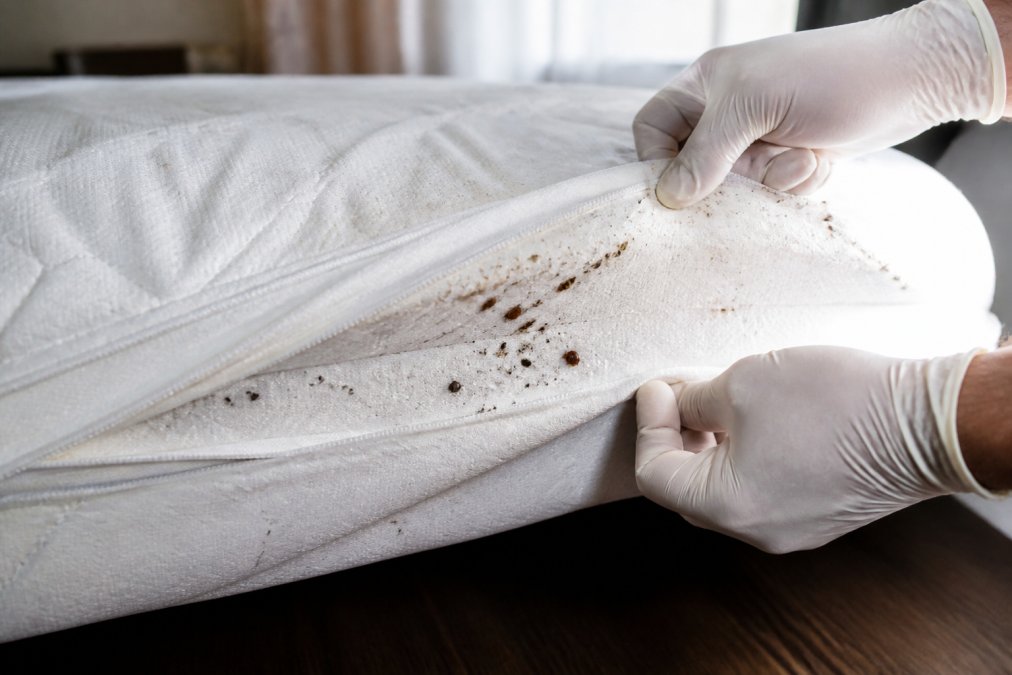
Fecal spots are among the easiest signs to identify and one of the most reliable indicators of an active infestation. Bed bugs leave droppings wherever they hide, making fecal spots a key diagnostic marker. These spots appear as dark brown or black marks, often clustered together on mattress surfaces, seams, and fabric.
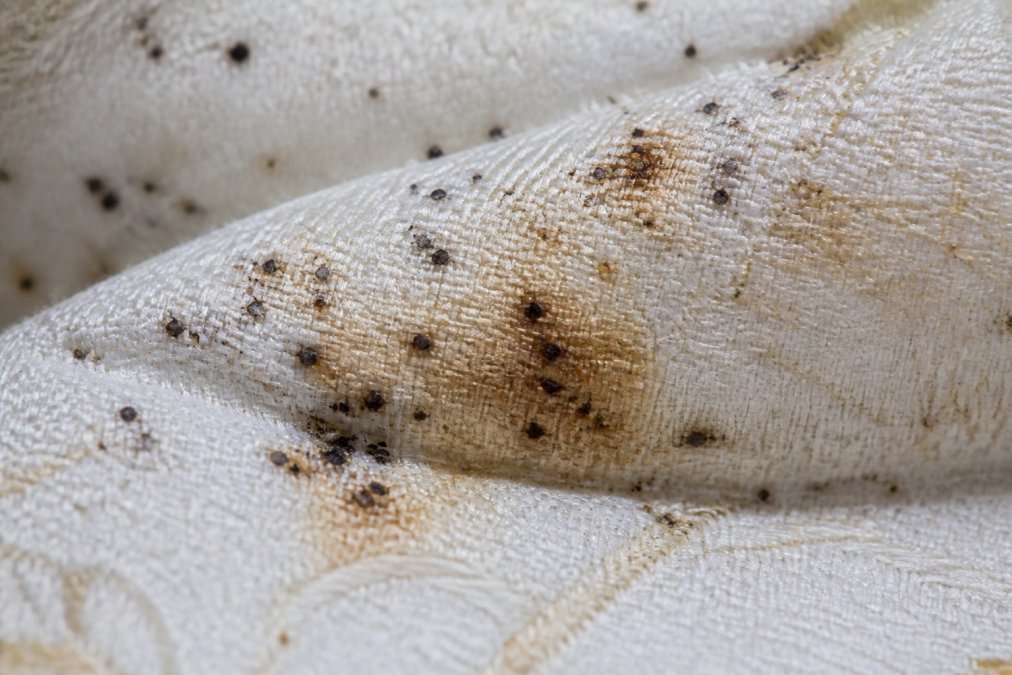
Fecal spots are actually digested blood (the CDC). They don't wipe away easily, if you try to remove them with a damp cloth, they'll smudge but won't disappear completely. This persistence is what distinguishes them from dust or dirt. On white or light-colored bedding, fecal spots create a distinctive speckled pattern that's hard to miss once you know what to look for.
Look for fecal spots in mattress seams, along the piping, in tufts, and on the underside of the mattress. They often cluster around hiding spots where multiple bugs congregate. The density of spots correlates roughly with infestation severity: a few scattered spots suggest a mild problem, while dense clusters indicate a heavy infestation.
Fecal spots remain visible for weeks or months, even after bugs are eliminated. This means you can use them to track whether an infestation is active or old. Fresh spots appear dark and moist; older spots are drier and may have faded slightly.
Blood Stains and Rusty Marks on Bedding
Blood stains on sheets and mattresses result from bed bugs being crushed after feeding. These stains appear as rusty or reddish-brown marks, often small but sometimes more obvious depending on how many bugs were present and how much pressure was applied.
You might find blood stains on your sheets (where you rolled over the bug during sleep) or directly on the mattress surface. Some stains are tiny specks; others form small smears. The presence of blood stains, especially combined with other signs, strongly suggests an active feeding infestation.
Rusty stains are another variant you'll encounter. These appear as oxidized blood marks that have dried and darkened over time. They're particularly visible on white or cream-colored bedding and mattress covers. Unlike fecal spots, blood stains are easier to remove with washing, but their presence is still diagnostic.
The key distinction: blood stains indicate feeding activity, while fecal spots and shed skins indicate hiding and reproduction. Together, they paint a complete picture of an active, established infestation.
Shed Skins and Exoskeletons: Another Key Indicator
As bed bugs grow from nymphs to adults, they shed their outer skin (exoskeleton) multiple times. These shed skins accumulate in hiding spots and are another reliable sign of infestation. Exoskeletons appear as hollow, tan or brown shells that resemble the shape of the bug itself but are completely empty.
Shed skins are fragile and often found in clusters near where bugs hide. You'll find them in mattress seams, tufts, and along the box spring. Unlike live bugs or eggs, exoskeletons don't move or change, they're simply abandoned shells.
The presence of multiple shed skins indicates that several bugs have matured in that location. This is a sign of an established, reproducing population. A single exoskeleton might suggest a transient bug; multiple skins in one area confirm ongoing infestation.
Shed skins are easier to photograph than live bugs, making them useful evidence if you decide to contact a professional. They don't degrade quickly, so they can persist for months after treatment.
How to Check for Bed Bugs in Box Spring and Seams
The box spring is a primary hiding spot for bed bugs because of its construction: fabric cover, wooden frame, and internal springs create numerous crevices and protected areas. Many infestations are missed because inspectors focus on the mattress and overlook the box spring entirely.
Inspecting mattress seams and tufts
Mattress seams are where the fabric is stitched together, creating a natural seam line that runs around the perimeter and across the surface. Bed bugs hide inside these seams where the stitching creates tiny gaps and pockets. Fecal spots, eggs, and exoskeletons accumulate along seams because bugs treat them as highways between hiding spots.
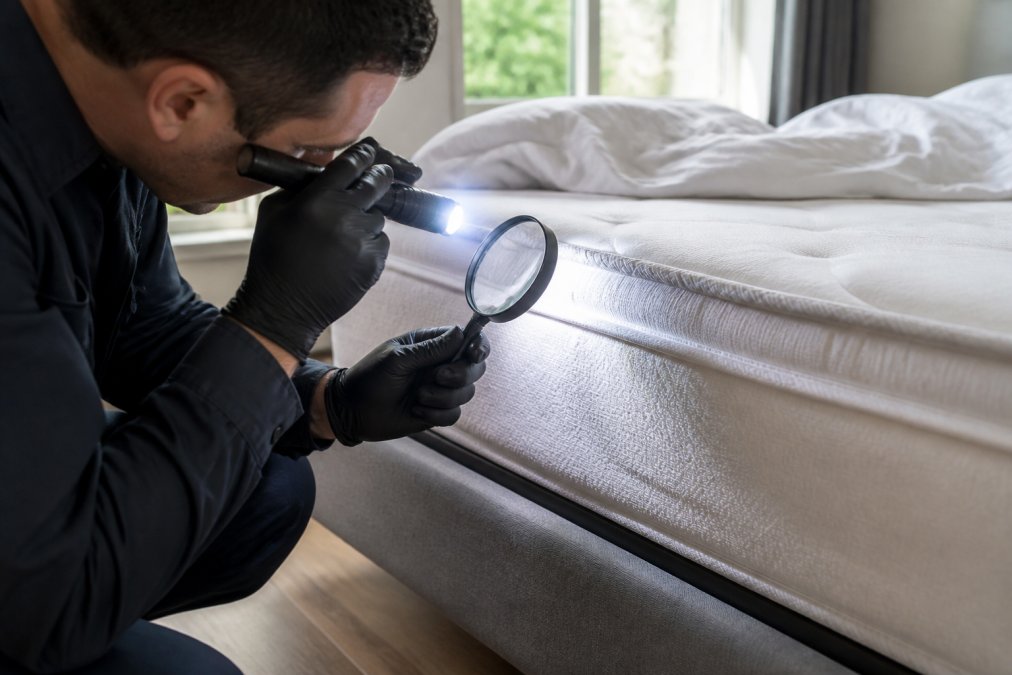
Use a flashlight and magnifying glass to examine seams closely. Run your fingers along the seam line while looking for any of the signs mentioned above. Pay special attention to corners and areas where seams intersect, as these are favorite hiding spots.
Tufts are the indented areas where the mattress fabric is pulled down and secured to the internal padding. These create small pockets where bugs congregate. Examine each tuft carefully, especially the fabric surrounding it. Fecal spots often cluster around tufts because multiple bugs hide in close proximity.
Checking the box spring foundation
The box spring requires more thorough inspection than the mattress. Start by examining the fabric covering the bottom. Flip the box spring upside down (or have someone help you) and look for fecal spots, blood stains, and exoskeletons on the underside fabric.
Next, examine the wooden frame. Bed bugs hide in cracks and gaps in the wood, particularly where the frame is joined or where staples have created small holes. Use your flashlight to peer into these gaps. You may spot bugs, eggs, or fecal spots inside.
Finally, check the fabric around the perimeter where it's stapled to the frame. This is a common hiding area. Look for the same signs: live bugs, fecal spots, eggs, shed skins, and blood stains.
Step-by-Step Mattress Inspection Process
A systematic inspection increases your chances of finding evidence of infestation. The process takes 20-30 minutes per mattress and requires patience and attention to detail.
What you'll need before you start
Gather these tools before beginning:
- Flashlight or headlamp (bright light is essential)
- Magnifying glass (at least 3x magnification)
- Small flat tool (credit card, butter knife, or inspection tool) to probe seams and gaps
- White sheet or paper to place under the mattress (makes droppings and insects more visible)
- Camera or phone to photograph evidence
- Gloves (optional, but recommended for hygiene)
Step 1: Prepare your inspection area
Move the mattress to a clear area where you have good access to all sides. Remove all bedding and pillows. Place a white sheet or large white paper under the mattress to catch any insects or debris that fall during inspection. Good lighting is critical, use your flashlight or work near a window during daylight.
Step 2: Examine seams and piping
Start at one corner and work systematically around the entire mattress perimeter. Examine the seam line carefully, looking for dark fecal spots, blood stains, tiny white eggs, or hollow exoskeletons. Use your magnifying glass for close inspection. The piping (the reinforced edge) is another common hiding spot, don't miss this area.
Step 3: Check tufts and indentations
Examine each tuft and indented area on the mattress surface. Look at the fabric surrounding the tuft as well as inside the indentation itself. Fecal spots often cluster around tufts. If you spot anything suspicious, use your camera to photograph it for later reference.
Step 4: Look for fecal spots and blood marks
Scan the entire mattress surface for dark specks or rusty stains. Fecal spots often appear in clusters, particularly near seams and tufts. Blood stains are less common on the mattress itself (more likely on sheets) but should be noted if present. Dark spots near the mattress edges are particularly common.
Step 5: Inspect the underside and edges
Flip the mattress (or have help) and repeat the process on the underside. Don't skip the edges and perimeter, bugs hide in the fold where the top and bottom fabric meet. Examine the bottom piping and any gaps or tears in the fabric covering.
Differentiating Bed Bug Signs from Common Lookalikes
Several other marks and debris can be mistaken for bed bug evidence. Learning to distinguish genuine signs from false alarms prevents unnecessary panic and wasted time.
Dust mites and dust appear as fine, light-colored particles. Unlike fecal spots, dust wipes away easily and doesn't cluster in specific areas. Dust is random; bed bug evidence follows patterns near seams and hiding spots.
Lint and fiber can resemble shed skins, but lint is fluffy and inconsistent in shape. Exoskeletons have a definite insect form, they're hollow shells that maintain the bug's body shape.
Small dark spots from mold or mildew can look like fecal spots, but mold grows in damp areas and spreads across fabric. Bed bug droppings cluster in specific locations related to hiding spots and don't require moisture to develop.
Food crumbs or debris are random and easily brushed away. Fecal spots don't wipe away cleanly because they're digested blood that has dried onto fabric.
Ink stains or dye marks from bedding or mattress covers can be mistaken for blood stains. True blood stains from bed bugs are usually small, concentrated in clusters, and associated with other signs of infestation.
The key to accurate identification is context. A single dark spot might be anything; a cluster of dark spots near mattress seams combined with live bugs and shed skins is almost certainly bed bug evidence.
Professional Bed Bug Inspection and When to Call an Expert
After a thorough DIY inspection, you may have confirmed an infestation or remain uncertain. This is when professional inspection becomes valuable. A trained pest control inspector has experience identifying subtle signs and can assess infestation severity and distribution across your home.
When to call a professional:
- You've found evidence but want confirmation before treatment
- You've conducted a thorough inspection and found nothing, but you're still experiencing bites
- You've already attempted DIY treatment and the infestation persists
- You manage multiple units (apartment building, hotel, short-term rental) and need a comprehensive assessment
- You're dealing with a severe infestation and need guidance on treatment options
Meridian Bed Bug Treatment provides professional inspection and assessment for homes, condos, apartments, hotels, and short-term rentals. Our specialists identify the extent of infestation and recommend appropriate treatment strategies tailored to your specific situation. For property managers dealing with multiple units, we offer discreet inspection services that minimize disruption while ensuring thorough assessment.
The cost of professional inspection varies based on property size and complexity, but early detection through professional assessment often prevents the need for more extensive (and expensive) treatment later. Many homeowners find that professional confirmation of infestation severity helps them make informed decisions about treatment options.
Frequently Asked Questions
Q: How do I tell if my mattress has bed bugs?
A: Look for live bed bugs or nymphs (small, reddish-brown insects), dark fecal spots, blood stains, and shed exoskeletons in mattress seams, tufts, and piping. Use a flashlight and magnifying glass to inspect crevices thoroughly. If you find any of these signs, contact a professional for confirmation and treatment.
Q: What do bed bug fecal spots on mattress look like?
A: Bed bug fecal spots appear as small, dark brown or black dots, similar to pepper or poppy seeds. They're concentrated in mattress seams, corners, and tufts where bed bugs hide. Unlike dust, these spots won't brush away easily and may smear slightly when wiped. Rusty or reddish stains nearby indicate crushed bugs mixed with blood. These droppings are a reliable indicator of active infestation.
Q: How do I check for bed bugs in my box spring?
A: Remove your mattress and inspect the box spring's top surface, seams, and fabric covering with a flashlight. Check the wooden frame corners, fabric tufts, and any tears or openings. Bed bugs hide in these crevices during the day. Look for the same signs you'd find on a mattress: live bugs, fecal spots, blood stains, and shed skins. Pay special attention to the underside and edges where fabric meets wood.
Q: When should I call a professional for bed bug inspection instead of doing it myself?
A: If you find any signs of bed bugs or suspect infestation but aren't certain, professional inspection confirms the presence and extent of infestation. Professionals use specialized equipment and training to locate all hiding spots you might miss. They also identify whether the infestation is isolated to the mattress or spread to other areas. Professional inspection cost varies by property size and complexity, but early detection prevents the infestation from spreading to other rooms or units.
A bed bug infestation confirmed through careful inspection is actionable. You now know what you're dealing with and can move forward with treatment. Whether you pursue DIY approaches or professional treatment, the signs you've identified provide a baseline for measuring progress. Meridian Bed Bug Treatment specializes in eliminating established infestations and can help you regain control of your living space with proven treatment methods tailored to your home or rental property.
This article was written using GrandRanker