 how-to
Discreet Bed Bug Control for Landlords: A Step-by-Step Guide
Table of Contents
- Why Discreet Bed Bug Control Matters for Landlords
- Landlord Responsibilities for Bed Bugs Under Residential Tenancy Law
- Identifying a Bed Bug Infestation Before It Spreads
- How to Communicate Bed Bug Issues to Tenants Privately
- Preparing Units for Professional Treatment
- Professional Extermination Methods: Heat Treatment vs. Chemical Treatment
- Preventing Bed Bug Spread in Multi-Unit Buildings
- Post-Treatment Monitoring and Liability Protection
Last Updated: August 28, 2026
Why Discreet Bed Bug Control Matters for Landlords
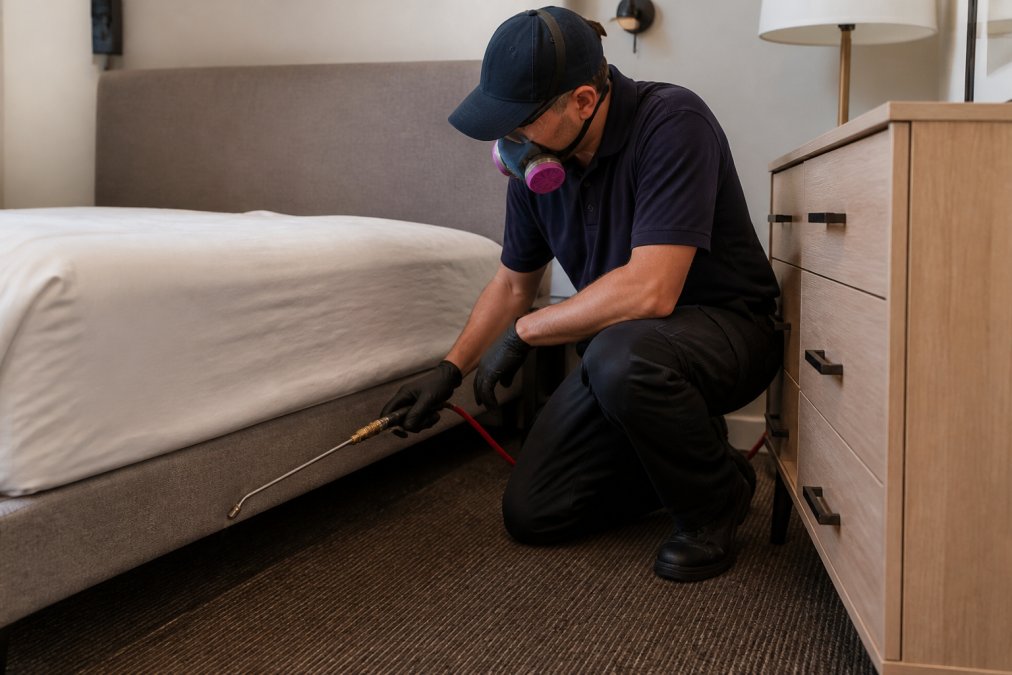
Bed bug infestations in rental properties require quick, thorough treatment while managing tenant relations carefully. A public or heavy-handed response can trigger panic, damage your property's reputation, and complicate communication with other residents who may worry about cross-contamination.
Discreet bed bug control balances urgency with discretion, treating the infestation decisively while protecting tenant privacy and maintaining property stability. This approach is especially critical in multi-unit buildings, where one unit's problem can spread to others if not handled strategically.
At Meridian Bed Bug Treatment, we work with landlords across the Lower Mainland who understand that how you handle bed bugs matters as much as whether you handle them. The goal is eradication without escalation.
Landlord Responsibilities for Bed Bugs Under Residential Tenancy Law
Under the Residential Tenancy Act, you must maintain the rental unit in a condition fit for habitation, including addressing pest infestations (British Columbia Residential Tenancy Act(https://www.bclaws.gov.bc.ca/civix/document/id/complete/statreg/02078_01)). The law places the burden on the landlord to arrange and pay for professional pest control treatment. Tenants cannot be charged for extermination services.
The tenant must cooperate with treatment by allowing reasonable access for inspection, preparation, and treatment. Documentation is critical, keep records of all communications about the infestation, treatment dates, the pest control company used, and follow-up inspections. If a dispute arises, your paper trail protects you.
The Residential Tenancy Act requires 24 hours' written notice before entering a unit for pest control. You may frame the notice to minimize alarm while remaining factually accurate.
Identifying a Bed Bug Infestation Before It Spreads
Early detection prevents spread to neighboring units. Bed bugs are small, reddish-brown insects about the size of an apple seed (Health Canada on Bed Bugs(https://www.canada.ca/en/health-canada/services/pest-control-tips/bed-bugs.html)). Common signs include:
- Small dark spots (fecal matter) on mattress seams, headboards, and baseboards
- Rust-colored stains on bedding from crushed bugs
- A musty, sweet odor in heavily infested areas
- Live bugs visible in mattress seams or bed frames, especially at night
Tenants often report bites or itching before seeing the bugs. If a tenant mentions unexplained bites, treat it as a potential infestation until proven otherwise.
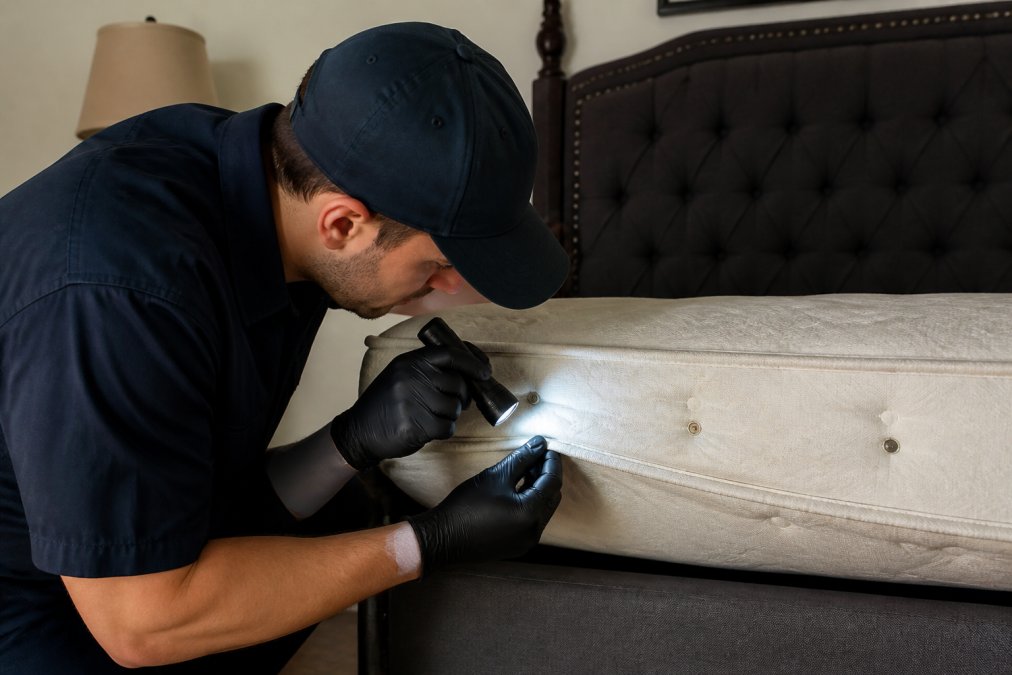
Don't rely on tenant reports alone. Conduct periodic inspections after tenant turnover, checking high-risk areas like beds, sofas, and baseboards. A visual inspection takes 10-15 minutes and can catch an infestation early.
Do not spray over-the-counter pesticides, this drives bugs deeper into walls and furniture, making professional treatment harder. Contact a pest control operator immediately instead.
How to Communicate Bed Bug Issues to Tenants Privately
Frame the communication around treatment, not crisis. Instead of "We've discovered a bed bug infestation," say "We've scheduled professional pest control treatment for your unit on [date] to address a minor pest issue."
Use written communication first, email or a formal letter, giving the tenant time to process privately. Follow up with a phone call if needed, but maintain a written record.
Provide clear preparation instructions: declutter surfaces, wash bedding, seal personal items in bags. Make preparation sound routine, not emergency-level. Assure the tenant that you're handling this discreetly and other residents don't need to know.
Here's a template for initial communication:
Subject: Scheduled Maintenance, Unit [X]
Dear [Tenant Name],
We've scheduled professional pest control treatment for your unit on [date] at [time]. This is a routine precautionary treatment to address a minor pest concern.
To prepare, please:
- Remove clutter from floors and surfaces
- Wash all bedding in hot water
- Seal personal items in plastic bags
- Ensure access to all areas of the unit
Treatment takes approximately [duration]. You may need to vacate for [time period]. We'll provide detailed instructions closer to the date.
This treatment is handled confidentially. If you have questions, please contact me directly.
Best regards, [Your Name]
Preparing Units for Professional Treatment
Professional treatment requires specific preparation to be effective. Standard preparation typically includes:
- Removing or bagging all items from closets, drawers, and under beds
- Washing all bedding and clothing in hot water
- Vacuuming thoroughly, then sealing the vacuum bag
- Moving furniture away from walls to allow access
- Removing pets and covering aquariums
- Ensuring clear pathways for the technician
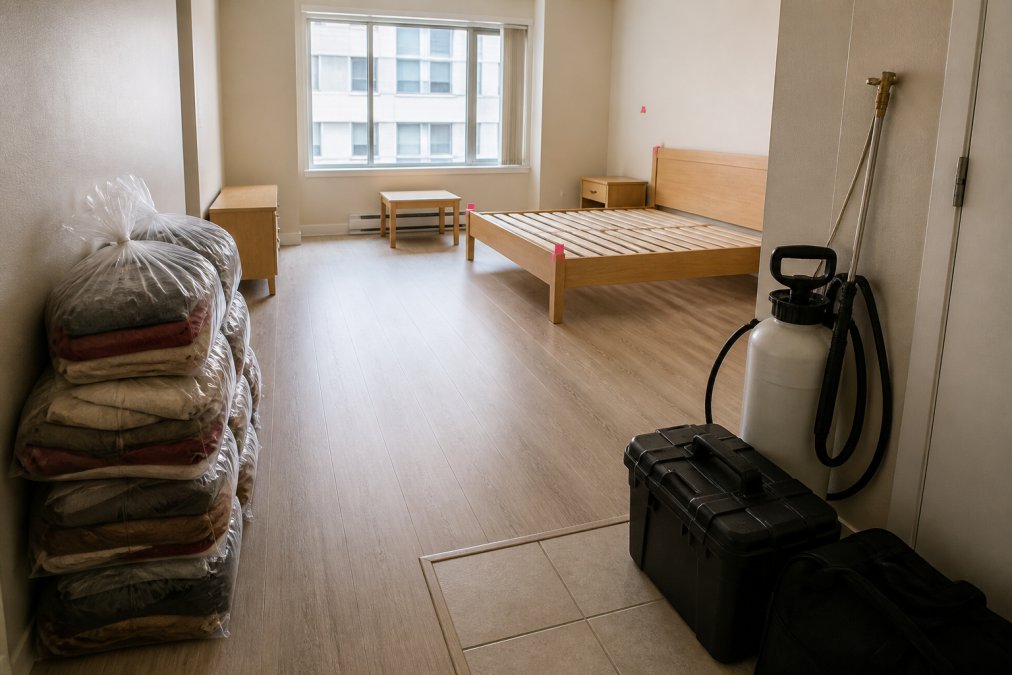
Share the pest control operator's detailed preparation checklist with the tenant at least one week before treatment. Inadequate preparation reduces treatment effectiveness.
Coordinate timing carefully. The tenant may need to vacate during treatment and for a period afterward, depending on the method used. Provide clear timelines so the tenant can arrange to be elsewhere.
Professional Extermination Methods: Heat Treatment vs. Chemical Treatment
Two main approaches dominate professional bed bug treatment: heat treatment and chemical treatment.
Heat Treatment
Heat treatment raises the temperature in the unit to 50-55°C (122-131°F) for several hours, killing all life stages of bed bugs (Research on Thermal Treatment for Bed Bugs(https://pmc.ncbi.nlm.nih.gov/articles/PMC4553552/)). A single treatment often solves the problem completely, with no concern about insecticide resistance. Heat treatment is also faster than chemical approaches.
The main drawback is cost and the requirement that the unit be vacated during treatment.
Chemical Treatment
Chemical treatment uses liquid insecticides, aerosol sprays, or diatomaceous earth applied to infested areas. These residual treatments kill bugs on contact and continue working for weeks or months. Chemical treatment is less expensive and doesn't require unit vacancy, though the tenant should avoid the unit during application.
Multiple applications over 2-3 weeks are often needed. Drawbacks include repeated visits and potential for insecticide resistance.
Integrated Pest Management Approach
Many operators combine both methods, a heat treatment followed by targeted chemical applications, providing thorough coverage and reducing resistance risk. This hybrid approach is more expensive but offers the best chance of complete eradication.
For discreet bed bug control, heat treatment is often preferable because it's faster and requires fewer visits, reducing visibility and tenant disruption.
Preventing Bed Bug Spread in Multi-Unit Buildings
In multi-unit buildings, your responsibility extends beyond the infested unit. Bed bugs travel through walls, electrical outlets, and shared spaces. A single infested unit can seed an entire building within weeks.
Containment strategies:
Seal cracks and gaps around baseboards, electrical outlets, and pipe penetrations to reduce bug migration to adjacent units. Inspect units immediately adjacent to the infested unit, above, and below. Early detection allows rapid treatment before infestation becomes established.
Communicate carefully with other residents. If it's contained to one unit, you don't need to announce a building-wide infestation. Frame any communication as preventative maintenance, not crisis response.
If multiple units are infested, treat them simultaneously or in quick succession. Staggered treatment allows bugs to migrate between units.
Educate tenants about prevention: reduce clutter, inspect secondhand furniture, and report signs of bed bugs immediately.
Post-Treatment Monitoring and Liability Protection
Schedule follow-up inspections 2-4 weeks after initial treatment to confirm eradication. Document all inspections and results. If a tenant later claims bed bugs returned or spread, your documentation demonstrates responsible, timely action.
Maintain communication with the tenant after treatment. Let them know what to expect and how to report any signs of bed bugs. This keeps the tenant engaged and provides early warning if treatment failed.
If bed bugs reappear after treatment, contact the pest control operator immediately. Many reputable operators offer guarantees or warranty periods. Review the treatment contract to understand what's covered.
Liability protection depends on demonstrating prompt, professional action. Delays, inadequate treatment, or failure to respond expose you to claims. Working with a professional pest control operator like Meridian Bed Bug Treatment creates a clear record of professional action and reduces liability risk.
Bed bug infestations require a thoughtful, systematic approach that balances tenant privacy concerns, legal obligations, and the risk of building-wide spread. Discreet bed bug control isn't about hiding the problem, it's about solving it professionally and efficiently while maintaining tenant relations and protecting your property's reputation.
Working with a specialized pest control provider like Meridian Bed Bug Treatment ensures access to proven treatment methods, professional documentation, and expertise to handle complex multi-unit scenarios. Our team understands the landlord's unique position and delivers solutions that address infestations while respecting tenant privacy and minimizing disruption. Get in touch with Meridian Bed Bug Treatment to discuss treatment options tailored to your property's needs.
Frequently Asked Questions
Q: Are landlords in British Columbia responsible for treating bed bugs?
A: Yes. Under the Residential Tenancy Act, landlords must maintain rental units in a state of good repair and fit for habitation. Bed bug infestations prevent this. Landlords are legally responsible for arranging and paying for professional extermination. Tenants cannot be charged for treatment costs resulting from pest control deficiency. Consult local regulations for specifics.
Q: How do I identify bed bugs without alerting the entire building?
A: Conduct inspections during off-hours using a flashlight and magnifying glass. Check mattress seams, headboards, baseboards, and furniture crevices. Look for small dark spots (fecal matter), shed skins, or live insects. Schedule professional pest control inspections under the guise of routine maintenance. Use unmarked vehicles and discreet scheduling to minimize visibility. A professional pest control operator can perform thorough inspections that confirm infestation without drawing attention from neighboring tenants.
Q: What's the difference between heat treatment and chemical treatment for bed bugs?
A: Heat treatment raises the entire unit to 48-50°C for several hours, killing all life stages of bed bugs. It requires temporary unit evacuation and is non-toxic but costly. Chemical treatment uses liquid insecticides and aerosol sprays applied to infested areas, requiring multiple visits (typically 2-3 weeks apart) to break the bedding heat cycle. Chemical treatments are less disruptive but take longer. Integrated pest management often combines both methods for faster, more reliable results. A professional pest control operator can recommend the best approach for your situation.
Q: How do I prevent bed bugs from spreading to other units in a multi-unit building?
A: Seal gaps around pipes, electrical outlets, and baseboards between units. Use caulk and weatherstripping to reduce cross-contamination pathways. Treat infested units immediately to prevent migration. Coordinate inspections of adjacent units and common areas. Implement mattress encasements in affected units to contain bed bugs. Establish a pest monitoring protocol for the entire building, including regular inspections of hallways and common spaces. Inform property management and other tenants discreetly to enable early detection in neighboring units without causing panic or reputational damage.
This article was written using GrandRanker


