 how-to
Preventing Bed Bugs in Rentals: A Step-by-Step Guide
Table of Contents
- Why Preventing Bed Bugs in Rentals Matters
- How to Inspect a Rental Unit for Bed Bugs
- Bed Bug Prevention Checklist for Rentals
- Landlord Responsibilities for Bed Bugs
- Preventing Spread Between Units
- DIY vs. Professional Intervention: When to Call Experts
- Travel-Related Prevention for Short-Term Rentals
- Documentation and Monitoring
- Frequently Asked Questions
Last Updated: October 6, 2026
Why Preventing Bed Bugs in Rentals Matters
Preventing bed bugs in rentals is a pressing challenge for property managers and landlords. Infestations spread quickly through shared walls, pipes, and electrical conduits, reaching neighboring apartments within weeks, and renters often delay reporting.
Early detection and prevention save thousands in treatment costs and protect your reputation. A building-wide infestation damages your ability to attract quality renters and can trigger legal liability.
Landlords who wait until tenants complain often face far more expensive interventions than those who prevent upfront.
How to Inspect a Rental Unit for Bed Bugs
Inspecting a rental unit requires a systematic approach. You're looking for three things, live bugs, shed skins, and fecal spotting, clustered where bed bugs hide during the day.
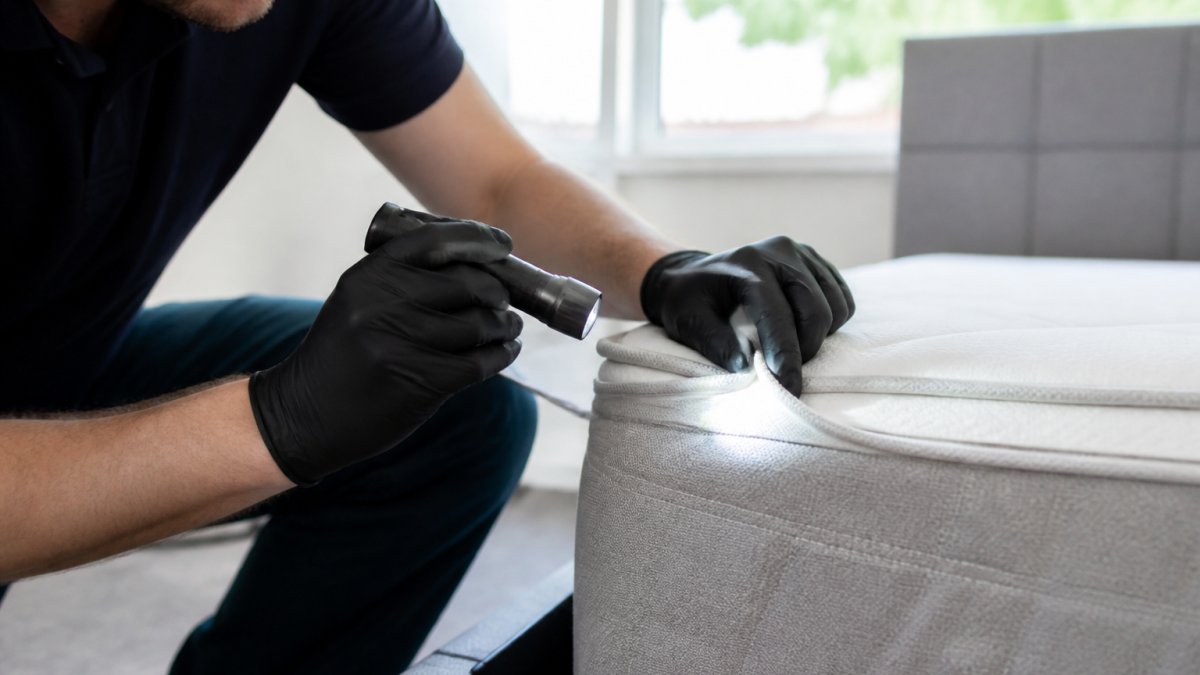
Focus areas: mattresses, baseboards, and electrical faceplates
Start with the mattress: bed bugs hide in seams, piping, and under labels, so use a flashlight and inspect both sides.
Move to the baseboards near the bed, looking for small dark spots (fecal matter) and tan or brown shed skins.
Examine furniture joints, behind headboards, inside nightstands, and along window and door frames. Bed bugs exploit any crack or crevice.
What to look for: signs of infestation
Live bed bugs are reddish-brown, apple-seed sized, and move quickly when exposed to light.
Look for these specific indicators:
- Small dark spots on sheets or mattress fabric (fecal spotting)
- Tan or brown shed skins clustered in one area
- A sweet, musty odor in heavily infested spaces
Bed Bug Prevention Checklist for Rentals
Prevention stops infestations before they start. A structured checklist ensures nothing gets missed.
Reducing clutter and sealing entry points
Clutter provides hiding places, and cluttered units are harder to inspect and treat.
Seal cracks and crevices with caulk, focusing on where pipes and electrical lines enter walls, bed bugs exploit these pathways to move between units, especially along shared walls.
Vacuuming and cleaning protocols
Establish a regular cleaning schedule. Vacuuming removes bed bugs, eggs, and shed skins before an infestation takes hold.
Require tenants to wash bedding weekly in hot water; dryer temperatures above 50°C kill all life stages within 20 minutes.
| Prevention Task | Frequency | Owner/Tenant | Impact |
|---|---|---|---|
| Visual inspection of unit | Quarterly | Owner | Early detection |
| Tenant bedding wash | Weekly | Tenant | Kills bugs and eggs |
| Baseboards and corners vacuumed | Weekly | Tenant | Removes fecal spots |
| Caulk cracks and crevices | Once | Owner | Blocks entry pathways |
| Door sweeps and weatherstripping | Once | Owner | Reduces spread risk |
Landlord Responsibilities for Bed Bugs
Your legal obligations extend to maintaining a habitable premises, and bed bugs compromise habitability.
Tenant notification and written notice requirements
The moment you discover or suspect bed bugs, notify affected tenants in writing.
Your notice should:
- State clearly that bed bugs have been identified
- Explain the treatment plan and timeline
- Specify what the tenant must do (wash bedding, reduce clutter, allow access)
Keep copies of all written notices. If a tenant later claims you ignored the problem, your documentation proves otherwise.
Maintaining habitable premises and treatment obligations
Once you know bed bugs are present, arrange professional treatment.
Coordinate treatment with your tenant. Schedule it at a time that works for them.
Preventing Spread Between Units
In multi-unit buildings, preventing cross-unit spread is critical, one infested unit can become five within a month.
Educate tenants about the risk.
Install door sweeps on all interior unit doors and seal gaps around pipes passing between units.
When treating one unit, consider treating adjacent units as a precaution. Bed bugs may have already migrated.
Communicate discreetly, framing prevention as routine maintenance rather than crisis management to avoid panic and reputational damage.
DIY vs. Professional Intervention: When to Call Experts
DIY has a narrow place in bed bug management, and most renters and landlords overshoot it.
What DIY can realistically accomplish
DIY is appropriate for only three situations:
- Prevention in a unit with no known infestation. Encasements, caulking, decluttering, vacuuming, and hot-water laundering cost little and reduce risk.
- Isolating a single suspected item. Seal the item in a plastic bag or move it to a garage to limit spread while you wait for professional assessment.
- Post-treatment support. Follow-up cleaning, laundering, and monitoring a technician prescribes is DIY work, prescribed, not improvised.
What DIY cannot do
- Eliminate an established infestation. Bed bugs hide in wall voids, behind baseboards, inside outlets, and in furniture seams, no consumer product reaches all of those places.
- Treat multiple rooms or units. Bugs in more than one room, or a neighbor's report, mean the infestation has spread beyond a tenant's reach.
- Provide a warranty or documentation. Professional treatments come with reports and guarantees; DIY leaves you with nothing to show a landlord, tenant, or insurer.
Why over-the-counter products often make things worse
Consumer sprays and foggers are contact killers: they kill only the bugs they touch.
Diatomaceous earth is a partial exception.
The decision threshold: when to stop DIY and call a professional
If any of the following is true, stop DIY and arrange professional treatment:
- You have seen live bed bugs on two or more separate days. A single sighting might be a hitchhiker; repeat sightings mean a breeding population.
- You have found evidence in more than one room. Cross-room evidence means the infestation is established in the structure, not just on one item.
- You have found evidence in a neighboring unit, or a neighbor has reported bed bugs. Cross-unit spread requires coordinated treatment.
What professional treatment actually involves
A competent professional will not simply spray and leave. A proper plan includes:
- A thorough inspection to identify all harborage sites and confirm the infestation's extent.
- A combination approach, usually a residual insecticide applied to cracks and crevices, plus heat or steam for items and areas that cannot be sprayed.
- A follow-up visit 10 to 14 days later. Eggs that survived the first treatment hatch in this window, and the follow-up catches new nymphs before they breed.
What to ask before you hire
- Are you licensed and insured in this province?
- What treatment method do you use, and why is it appropriate here?
- Is a follow-up visit included, and is there a warranty period?
Tenant rights and the landlord's obligation
In most provinces, a landlord has a legal duty to maintain the rental unit in a habitable condition, and a known bed bug infestation left unaddressed can breach that duty.
Documentation is your leverage
Whether you are a tenant or a landlord, the paper trail matters more than the argument. Keep:
- A dated written notice to the landlord describing what you found and where.
- Photographs of the evidence with dates.
- A log of every sighting, bite, and treatment attempt.
- Copies of any professional reports.
Travel-Related Prevention for Short-Term Rentals
Short-term rentals operate on a different risk model than long-term tenancies.
Why turnover properties are higher risk
The turnover inspection protocol
- Strip the bed last, not first. Inspect the mattress and box spring while bedding is still on, pull back the fitted sheet at the head and check the piping and seams where bed bugs cluster.
- Check the headboard. Remove it from the wall if bracket-mounted, and inspect the back, mounting hardware, and wall behind it. This is the most-missed location in short-term rentals.
- Inspect the nightstands. Pull both drawers fully out and check the slides, the underside, and the back panel.
- Scan the luggage rack and closet. Bed bugs hide in the folds of fabric luggage racks and along the top shelf where guests store bags.
- Check the sofa and upholstered chairs. Lift cushions, inspect the seams, and look along the decking underneath.
- Look at the baseboards near the bed. A flashlight along the perimeter reveals fecal spotting and shed skins.
If you find nothing, log the inspection and move on.
Between-guest cleaning that actually matters
Standard cleaning removes crumbs and surface dirt. Bed bug prevention requires heat and vacuuming in specific places.
- Wash all bedding on the hottest cycle the fabric allows, and dry on high heat for at least 30 minutes. Bed bugs and their eggs die at sustained temperatures above 50°C, a warm wash alone is not enough; the dryer does the killing.
- Vacuum the mattress seams, box spring, baseboards, and under the bed with a crevice tool after every checkout. Empty the canister into an outdoor bin immediately; a vacuum that sits with live bugs inside becomes a redistribution device.
- Wipe down hard surfaces, nightstands, headboards, luggage racks, with a damp cloth to remove eggs deposited on smooth surfaces.
- Do not use foggers or bug bombs between guests. They scatter bed bugs into wall voids and adjacent rooms, make professional treatment harder, and leave pesticide residue on surfaces guests touch.
Mattress and box spring encasements
Install a zippered, bed-bug-grade encasement on every mattress and box spring.
Guest communication that protects you
Include a short, non-alarming note in your welcome materials: "We inspect this unit for pests between every stay.
Screening and logistics
- Ask guests to keep luggage on the luggage rack or in the closet, not on the bed. A small sign helps.
- If you allow guests to store bags before check-in, designate a hard-floor area away from carpeted bedrooms.
- For high-turnover properties, schedule a professional inspection quarterly and after any stay longer than seven nights, a professional can confirm what a visual inspection misses.
- Keep a log of every turnover inspection with date, unit, inspector initials, and findings. If a guest later claims they were bitten during their stay, this log is your defense.
When a guest reports bites
Treat every report as credible until proven otherwise.
Documentation and Monitoring
Documentation protects you legally and helps professionals treat infestations more effectively.
Create a simple log for each unit:
- Date of inspection
- Findings (presence or absence of bed bugs)
- Location of any signs
- Photos (if applicable)
If you hire professionals, keep their reports.
Set up a monitoring system. Check units quarterly, even if no infestation has been reported.
Communicate findings to tenants clearly. If you find evidence of bed bugs, explain the treatment plan and timeline.
Bed bug infestations in rental properties demand swift action and clear prevention protocols.
Frequently Asked Questions
Are landlords responsible for bed bug extermination in rental units?
Yes. Under residential tenancy laws, landlords must maintain habitable premises, which includes addressing pest infestations like bed bugs. Landlords are responsible for arranging and paying for professional extermination. Tenants should provide written notice of the infestation, and landlords must respond promptly. The specific timeline and process depend on your province's tenancy regulations, so check your local rules for exact requirements.
What should I include in a bed bug prevention checklist for rentals?
A comprehensive checklist includes: inspecting all furniture and belongings before moving in, reducing clutter to eliminate hiding places, sealing cracks and crevices around baseboards and electrical faceplates, vacuuming regularly with proper disposal protocols, using mattress encasements, and monitoring for early detection signs. For short-term rentals, add inspection protocols between guests and travel precautions for items brought into the unit.
How often should rental units be inspected for bed bugs?
Regular inspections depend on your situation. For occupied rentals, conduct a visual inspection monthly, focusing on mattresses, baseboards, and furniture. For short-term rentals, inspect after each guest checkout. If you've had a previous infestation, increase frequency to catch early detection before cross-contamination occurs. Document all inspections as part of your pest management plan.
When should I call a professional instead of attempting DIY bed bug treatment?
Call a professional if DIY efforts have failed after multiple attempts, if the infestation is widespread across multiple units, or if you lack time to monitor and treat properly. Professionals use residual spray and targeted mitigation strategies that are more effective than over-the-counter options. For short-term rentals, professional intervention is often necessary to prevent booking loss and maintain guest satisfaction.


