 ultimate-guide
Alternatives to Pesticides for Bed Bugs: 2026 Guide
Table of Contents
- Why Pesticide Alternatives Matter for Bed Bug Control
- Heat Treatment vs Chemical Spray for Bed Bugs
- Diatomaceous Earth: Physical Desiccation Without Chemicals
- How to Use Steam for Bed Bug Control
- Bed Bug Mattress Encasement Effectiveness and Application
- Monitoring and Detection: Finding Bed Bugs Before They Spread
- Integrated Pest Management: Combining Methods for Real Results
- Frequently Asked Questions
Last Updated: October 3, 2026
Why Pesticide Alternatives Matter for Bed Bug Control
Bed bug infestations have surged across residential and commercial properties. Traditional chemical pesticides no longer deliver reliable results because resistance to pyrethroid-based insecticides has become widespread, making alternatives to pesticides a critical priority for homeowners and property managers seeking solutions that actually work.
Overreliance on a single chemical class has created resistant bed bug populations. Property owners now face a choice: continue cycling through ineffective chemicals, or adopt integrated strategies that combine heat, physical barriers, monitoring tools, and targeted biological treatments.
Modern pest management treats bed bug control as a system where each method addresses a different vulnerability. Heat kills all life stages instantly. Diatomaceous earth desiccates insects through physical action. Mattress encasements trap bugs and starve them. Monitoring tools catch infestations early.
Heat Treatment vs Chemical Spray for Bed Bugs
Heat treatment and chemical sprays represent fundamentally different approaches to bed bug eradication, and understanding when each makes sense is critical for effective control.
How Heat Treatment Works
Heat treatment raises the temperature in a space to 49-54°C (120-130°F), killing bed bugs at every life stage within minutes. The heat penetrates walls, furniture, and harborage areas where bed bugs hide.
Bed bugs cannot survive sustained exposure to these temperatures. Unlike chemical resistance, heat offers no escape route; every bed bug dies, regardless of previous chemical exposure history.
A single heat treatment eradicates an entire infestation in one session. Property owners can reoccupy treated spaces within hours. For hotels, short-term rentals, and property managers, this speed is invaluable, as downtime translates directly to lost revenue.
Heat treatment requires removing or protecting heat-sensitive items, sealing the space, and deploying professional-grade equipment. It's not a DIY approach.
When Chemical Sprays Are Still Used
Targeted, low-toxicity formulations like Aprehend, which contains the fungal spore Beauveria bassiana, can suppress populations when applied strategically. Unlike broad-spectrum pyrethroids, these biological approaches kill bed bugs through a mechanism they cannot easily resist.
Aprehend infects the insect's exoskeleton with fungal spores that germinate and destroy the bug from the inside, providing residual protection for up to 90 days. This prevents reinfestation between professional treatments.
Chemical sprays don't produce the immediate knockdown that heat delivers. Bed bugs may take hours or days to die, and eggs may not be affected until they hatch, making them better suited for maintenance and prevention rather than emergency eradication.
Diatomaceous Earth: Physical Desiccation Without Chemicals
Diatomaceous earth (DE) is a naturally occurring powder made from fossilized diatoms, ancient aquatic organisms with microscopic sharp edges. When applied to cracks, crevices, and baseboards, DE damages the waxy protective layer of a bed bug's exoskeleton, causing dehydration and death.
How DE Actually Works (and Why It Often Fails)
The mechanism is physical, not chemical: DE particles are roughly 10 micrometers in diameter with jagged, porous surfaces. When a bed bug crawls across treated surfaces, the particles adhere to its cuticle and absorb the lipid layer that prevents water loss. Over 24 to 72 hours, the bug loses moisture and dies.
Real-world application reveals critical limitations: DE loses effectiveness within hours of exposure to humidity above 50 percent, and bathrooms, kitchens, and basements are naturally humid. Bed bugs hide in wall voids, electrical outlets, and seams where DE cannot reach. DE requires days or weeks to work, during which bugs continue feeding and reproducing; a female can lay 5 to 7 eggs per day.
When DE Has a Role
DE is most effective as a supplementary barrier in a layered approach, not as a standalone treatment. After heat treatment or professional chemical application, applying food-grade DE to baseboards and known harborage areas adds a passive physical barrier that catches any surviving bugs or newly introduced ones. It costs $15 to $30 per container and requires no special equipment.
For prevention in low-risk settings, a home that has never had bed bugs, or a unit adjacent to a treated unit in a multi-unit building, DE applied to baseboards and bed frame legs provides a cost-effective early-warning system. If bugs are present, they will eventually cross the DE barrier and die, signaling the need for professional intervention before the infestation spreads.
The Scientific vs. Anecdotal Divide
Online forums claim desiccants can eliminate infestations alone, but this is anecdotal evidence. Laboratory studies show DE is effective under ideal conditions, but field studies show mixed results, with many homeowners reporting continued infestations despite weeks of application.
If you rely on DE alone and the infestation persists, you've lost valuable time. If you use DE as part of an IPM plan (heat treatment + encasements + monitoring), you gain the benefits of physical desiccation without betting your entire strategy on a single method.
How to Use Steam for Bed Bug Control
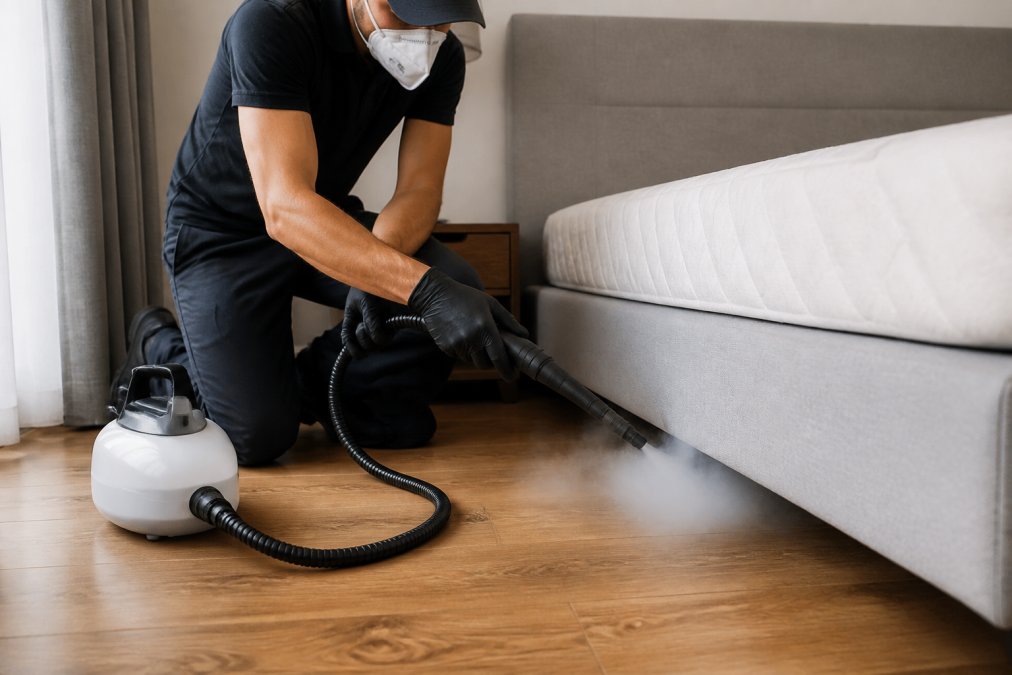
Steam cleaning delivers heat directly into fabrics and crevices where bed bugs hide, making it an effective supplementary treatment that requires no chemicals.
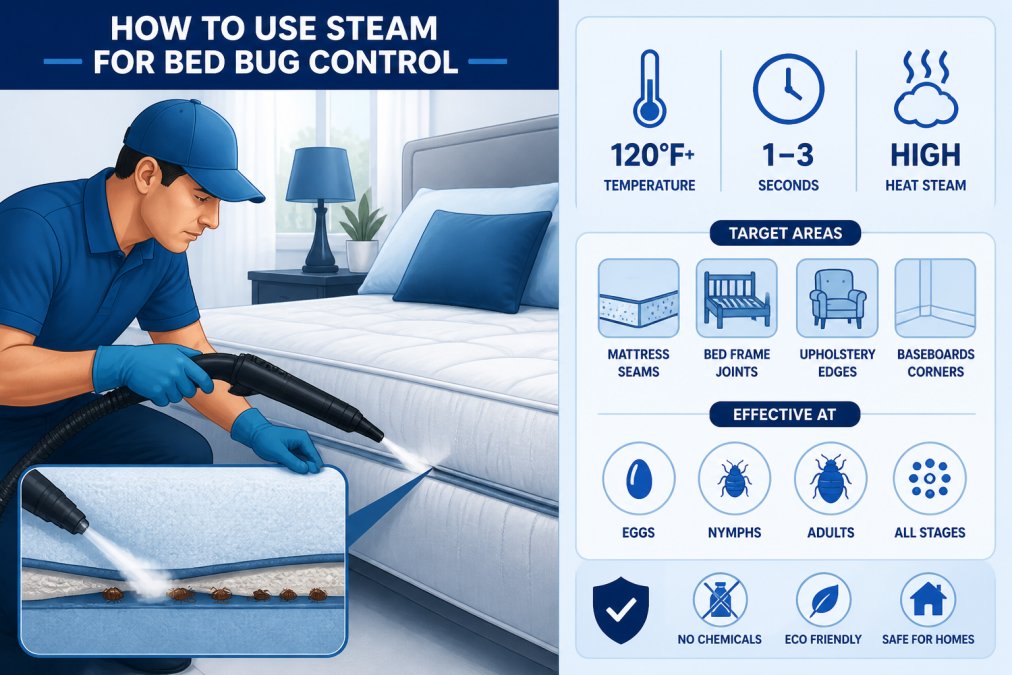
Handheld steam cleaners heat water to 65-82°C (150-180°F), hot enough to kill bed bugs and eggs on contact without damaging most fabrics.
Move the steamer slowly across seams, paying special attention to where the mattress meets the box spring and the underside. Steam also works on upholstered furniture, curtains, and carpet edges.
Steam requires no chemicals and leaves no residue, but only kills bugs directly exposed to heat. Bugs hiding in walls or electrical outlets won't be reached. Steam is most effective combined with other methods for complete coverage.
Bed Bug Mattress Encasement Effectiveness and Application
A mattress encasement is a zippered, bed bug-proof cover that traps bugs already inside the mattress and prevents new infestations from establishing.
Bed bugs inside the mattress cannot escape and starve over 6 to 12 months. The encasement also prevents new bugs from crawling in. A single encasement costs $30-$60 and lasts for years.
Encasements are a physical barrier requiring no ongoing maintenance. Once installed, they work passively, protecting the mattress even if bed bugs are present elsewhere in a unit.
Remove the mattress, unzip the encasement, slide the mattress in, and zip it closed. Inspect monthly for tears or damage.
The limitation is that an encasement only protects the mattress. Bed bugs can still live in box springs, bed frames, nightstands, and other furniture.
Monitoring and Detection: Finding Bed Bugs Before They Spread
Monitoring tools like pitfall traps and detection kits catch infestations early and verify that treatment has worked.
Detection Tools and How They Work
Common monitoring options include:
Pitfall traps: Simple containers placed under furniture legs or baseboards. Cost: $5 to $15 per trap.
Active attractant kits: Products like the SenSci ActivVolcano use carbon dioxide or pheromone lures to draw bed bugs from up to 1 meter away. Cost: $25 to $50 per kit.
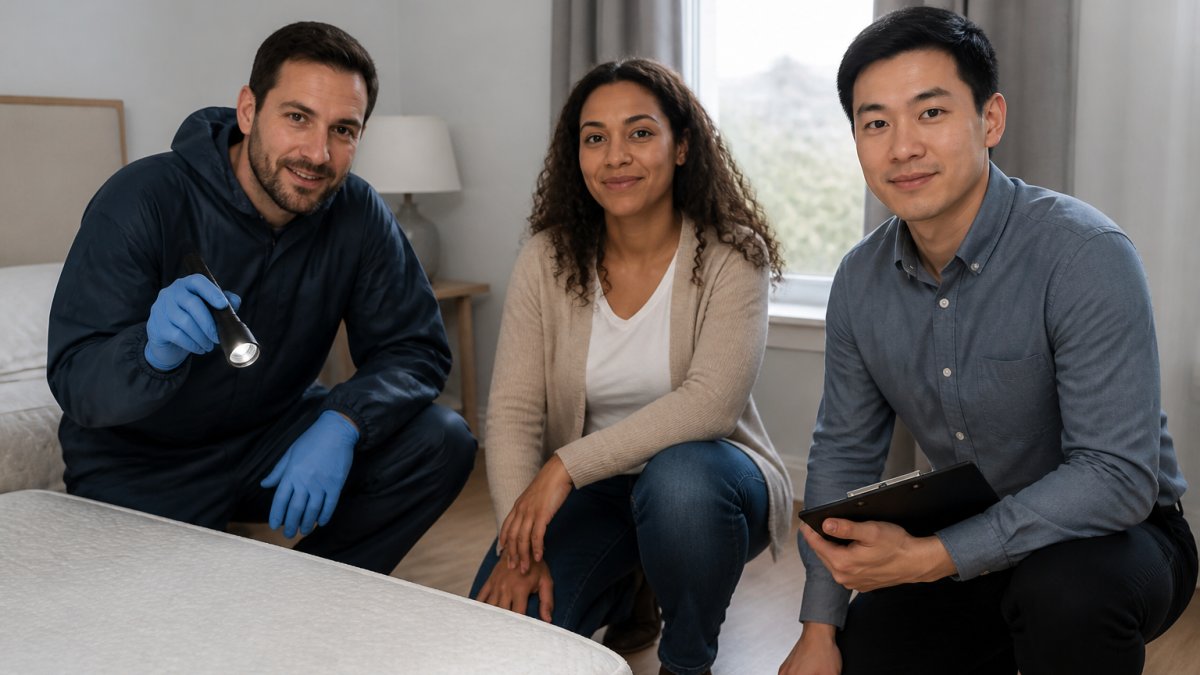
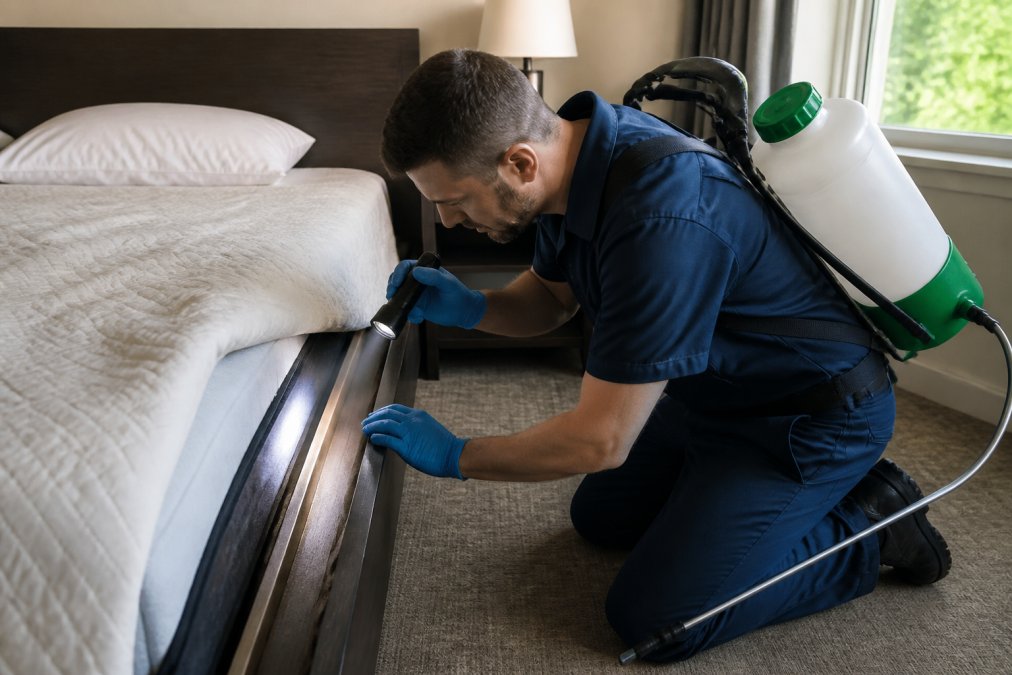
Visual inspection: Inspect mattress seams, box spring edges, and baseboards with a flashlight at night. Look for live bugs, shed skins, or dark fecal spots. Cost: nothing.
Using Monitoring Data to Verify Treatment Success
This is where most DIY guides fall short. Placing a trap is easy. Interpreting the results to confirm that treatment has worked is harder.
Before treatment: Place 4 to 6 traps in the infested room. Check daily for 7 days to establish a baseline. Catching 5 to 10 bugs per night indicates an active infestation.
After treatment: Remove traps for 24 hours, then replace and check daily. Trap catches should drop to zero by days 4-7. If you're still catching 3 or more bugs per night, additional treatment is needed. Zero catches for 2 consecutive weeks indicates the infestation is likely resolved. Switch to monthly monitoring after 4 weeks.
Why This Matters for Pesticide-Free Verification
When you use pesticides, you rely on the chemical's residual effect and the pest control operator's assurance that the treatment worked. With non-pesticide methods like heat, encasements, and diatomaceous earth, you need objective evidence that bugs are actually gone. Monitoring provides that evidence.
A homeowner who completes heat treatment but sees no follow-up monitoring plan may worry for months whether the treatment truly worked. A homeowner who places traps, checks them daily for two weeks, and records zero catches has concrete proof. This psychological certainty is valuable, especially for renters or property managers who need to document that an infestation has been resolved.
Common Monitoring Mistakes
Place traps in multiple locations, not just under the bed. Daily checks for the first week are crucial; weekly checks will miss population trends. Bed bugs are small (4 to 5 millimeters), flat, and reddish-brown; photograph uncertain specimens for identification. Monitor for at least 8 to 12 weeks post-treatment, as bed bugs can survive months without feeding.
Integrated Pest Management: Combining Methods for Real Results
Integrated Pest Management (IPM) combines multiple control methods, including heat, physical barriers, monitoring, and targeted treatments, to eliminate bed bugs while reducing reliance on any single approach.
Why IPM Outperforms Single-Method Approaches
Single-method approaches fail because they ignore the bed bug lifecycle and the diversity of harborage areas. IPM works by layering defenses: heat treatment eliminates the active infestation, mattress encasements prevent reinfestation, diatomaceous earth adds a supplementary barrier, and monitoring kits detect survivors or newly introduced bugs. This redundancy ensures that if one method fails, others catch the problem.
IPM adapts to context. For single-family homes, heat treatment followed by encasements and monitoring may be sufficient. For multi-unit buildings, professional treatment of affected units combined with preventative monitoring in adjacent units prevents cross-unit spread.
When Professional Help Becomes Necessary
DIY alternatives to pesticides for bed bugs work for early-stage infestations and prevention, but active, established infestations typically require professional intervention. If you've tried diatomaceous earth, steam cleaning, or encasements for more than two weeks with no improvement, or if the infestation spans multiple rooms or units, professional help is necessary.
Professional pest management brings three advantages: specialized equipment, expertise in identifying all harborage areas, and access to targeted biological treatments that homeowners cannot easily obtain.
Bed bug infestations create urgency and frustration, especially when standard approaches fail. The shift toward effective alternatives to pesticides reflects a simple reality: resistance is real, and single-method solutions don't work anymore. Heat treatment eliminates infestations in a single session. Mattress encasements provide lasting protection. Monitoring tools catch problems early.
For property owners and managers facing active infestations or recurring problems, Meridian Bed Bug Treatment offers specialized pest control solutions tailored to your space. Our professional approach helps address bed bug infestations. Contact us for a consultation and discover how professional alternatives to pesticides can resolve your infestation.
Frequently Asked Questions
What kills 100% of bed bugs without using pesticides?
Heat treatment is the most reliable pesticide-free method, reaching temperatures of 48-50°C throughout an entire space to kill all life stages including eggs, nymphs, and adults. Professional heat treatment achieves near-complete eradication in a single application. Combining heat with other methods like steam cleaning, encasements, and vacuuming improves success rates further. No single DIY alternative to pesticides achieves 100% elimination alone, which is why integrated pest management combining multiple approaches works best.
How does heat treatment compare to chemical sprays for bed bug eradication?
Heat treatment kills all bed bug life stages in one visit by raising interior temperatures to lethal levels, leaving no chemical residue. Chemical sprays require multiple applications over weeks, may face resistance in some populations, and leave residues on surfaces. Heat works faster and more completely but requires professional equipment and preparation. Chemical sprays are cheaper upfront but often fail when bed bugs have developed resistance. Many professionals now combine both methods for maximum effectiveness.
Are natural remedies like baking soda or essential oils effective against bed bugs?
Baking soda and essential oils like neem, peppermint, and cedarwood show limited effectiveness in scientific testing compared to physical methods like heat or diatomaceous earth. Essential oils can repel bed bugs temporarily but do not reliably kill them, and some oils pose inhalation risks if overused indoors. Diatomaceous earth (food grade) is more effective as a natural desiccant, damaging the insect's exoskeleton and causing dehydration. For active infestations, relying solely on baking soda or essential oils often fails; they work best as supplementary measures within a broader integrated approach.
What is the most effective non-chemical method for killing bed bugs?
Professional heat treatment is the most effective non-chemical method, achieving eradication rates above 95% in single treatments by reaching lethal temperatures throughout the entire space. Steam cleaning combined with vacuuming and mattress encasements provides a solid DIY alternative when professional heat is unavailable, though results depend on thoroughness and consistency. Diatomaceous earth works well for cracks and crevices but requires careful, repeated application. Monitoring tools like detection kits help confirm infestation levels. Combining multiple methods through integrated pest management yields the best outcomes for persistent infestations.