 how-to
What to Do Immediately After Discovering Bed Bugs
Table of Contents
- Recognize Signs of Bed Bug Infestation
- Step 1: Isolate Infested Items Immediately
- Step 2: Wash and Dry Textiles at High Heat
- Step 3: Vacuum and Declutter Your Bedroom
- Step 4: Encase Mattresses and Box Springs
- How to Prepare for Bed Bug Treatment
- Heat Treatment vs Chemical Spray for Bed Bugs
- When to Call a Professional Exterminator
- Frequently Asked Questions
Last Updated: September 22, 2026
Recognize Signs of Bed Bug Infestation
Before taking action, confirm you're dealing with bed bugs by discovering bed bugs' distinctive signs, as many people mistake other issues for infestations.
Bed bugs are small, flat insects about the size of an apple seed. They're reddish-brown and hide in mattress seams, bed frames, baseboards, and upholstered furniture. Look for these telltale signs:
- Fecal spots: Dark or rust-colored stains on sheets, mattresses, or furniture
- Exoskeletons: Shed skin casings near harborage areas (hiding spots)
- Blood stains: Small red marks on bedding from crushed bugs
- Live insects: Actual bugs crawling on mattresses, box springs, or bed frames
- Bites: Itchy welts on your skin, though not everyone reacts the same way
Bed bugs feed on blood at night and hide during the day. Clustered bites on exposed skin combined with evidence on your mattress or bed frame confirm an infestation.
Inspect your entire bedroom, including all furniture, baseboards, and electrical outlets, as bed bugs spread quickly through cross-contamination.
Step 1: Isolate Infested Items Immediately
Your first action after discovering bed bugs is containment to prevent spread to other rooms or furniture.
Isolate all infested items right now. This means:
- Strip your bed completely and place all bedding in sealed garbage bags
- Bag up any clothing from the infested bedroom
- Keep these sealed bags separate from the rest of your home
- Do not move items between rooms until they've been treated
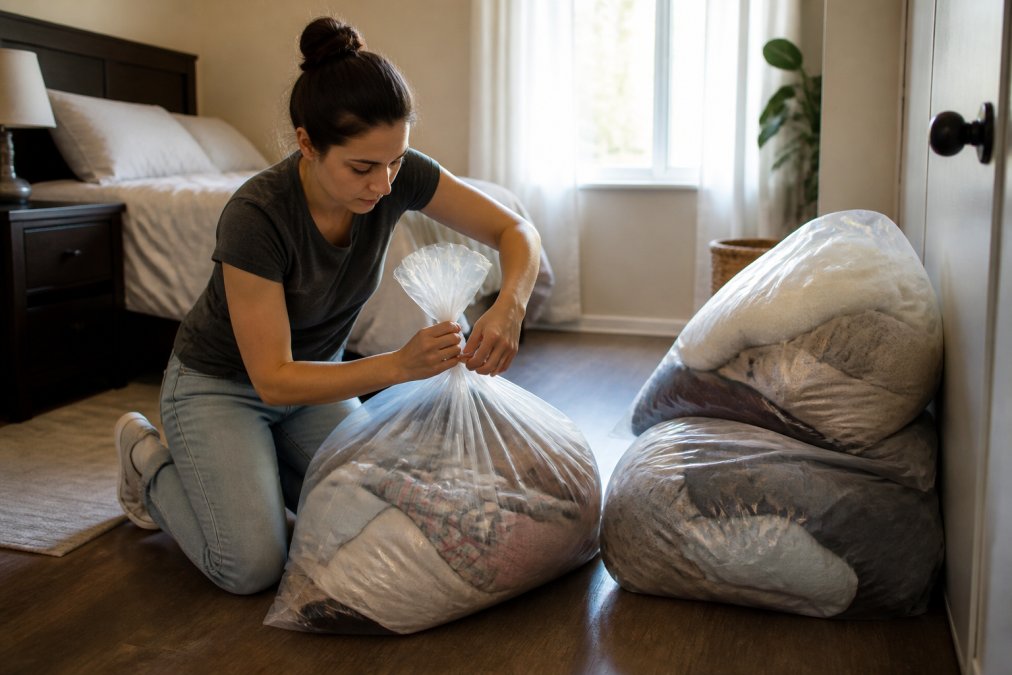
A single pregnant female can start a new infestation in another room within days, so containment is critical.
Do not panic-clean your entire house, as this spreads bugs to uninfested areas. Focus only on containing what you know is infested.
In condos or apartments, isolating items prevents bed bugs from traveling through walls, pipes, and conduits to neighboring units.
Step 2: Wash and Dry Textiles at High Heat
Treat isolated textiles with heat, as bed bugs and eggs cannot survive high temperatures.
Wash all infested bedding, clothing, and fabrics using the hot water cycle. Then dry them on the highest heat setting your dryer allows.
Here's what works:
- Water temperature: Hot water (at least 54°C) kills bed bugs on contact
- Dryer temperature: High heat setting for at least 30 minutes
- What to wash: All bedding, pillowcases, blankets, sheets, and any clothing from the infested room
- What to skip: Delicate fabrics that can't handle high heat (dry clean these separately or discard them)
Step 3: Vacuum and Declutter Your Bedroom
Vacuuming removes bed bugs, eggs, and fecal spots while decluttering eliminates hiding spots.
Vacuum thoroughly, paying special attention to:
- Baseboards and corners where walls meet floors
- Under and around the bed frame
- Cracks in wooden bed frames
- Upholstered furniture surfaces
- Carpet edges and seams
Declutter your bedroom by removing:
- Piles of clothing on the floor
- Stacks of books or papers
- Extra furniture pushed against walls
- Items under the bed
- Anything that creates a hiding spot
Step 4: Encase Mattresses and Box Springs
Mattress and box spring encasement is one of the most effective DIY steps you can take. It traps bed bugs inside the fabric and prevents new infestations.
Here's how to use them:
- Vacuum your mattress and box spring thoroughly before encasing
- Slide the encasement over the mattress or box spring completely
- Zip it closed and keep it zipped for at least one year
- Any bed bugs trapped inside will eventually die from starvation
- New bed bugs cannot infest a properly-sealed encasement
How to Prepare for Bed Bug Treatment
Professional treatment is almost always necessary to fully eliminate bed bugs. Your preparation directly affects treatment success, but the steps differ significantly depending on whether you own your home or rent.
For homeowners, clear and prepare your space:
- Clear all clutter from your bedroom and other affected areas
- Move furniture away from walls so technicians can access baseboards and wall voids
- Wash and bag all clothing and bedding as described above
- Vacuum all carpets and hard floors
- Ask the professional what you should do before and after treatment
- Ensure pets and children will be away during chemical treatment (heat treatment is pet-safe)
For renters and apartment dwellers, follow these additional steps:
-
Notify your landlord or property manager immediately. In most provinces, landlords are legally required to arrange treatment within a specific timeframe. Failure to notify can void your lease protections and may be considered a breach of your rental agreement.
-
Provide written notice. Send an email or letter documenting the date you discovered bed bugs and the areas affected. Keep a copy for your records. This creates a paper trail if disputes arise later.
-
Request that management inspect neighboring units. Bed bugs can travel through shared walls, electrical conduits, and plumbing. Your neighbors may already be infested without knowing it. Management should conduct inspections and treat adjacent units if necessary.
-
Ask about cost responsibility. In most jurisdictions, the landlord is responsible for pest control treatment costs. Do not agree to pay for treatment yourself unless your lease explicitly states otherwise and local law permits it.
-
Document your home's condition. Take photos of the infestation, bites on your skin, and any damage to furniture or bedding. If the infestation was caused by the landlord's failure to maintain the property, this documentation supports a potential claim for damages or rent reduction.
-
Understand your rights during treatment. You may have the right to temporary relocation if treatment requires you to vacate. Clarify this before the appointment.
Heat Treatment vs Chemical Spray for Bed Bugs
Two main professional treatment methods exist: heat treatment and chemical spray. Each has advantages and disadvantages.
Advantages of heat treatment:
- Kills bed bugs in a single treatment day
- No chemical residue left behind
- Works in all areas (walls, furniture, electronics)
- No preparation needed after treatment
Disadvantages:
- More expensive than chemical treatment
- Requires you to vacate your home during treatment
- Can damage some electronics or delicate items if not properly protected
Advantages of chemical treatment:
- Generally less expensive than heat treatment
- Can be done in stages
- Shorter treatment time
Disadvantages:
- Requires multiple visits (usually 2-3 treatments)
- Takes several weeks to fully eliminate the infestation
- Requires careful preparation and follow-up
- Some bed bugs have developed pesticide resistance
When to Call a Professional Exterminator
Call a pest control professional if you:
- Have confirmed bed bugs in your home
- Have tried DIY treatments without success
- Live in a condo or apartment building
- Operate a hotel or short-term rental
- Manage rental properties with multiple units
When choosing a professional, ask these questions:
- What treatment method do you use (heat, chemical, or both)?
- How many visits will treatment require?
- Do you guarantee the bed bugs won't return? (What is the guarantee period?)
- What should I do to prepare my home?
- What happens if I still see bed bugs after treatment?
- Will you treat neighboring units if I live in a shared building?
- How long before I can return to my bedroom after treatment?
Post-treatment monitoring: The critical 14-day window
Here's what to expect and monitor:
Days 1-3 after treatment: You may see dead bed bugs or increased activity as they're flushed from hiding spots. This is normal and indicates the treatment is working. Do not panic if you see a few bugs; they are likely dying.
What to monitor actively:
- Your skin: Check for new bite clusters on your arms, legs, and torso each morning. Bed bugs typically bite in a line or cluster pattern. New bites after day 3 suggest the infestation persists.
- Your mattress and box spring: Inspect the encasement seams and zipper daily for any tears or escaping bugs.
- Baseboards and bed frame: Use a flashlight to check corners and cracks for live bugs or fresh fecal spots (dark specks that look like pepper).
- Furniture: If bed bugs were found in upholstered furniture, inspect those items daily.
If you see live bed bugs after day 7:
- Pesticide-resistant bed bugs (increasingly common)
- Incomplete treatment of all infested areas
- Re-infestation from a neighboring unit (common in apartments)
- Bed bugs brought back into your home on clothing or luggage
When to declare victory:
Frequently Asked Questions
What should I do if I find just one bed bug?
Do not ignore a single bed bug. Bed bugs reproduce rapidly, and one adult can become an infestation within weeks. Immediately isolate any items the bug may have contacted in sealed garbage bags. Inspect your mattress, box spring, bed frame, and nearby furniture for additional signs like eggs, nymphs, fecal spots, or exoskeletons. Document what you find with photos. Contact a pest control professional to confirm identification and begin treatment before the infestation spreads to other rooms or harborage areas.
Is it safe to sleep in my bed after finding a bed bug?
Continuing to sleep in an infested bed allows bed bugs to feed and reproduce. If you discover bed bugs, stop using that bed immediately. Move to a different room if possible, but avoid carrying infested items with you. Encase your mattress and box spring in protective covers to prevent bugs from escaping into new areas. This containment step is critical during the period before professional treatment begins. Never move an infested mattress to another room, as this spreads the infestation.
How do I prevent bed bugs from spreading to other rooms?
Isolation and containment are your first priorities. Keep infested bedding in sealed garbage bags. Move furniture away from walls to prevent bugs from using baseboards and wall cavities as highways to adjacent rooms. Avoid touching furniture in other rooms with contaminated clothing or hands. If you live in an apartment or condo, inform your landlord or property manager immediately, as integrated pest management may require treatment of neighboring units to prevent cross-contamination. Professional pest control can advise on whether adjacent units need inspection.
Will bed bugs eventually go away on their own?
No. Bed bugs do not leave on their own and will not starve quickly. They can survive months without feeding, hiding in baseboards, bed frames, upholstered furniture, and other harborage areas. An untreated infestation grows exponentially as bugs reproduce. DIY treatments often fail because they do not reach all hiding spots where eggs and nymphs survive. Professional pest control using either chemical treatment or thermal treatment is necessary to eliminate an infestation completely.


