 how-to
How to Calculate Bed Bug Treatment Cost Per Room
Table of Contents
- What You'll Need Before Getting a Quote
- Factors Affecting Bed Bug Treatment Price
- Bed Bug Heat Treatment vs Chemical Cost
- How Many Treatments Are Needed for Bed Bugs
- Step-by-Step: Calculate Your Bed Bug Treatment Cost Per Room
- Hidden Costs and What to Expect Beyond Treatment
- Common Mistakes to Avoid When Budgeting for Treatment
- Getting an Accurate Extermination Quote
- Frequently Asked Questions
Last Updated: October 1, 2026
What You'll Need Before Getting a Quote
Before contacting a pest control professional, gather: room square footage, when you first noticed bed bugs, what DIY treatments you've tried, photos of affected areas (mattress seams, furniture cracks, visible bugs or droppings), your property type (single-family home, condo, apartment, or rental unit), and any access restrictions. This information speeds up quoting and helps professionals estimate infestation severity and treatment scope.
Factors Affecting Bed Bug Treatment Price
Several variables determine treatment cost: infestation severity, room size, property type, and treatment method.
Infestation severity and treatment scope
Infestation severity directly affects bed bug treatment cost per room. Professionals assess severity by counting bugs, identifying life stages present, determining how long the infestation has existed, and checking how many rooms are affected. Localized treatment targets one or two rooms, while whole-home treatment covers every room including closets and hallways. Heavy infestations require more aggressive methods, costing more upfront but reducing follow-up visits.
Room size and square footage
Larger rooms require more treatment material and labor, increasing cost per room. Most professionals calculate based on square footage: measure room length and width, multiply to get square footage, and account for all infested areas including closets and bathrooms. For irregular shapes, break into rectangles, measure each section, and add together.
Property type and accessibility
Property type influences labor and equipment costs. Single-family homes are simpler to treat than condos or apartments, which have shared walls, require landlord approval, and need resident coordination. Hotels and short-term rentals need rapid turnaround, costing more. Older homes with cracks and gaps may need additional sealing; newer construction costs less because bed bugs have fewer hiding spots.
Bed Bug Heat Treatment vs Chemical Cost
Two main treatment methods dominate the pest control industry: chemical treatment and heat remediation. Each has different cost structures and effectiveness profiles.
Chemical treatment pricing structure
Chemical treatment uses residual insecticides applied to baseboards, mattresses, furniture, and wall voids, then follow-up visits 2-3 weeks apart to catch newly hatched nymphs. Cost depends on room size and severity. Chemical treatment works well for light to moderate infestations and is less disruptive than heat treatment since you don't need to vacate your home. However, some bed bug populations have developed resistance to certain insecticides.
Heat remediation costs and effectiveness
Heat treatment raises temperature to lethal levels (typically 48-50°C sustained for 90 minutes), killing all life stages in one visit. It eliminates the need for follow-ups and appeals to those who can't tolerate repeated visits. However, heat treatment equipment is expensive and requires specialized expertise, costing more upfront than a single chemical visit. It also requires temporary displacement for 24-48 hours.
How Many Treatments Are Needed for Bed Bugs
The number of treatments depends on your chosen method and infestation severity.
Service frequency and follow-up inspections
Chemical treatment typically requires 2-4 visits spaced 2-3 weeks apart. The first visit targets adult bugs and nymphs. Follow-up visits kill nymphs that hatched from eggs laid before the initial treatment.
Bed bug life cycles vary by temperature and feeding frequency. In warm homes, eggs hatch faster, requiring closer follow-up spacing. In cooler spaces, the cycle stretches, allowing longer gaps between treatments.
Your professional will schedule follow-ups based on:
- Initial infestation severity
- Room temperature in your home
- Treatment method used
- Local bed bug population resistance patterns
Severe infestations sometimes need 4-5 visits. Light infestations may resolve in 2 visits. Your pest control professional will outline the expected schedule during the initial assessment.
Calculating total cost across multiple visits
To estimate your total treatment cost, multiply the per-visit cost by the number of expected visits. This gives you a realistic budget.
Example calculation:
- Per-room cost per visit: varies by professional and severity
- Expected visits: 3
- Total cost for one room: multiply the per-visit cost by 3
If your infestation spans multiple rooms, add the per-room costs together. A two-bedroom infestation requiring 3 visits costs roughly double a single-bedroom treatment.
Ask your pest control professional for a written estimate that includes:
- Cost per visit
- Number of expected visits
- Total estimated cost
- Any additional fees (travel, equipment, preparation requirements)
This transparency prevents billing surprises later.
Step-by-Step: Calculate Your Bed Bug Treatment Cost Per Room
Follow this process to estimate your treatment costs before contacting professionals.
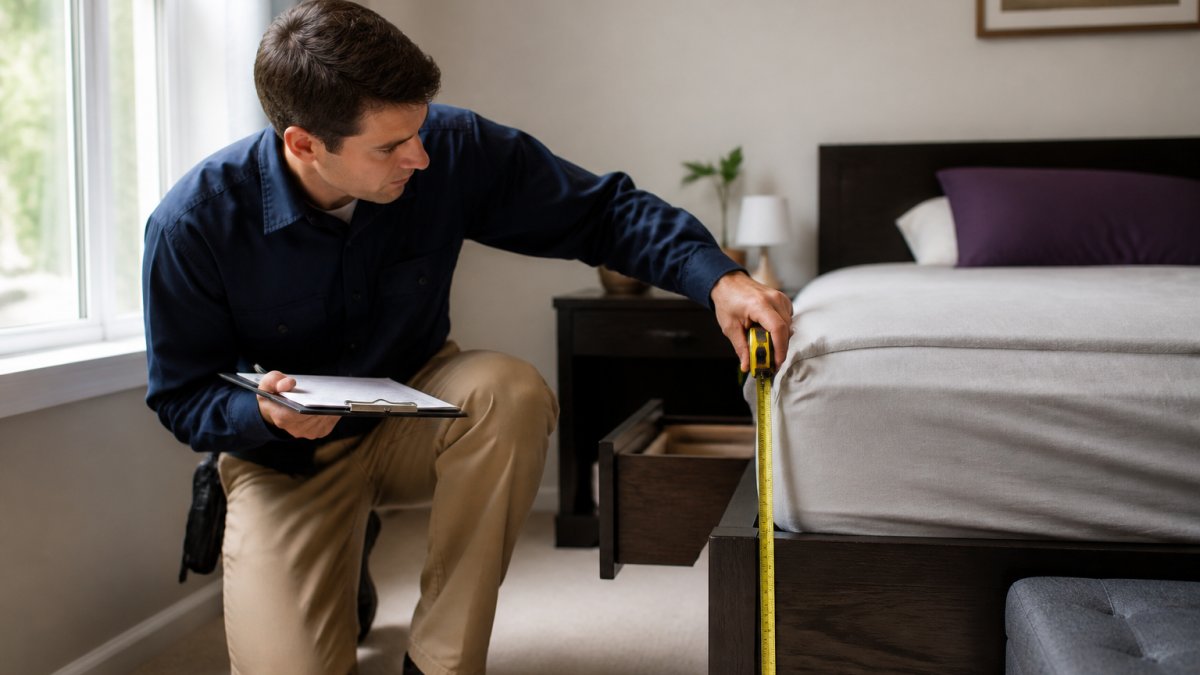
Step 1: Measure the infested room
Measure your room's length and width. Multiply these numbers to get square footage. Professionals often use metric measurements, so be prepared to convert if necessary.
For example:
- Bedroom: 3.6 meters × 4.2 meters = 15.12 square meters
- Master suite: 5.5 meters × 6 meters = 33 square meters
Include closets and attached bathrooms in your measurement. Bed bugs hide in these spaces too.
Write down the square footage for each infested room. You'll use these numbers when requesting quotes.
Step 2: Assess infestation severity
Determine whether your infestation is light, moderate, or severe.
Light infestation signs:
- Bed bugs visible only on one mattress
- Few droppings or shed skins
- Infestation discovered early (within weeks of first signs)
Moderate infestation signs:
- Bugs found in bedroom furniture and nearby rooms
- Multiple mattresses affected
- Visible droppings in several locations
- Infestation ongoing for 1-2 months
Severe infestation signs:
- Bugs visible in multiple rooms
- Infested furniture throughout the home
- Multiple failed DIY treatment attempts
- Infestation present for several months
Severity directly impacts cost. Severe infestations need more treatment material, longer labor, and more follow-up visits.
Step 3: Choose your treatment method
Decide between chemical treatment and heat remediation based on your situation.
Choose chemical treatment if:
- You have a light to moderate infestation
- You can tolerate 2-4 visits over several weeks
- Budget is a primary concern
- You can prepare rooms between visits
Choose heat treatment if:
-
You need fast results
-
You have a severe infestation
-
You can vacate your home for 24-48 hours
-
Budget allows for higher upfront cost
-
You want to avoid multiple visits
Your professional may recommend one method over the other based on your specific situation.
Step 4: Factor in preparation and follow-ups
Preparation work affects total cost. Most professionals charge extra for:
- Vacuuming and decluttering (you may do this yourself to save money)
- Washing all bedding and clothing
- Sealing cracks and gaps
- Moving furniture away from walls
Follow-up visits add to your total. Budget for the expected number of visits based on your chosen method.
Calculate your estimated total:
-
Base treatment cost per room
-
Multiply by number of rooms
-
Add preparation costs if applicable
-
Multiply by expected number of visits
-
Add any travel or equipment fees
This gives you a ballpark figure before contacting professionals.
Hidden Costs and What to Expect Beyond Treatment
Several expenses beyond the core treatment can surprise homeowners. Knowing about them prevents budget overruns.
Preparation and sanitation work sometimes costs extra. If your professional requires deep cleaning, decluttering, or furniture removal, expect additional fees. Some homeowners handle this themselves to save money.
Mattress encasements trap any surviving bed bugs inside. These specialized covers cost money but prevent re-infestation from hidden bugs. Many professionals recommend them as part of treatment.
Monitoring devices detect bed bugs between treatments. These small traps cost extra but help confirm treatment success. They're especially valuable for rental properties where re-infestation risk is high.
Preventative treatments on furniture and luggage protect against future infestations. These optional services add cost but reduce re-infestation risk.
Travel time and distance fees apply if your home is far from the professional's base.
Common Mistakes to Avoid When Budgeting for Treatment
Many homeowners make budgeting errors that lead to frustration and wasted money.
Getting an Accurate Extermination Quote
Request quotes from multiple professionals to compare costs and services. Here's how to get accurate estimates.
Request a written quote that includes:
-
Per-visit cost
-
Number of expected visits
-
Total estimated cost
-
Treatment method details
-
Preparation requirements
-
Warranty or guarantee terms
-
Travel fees or distance charges
-
Timeline for scheduling
Ask specific questions:
-
How many visits does your estimate include?
-
What happens if bed bugs return after treatment?
-
Do you guarantee your work?
-
What preparation must I do?
-
Can you treat multiple rooms at once?
-
Do you charge extra for severe infestations?
Frequently Asked Questions
Why do bed bug treatment costs vary so much per room?
Costs depend on room size, infestation severity, treatment method, and property layout. A small bedroom with light infestation costs far less than a multi-room apartment with severe bed bug life cycle activity. Treatment method matters too: chemical treatment typically costs less upfront than heat remediation, but may require more follow-up visits. Professional assessment during an extermination quote accounts for all these variables to give you an accurate price.
How many treatments are needed for bed bugs, and does that affect the total cost?
Most infestations require 2-3 treatment visits spaced 7-14 days apart to break the bed bug life cycle. Some severe cases need additional follow-up inspections. Each service frequency visit adds to your total cost. A pest control professional will outline the expected treatment schedule during your quote, so you know the full investment upfront rather than discovering hidden costs later.
Is bed bug heat treatment or chemical treatment more cost-effective?
Heat remediation typically costs more per treatment but often requires fewer visits because it eliminates all life stages at once. Chemical treatment costs less initially but usually needs multiple applications and follow-up inspections to ensure efficacy. The cost-benefit analysis depends on your infestation severity and room size. Get quotes for both methods to compare total cost across the full treatment plan, not just the first visit.
What hidden costs should I budget for beyond the treatment itself?
Beyond labor and chemicals, expect costs for mattress encasement, preparation work (clearing furniture, laundering items), and potential equipment rental if heat treatment is used. Some properties need localized treatment in multiple rooms, increasing costs. If treatment fails, you may face additional visits. Ask your pest control professional for a complete breakdown including all preparation requirements before committing.