 listicle
7 Common Bed Bug Hiding Spots in Condos
Table of Contents
- Why Condos Are Vulnerable to Bed Bug Infestations
- 1. Mattress Seams and Piping
- 2. Box Spring Crevices
- 3. Bed Frames and Headboards
- 4. Upholstered Furniture
- 5. Wall Voids and Baseboards
- 6. Window and Door Moldings
- 7. Clothing, Linens, and Storage Areas
- Visual Inspection Checklist for Condo Residents
- Frequently Asked Questions
Last Updated: September 29, 2026
Bed bugs thrive in multi-unit dwellings because they move easily between units and find countless places to hide. Understanding bed bug hiding spots is your first line of defense. This guide from Meridian Bed Bug Treatment covers the seven most common bed bug hiding spots in condos, helping you identify infestations early and take action before they spread to neighboring units.
Condos present unique vulnerabilities that single-family homes don't face. Shared walls, common entry points, and the movement of residents between units create a perfect environment for bed bugs to establish themselves and multiply. Early detection matters. The longer an infestation goes unaddressed, the more likely it spreads through your building and the more expensive professional treatment becomes.
Why Condos Are Vulnerable to Bed Bug Infestations
Condos and apartment buildings create ideal conditions for bed bug infestations to take hold and spread rapidly in ways that single-family homes do not. Unlike detached homes, multi-unit dwellings have shared walls, interconnected plumbing, and common entry points that bed bugs exploit. A single infested unit can seed an entire building within weeks.
Structural Pathways Unique to Multi-Unit Buildings
-
Plumbing chases and pipe penetrations: Vertical and horizontal plumbing runs through walls to supply multiple units. Where pipes pass through walls, gaps remain around the penetration points. Bed bugs exploit these openings to move between floors and adjacent units. A bug hiding in the wall void of Unit 302 can travel through a plumbing chase to Unit 402 directly above.
-
Electrical conduit and outlet boxes: Electrical wiring runs through wall cavities to service multiple units. Outlet boxes, switch plates, and junction boxes create openings into wall voids. Bed bugs hide inside outlet boxes and travel along conduit runs, emerging in different units or rooms than where they originated.
-
HVAC returns and supply ducts: In buildings with central or semi-central air handling, return air ducts create pathways through wall voids. While bed bugs don't travel through active airflow, they hide in ductwork and emerge in rooms far from the original infestation point.
-
Shared wall cavities: Interior walls separating units are hollow. Once bed bugs establish themselves in a wall cavity, they can move horizontally along the entire length of the wall, accessing multiple units through any opening: electrical outlets, plumbing penetrations, cracks in drywall, or gaps where baseboards meet walls.
-
Hallway and common area entry points: Bed bugs travel through hallways on residents' clothing, luggage, and furniture. They hide in hallway baseboards, light fixtures, and fire alarm boxes, then enter units through door frames and gaps around door jambs.
Why Delayed Reporting Accelerates Spread
1. Mattress Seams and Piping
Mattress seams and piping are the primary hiding spots for bed bugs in any bedroom. These narrow crevices provide the perfect environment: dark, warm, close to their host, and difficult to access with a vacuum or spray.
When inspecting your mattress, use a flashlight and look closely at:
- All seams running along the top and bottom surfaces
- The piping along all four edges
- The underside, particularly where fabric meets the frame
- Zipper areas if your mattress has a removable cover
2. Box Spring Crevices
Box springs are even more vulnerable than mattresses because their construction creates numerous cracks and crevices where bed bugs hide in large numbers. The wooden frame, fabric stapling, and internal support structure all provide ideal harborage.
Inspect your box spring by:
- Flipping it over and examining the fabric covering the bottom
- Looking for tears or holes in the fabric where bugs can enter and hide
- Checking the wooden frame for cracks and gaps
- Examining the stapled seams where fabric meets the frame
3. Bed Frames and Headboards
Wooden bed frames and headboards provide extensive harborage because of their joints, crevices, and hollow spaces. Bed bugs hide in the corners where frame pieces meet, inside bolt holes, and in any gap or crack in the wood.
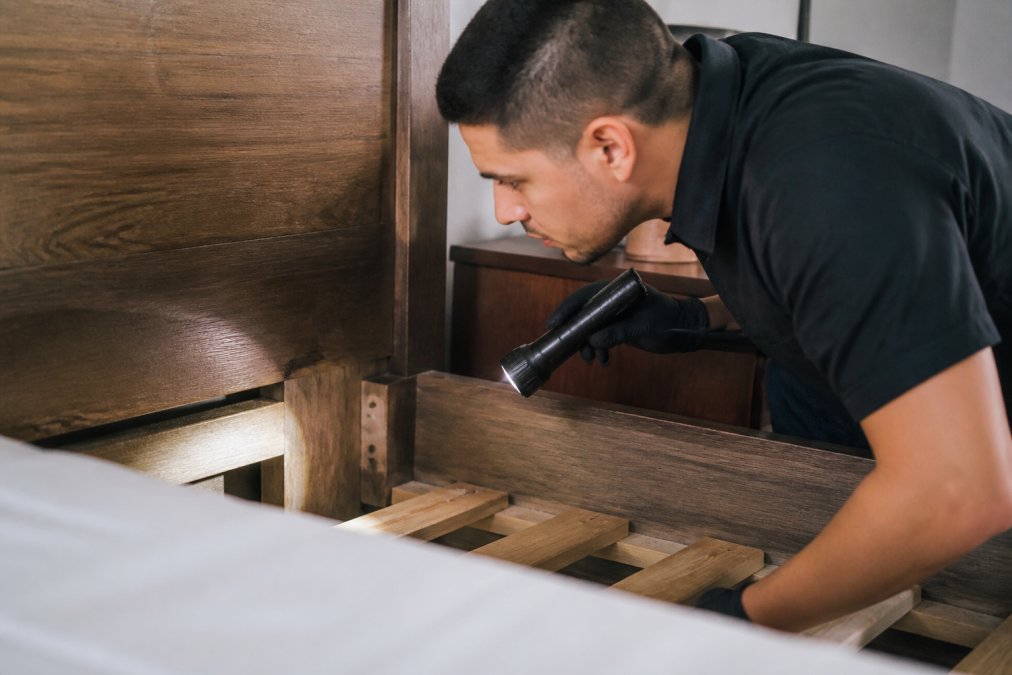
When inspecting your bed frame and headboard:
- Examine all joints and corners with a flashlight
- Look inside bolt holes and screw holes
- Check the underside where the frame meets the floor
- Inspect any cracks or splits in the wood
- For upholstered headboards, check seams and piping
4. Upholstered Furniture
Couches, armchairs, and other upholstered furniture are common harborage sites, especially in living rooms where residents spend evening hours. Bed bugs don't limit themselves to bedrooms, they follow their hosts to any location where people rest or sleep.
Inspect upholstered furniture by:
- Examining all seams and piping on cushions and arms
- Looking underneath cushions and in the space between them
- Checking the fabric underside where it meets the frame
- Inspecting any tears or holes in the fabric
- Looking at the wooden frame joints where fabric is stapled
5. Wall Voids and Baseboards
Wall voids, the hollow spaces between interior and exterior walls, serve as highways for bed bug migration between units in condos. Once bed bugs establish themselves in wall voids, they can spread throughout an entire building through electrical outlets, pipe penetrations, and other openings.
Signs of wall void infestation include:
- Fecal spots or blood stains on baseboards
- Live bugs emerging from electrical outlets or gaps in baseboards
- A musty odor (from large populations of bed bugs)
- Bugs appearing in rooms where you haven't seen them before
6. Window and Door Moldings
Window frames and door moldings create cracks and crevices where bed bugs hide during the day. These locations are particularly attractive because they're near entry points and provide easy access for bugs traveling between rooms or units.
Bed bugs hide in:
- Cracks in painted or stained wood molding
- Gaps where molding meets the wall or window frame
- Inside hollow door frames
- Behind loose or peeling paint or caulk
Inspect moldings by:
- Running your fingers along all edges to feel for gaps
- Using a flashlight to look for fecal spots or live bugs
- Checking for exoskeletons or blood stains
- Looking for cracks where paint has peeled away
7. Clothing, Linens, and Storage Areas
Bed bugs hide in clothing, linens, and storage areas because these items provide shelter and often remain undisturbed for extended periods. Closets, drawers, and storage containers become harborage sites, especially if items are stored in plastic bags or boxes.
Inspect storage areas by:
- Checking folded clothing in drawers and closets
- Examining the seams and hems of stored items
- Looking inside storage boxes and containers
- Checking the corners and seams of storage shelves
- Inspecting suitcases and travel bags
Visual Inspection Checklist for Condo Residents
A systematic inspection approach increases your chances of catching an infestation early. Use this checklist to conduct a thorough examination of your unit:
| Area | What to Look For | Tools Needed | Frequency |
|---|---|---|---|
| Mattress seams and piping | Live bugs, exoskeletons, fecal spots | Flashlight, magnifying glass | Monthly |
| Box spring underside | Tears, holes, fecal spots, live bugs | Flashlight | Monthly |
| Bed frame joints | Cracks, gaps, fecal spots | Flashlight, magnifying glass | Monthly |
| Headboard seams | Live bugs, exoskeletons | Flashlight | Monthly |
| Upholstered furniture | Seams, cushion gaps, underside | Flashlight | Every 2 weeks |
| Baseboards | Fecal spots, gaps, live bugs | Flashlight | Monthly |
| Window and door moldings | Cracks, fecal spots | Flashlight | Monthly |
| Closets and storage | Clothing seams, box corners | Flashlight | Every 2 weeks |
Frequently Asked Questions
How do I know if I have bed bugs in my condo?
Look for fecal spots (dark stains) on mattress seams, exoskeletons, or live bugs in cracks and crevices near your bed. You may notice blood stains on sheets or experience itchy bites in clusters. Bed bugs are nocturnal and stealthy, so inspect your mattress seams, box spring, bed frame, and headboard with a flashlight. If you spot any signs, contact a professional for a thorough inspection to confirm the infestation.
Can bed bugs spread from one condo unit to another?
Yes, bed bugs can migrate between units in multi-unit dwellings through wall voids, electrical outlets, and shared plumbing. They hitch rides on clothing, luggage, and furniture. In condos, this makes infestation a building-wide concern. Landlords and property managers should address infestations quickly and communicate with adjacent units. Professional pest control services understand these structural vulnerabilities and can prevent migration during treatment.
What are the most common hiding spots for bed bugs in a condo bedroom?
Bed bugs favor mattress seams, box spring crevices, bed frame joints, and headboard seams because they're close to their host. They also hide in wall baseboards, window moldings, electrical outlets, and clutter. In condos, wall voids between units are common harborage areas. These hiding spots offer protection and easy access to sleeping areas. A professional inspection can identify all active harborages and guide treatment.
How to identify bed bugs before they spread throughout my condo?
Early detection prevents widespread infestation. Use insect interceptors under furniture legs to trap bugs. Inspect mattress seams weekly with a flashlight, looking for live bugs, exoskeletons, or fecal spots. Check baseboards and wall voids for dark staining. If you spot any signs, isolate the infested area and contact a professional immediately. CO2 monitors can also help confirm the presence of bugs in hidden locations.
What should I do if my landlord won't treat bed bugs in my condo?
Landlords have a legal responsibility to maintain habitable premises, which includes pest control. Document the infestation with photos and contact your landlord in writing. If they don't respond, contact your local residential tenancy office or seek legal advice. Many jurisdictions require landlords to arrange professional treatment at their expense. Don't delay, bed bugs multiply quickly and spread to neighboring units, creating liability for the building.