 ultimate-guide
Bed Bug Prevention for Short-Term Rentals: 2026 Guide
Table of Contents
- What Bed Bugs Are and Why Short-Term Rentals Are High-Risk
- Bed Bug Prevention for Short-Term Rentals: Structural and Operational Measures
- Best Mattress Encasements for Short-Term Rentals
- Bed Bug Inspection Checklist for Hosts
- How to Handle Bed Bug Complaints in Rentals
- Non-Toxic vs. Chemical Bed Bug Prevention Methods
- When to Call a Professional Exterminator for Bed Bug Prevention
- Conclusion
Last Updated: August 23, 2026
Bed bug prevention for short term rentals is one of the most overlooked operational risks in the hospitality industry, and the consequences of getting it wrong are severe. A single confirmed infestation can trigger negative reviews, booking cancellations, and legal liability. At Meridian Bed Bug Treatment, we work with short-term rental hosts, property managers, and hotel operators across Vancouver and the Lower Mainland, and the pattern we see repeatedly is this: hosts invest in cleaning but skip prevention. This guide closes that gap.
Below, we cover structural modifications, laundry protocols, inspection checklists, guest communication templates, and when professional intervention is the right call. The goal is a system you can run consistently, not a one-time fix.
What Bed Bugs Are and Why Short-Term Rentals Are High-Risk
Bed bugs are small, reddish-brown parasitic insects that feed on human blood, typically at night. They are not a sign of poor hygiene. They hitchhike on luggage, clothing, and secondhand furniture, which makes short-term rentals a uniquely high-risk environment.
High guest turnover means new potential entry points every few days. Guests arrive from hotels, airports, and transit hubs where bed bug exposure is common. A single guest can introduce an infestation that takes weeks to detect, by which point the population has spread. Hosts face refund requests, platform penalties, and potential liability claims. The reputational damage from a single public review mentioning bed bugs is disproportionate to the actual infestation size.
Bed bug prevention for short term rentals, done properly, is risk management.
Bed Bug Prevention for Short-Term Rentals: Structural and Operational Measures
Structural prevention is the foundation. Cleaning alone will not stop an infestation. The goal is to reduce entry points, eliminate harborage sites, and build protocols that catch problems early.
Sealing Entry Points: Cracks, Crevices, and Weather Stripping
Bed bugs exploit any gap wider than a credit card. Cracks in baseboards, gaps around electrical outlets, and deteriorating weather stripping all serve as harborage sites and travel corridors.
Practical steps:
- Apply silicone caulk to baseboards, crown molding gaps, and where flooring meets walls
- Install kick plates on exterior doors to eliminate the gap at the floor level
- Replace worn weather stripping around all entry doors
- Cover electrical outlets with tamper-resistant plates
- Seal gaps around pipes under sinks and behind appliances
These measures also improve the unit's general pest resistance.
Furniture Selection: Wood Frames Over Upholstered Pieces
Upholstered furniture is the single biggest harborage risk in a short-term rental. Fabric headboards, upholstered bed frames, and soft sofas provide hundreds of hiding spots that are nearly impossible to treat without professional intervention. Switch to wood or metal bed frames with minimal crevices.
Hard-surface furniture can be inspected visually in minutes and wiped down between stays.
High-Heat Laundry and Steam Cleaning Protocols
Thermal treatment is the most reliable non-chemical method for killing bed bugs at all life stages. Bed bugs die at sustained temperatures above 49°C.
Laundry protocol: All linens, pillowcases, duvet covers, and mattress protectors should be washed at the highest temperature the fabric allows and dried on high heat for a minimum of 30 minutes after every guest checkout.
Steam cleaning protocol: A commercial-grade steam cleaner delivers temperatures sufficient to kill bed bugs in mattress seams, upholstered furniture, and along baseboards. Move the steam tip slowly to allow heat to penetrate fabric layers.
According to Health Canada's guidance on pest control in residential settings, thermal methods are recognized as effective pest management tools when applied correctly.
Best Mattress Encasements for Short-Term Rentals
A mattress encasement is the single most cost-effective bed bug prevention tool available to hosts. A quality encasement seals the entire mattress in a zippered cover that bed bugs cannot penetrate or escape from.
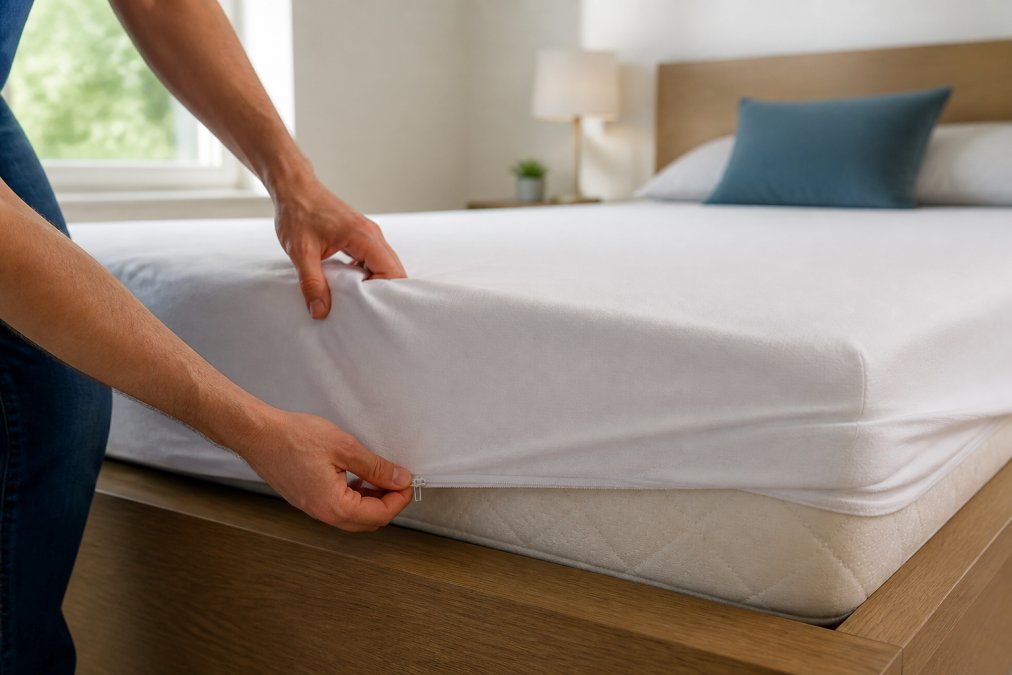
For short-term rental use, look for these specifications:
| Feature | Why It Matters |
|---|---|
| Bite-proof fabric | Prevents bed bugs from feeding through the cover |
| Zipper with a locking end-stop | Eliminates the gap at the zipper closure |
| Full six-sided coverage | Covers top, bottom, and all four sides |
| Waterproof layer | Protects against spills and extends mattress life |
| Machine-washable | Practical for high-turnover laundry protocols |
| Certified lab-tested | Confirms the encasement meets pest control standards |
Box springs need encasements too. Box springs are the most common primary harborage site in a bed bug infestation. Encasing both the mattress and box spring eliminates the most likely nesting location in the unit.
Replace encasements annually or immediately if the zipper, seams, or fabric show wear.
Bed Bug Inspection Checklist for Hosts
A post-stay inspection is only useful if it is systematic. Bed bugs are small, fast-moving, and prefer tight, dark spaces. Hosts need a structured protocol that covers the locations where infestations actually start.
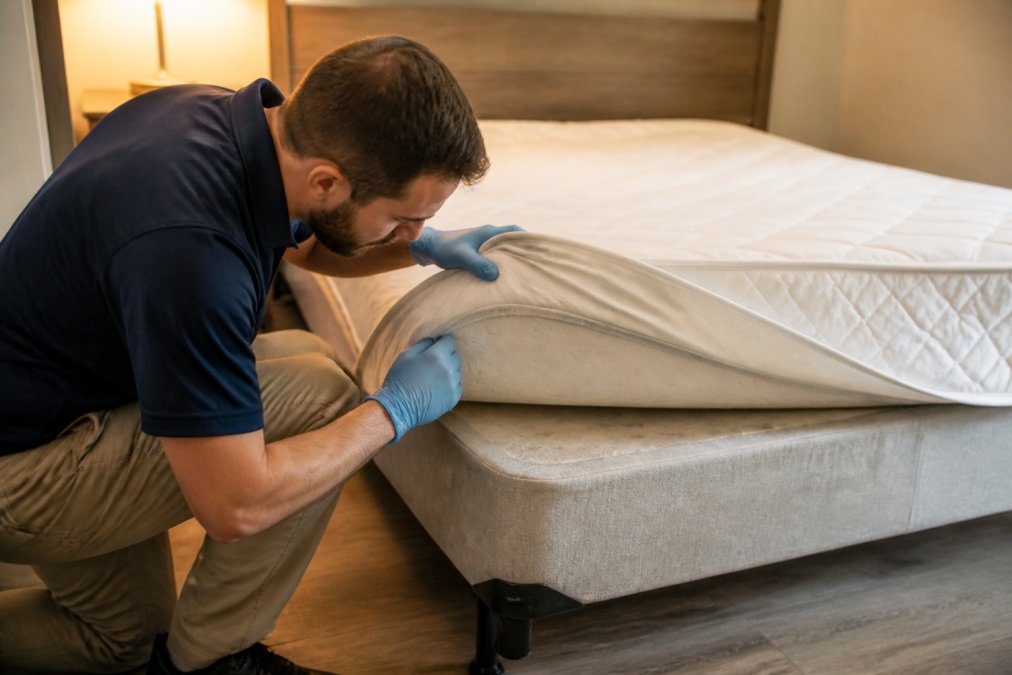
Post-Stay Inspection: What to Check After Every Guest
Run this checklist after every checkout before the next guest arrives. The entire process takes 10-15 minutes.
Bed and sleep surfaces:
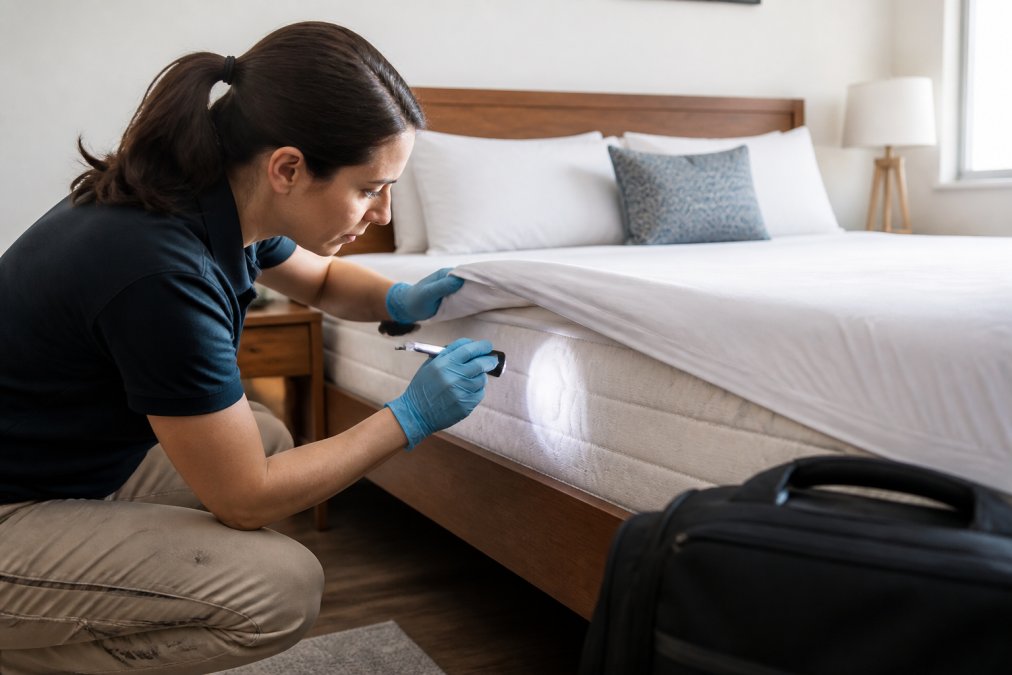
- Lift mattress and inspect all seams, tufts, and piping for dark spots, shed skins, or live bugs
- Remove and inspect the box spring, checking the fabric underside and all wooden frame joints
- Check the bed frame, especially joints, screw holes, and any cracks in wood
- Inspect the headboard front, back, and mounting hardware
Soft furnishings:
- Check all upholstered furniture seams, cushion undersides, and skirts
- Inspect behind picture frames and mirrors
- Check curtain folds and rod hardware
Room perimeter:
- Run a flashlight along baseboards, looking for fecal spots or shed skins
- Check electrical outlet covers and switch plates
- Inspect nightstand drawers, particularly inside corners and back panels
Signs to look for:
- Reddish-brown fecal stains (about the size of a pen dot)
- Pale yellow shed skins at any life stage
- Live bugs, which are flat, oval, and approximately 5mm in length
- A sweet, musty odor in severe infestations
Install bed bug interceptors under each bed leg. These passive monitors trap bugs attempting to climb onto the bed and provide early warning. Check them weekly.
How to Handle Bed Bug Complaints in Rentals
Most hosts handle bed bug complaints reactively and poorly. The correct approach is immediate, documented, and professional.
Guest-Facing Communication Templates
Speed and tone matter. Guests who feel heard and treated fairly are far less likely to post damaging public reviews.
Template 1: Immediate response to a complaint
"Thank you for contacting us about this. We take reports of this nature very seriously and are acting immediately. We have arranged for a professional inspection of the unit within 24 hours. In the meantime, we are pausing bookings for this property. We will follow up with you directly once we have results and will discuss next steps, including any remediation you may need for your belongings. Please keep any items that were in the room bagged and sealed until you hear from us."
Template 2: Post-inspection update (no infestation confirmed)
"Our professional inspection has been completed. No evidence of bed bugs was found in the unit. We are happy to share the inspection report with you. We take guest comfort seriously and have taken additional precautionary steps as a result of your report. Please let us know how we can assist you further."
Template 3: Post-inspection update (infestation confirmed)
"Our professional inspection has confirmed the presence of bed bugs in the unit. We sincerely apologize for this experience. We are arranging full professional treatment immediately and the property will not be rebooked until clearance is confirmed. We would like to discuss compensation and support for any belongings that may have been affected. Please contact us at your earliest convenience."
Liability, Disclosure, and Host Legal Responsibilities
Bed bug liability for short-term rental hosts is governed by provincial tenancy and consumer protection frameworks. In British Columbia, the Residential Tenancy Act and related BC government guidance on landlord obligations establishes that landlords and property operators have a duty to maintain premises in a condition that does not endanger the health or safety of occupants.
For short-term rental operators, the obligation to disclose a known infestation is both legal and ethical. Operating a property with a known active infestation without disclosure exposes hosts to claims under consumer protection legislation.
Practically, this means:
- Document every complaint, inspection, and treatment with dates and professional reports
- Do not rebook a unit between a complaint and a professional clearance inspection
- Retain treatment records for a minimum of two years
- Review your short-term rental platform's host protection policies regarding pest incidents
Insurance coverage for bed bug infestations is not standard in most homeowner or landlord policies. Hosts should verify coverage explicitly with their insurer before an incident occurs.
Non-Toxic vs. Chemical Bed Bug Prevention Methods
Effective bed bug management for short-term rentals typically uses both non-toxic and chemical methods, applied to different parts of the problem.
Non-toxic methods are appropriate for ongoing preventative maintenance:
- Mattress and box spring encasements (physical barrier)
- Bed bug interceptors under bed legs (passive monitoring)
- High-heat laundry (thermal kill at all life stages)
- Steam cleaning of furniture, baseboards, and mattress seams
- Vacuuming with a HEPA-filter vacuum along seams and crevices
- Diatomaceous earth applied to wall voids and behind electrical plates
Chemical methods are appropriate when a confirmed infestation requires active extermination:
- Residual insecticide sprays applied to harborage sites and travel paths
- Dust formulations for wall voids and electrical outlets
- Chemical barrier treatments around bed legs and furniture
Non-toxic methods are excellent for prevention and early-stage mitigation. Chemical barriers are more appropriate for active infestations or as part of a professional treatment protocol. Hosts should not attempt chemical treatment themselves. Misapplied pesticides can create resistance in bed bug populations and may violate the Pest Control Products Act administered by Health Canada.
When to Call a Professional Exterminator for Bed Bug Prevention
Call a professional when:
- A guest reports bites or visual evidence and you cannot rule out bed bugs from your own inspection
- Your inspection reveals any of the signs listed in the checklist above
- You are purchasing or taking over a property with unknown pest history
- You want a baseline professional inspection before your first rental season
- You have treated the property yourself and still see evidence of activity
A professional inspection at the start of each rental season, and after any complaint, is a defensible operational practice. It creates documentation, catches problems early, and demonstrates due diligence if a liability question ever arises.
Meridian Bed Bug Treatment provides specialized bed bug treatment for short-term rentals, hotels, and multi-unit properties across Vancouver and the Lower Mainland. Specialized providers focus exclusively on bed bugs, which means faster diagnosis, more targeted treatment protocols, and a clearer path to confirmed clearance. For hosts who need rapid turnaround to protect bookings, a specialized provider with experience in rental properties is the right call. The Canadian Pest Management Association's guidelines on professional pest control standards outlines what to expect from a qualified provider, including documentation practices and treatment verification.
Short-term rental hosts face a specific and manageable set of bed bug risks, but managing them requires a system, not a reaction. The combination of structural prevention, consistent inspection protocols, and rapid professional response when needed is what separates hosts who lose bookings to infestations from those who never have to. Meridian Bed Bug Treatment offers specialized bed bug treatment tailored to short-term rentals and multi-unit properties, with the speed and documentation that hosts actually need. Contact the Meridian Bed Bug Treatment team to arrange an inspection or discuss a prevention protocol for your property.
Frequently Asked Questions
How likely is it for guests to bring bed bugs into a short-term rental?
Bed bugs travel in luggage, clothing, and personal items, making short-term rentals particularly vulnerable. Every new guest represents a potential entry point, especially travelers who have recently stayed in hotels or other rentals. High guest turnover amplifies the risk compared to long-term tenancies. Consistent bed bug prevention measures, encasements, interceptors, post-stay inspections, and prompt complaint response, are the most reliable way to keep an infestation from taking hold.
Are mattress encasements actually effective for bed bug prevention in rentals?
Yes. A properly fitted, lab-tested mattress encasement eliminates the seams and crevices where bed bugs prefer to hide and lay eggs. It also traps any bugs already present, preventing them from feeding and eventually killing them. For short-term rentals, encasements are one of the highest-value preventative investments because they protect expensive mattresses and make post-stay inspections significantly faster. Choose encasements rated specifically for bed bug mitigation, not generic waterproof covers.
What are a host's legal responsibilities if a guest reports bed bugs?
Canadian residential tenancy legislation requires landlords and hosts to maintain properties in a safe, habitable condition. Under provincial legislation such as British Columbia's Residential Tenancy Act, landlords must address pest infestations promptly. For short-term rental platforms, most terms of service also require hosts to disclose known pest issues. Failing to act after a credible complaint can expose a host to liability for guest losses, refund claims, and potential regulatory action. Document every complaint and every remediation step taken.
How often should a short-term rental be inspected for bed bugs?
A brief visual inspection should occur after every guest checkout as part of your standard turnover routine. A thorough inspection, checking mattress seams, box springs, headboards, baseboards, and upholstered furniture, should happen at least once per month during peak booking periods. If your property has a history of infestation or sits in a high-density building, schedule a professional inspection every three to six months. Bed bug monitors and interceptors placed under bed legs provide continuous passive monitoring between inspections.
What steps should a host take immediately after a guest reports bed bugs?
Stop accepting new bookings for the affected unit right away. Acknowledge the guest's report in writing, apologize, and explain your next steps, this limits liability and demonstrates good faith. Arrange a professional inspection within 24 to 48 hours. Bag and launder all linens at high heat. Do not move furniture between rooms, as this spreads an infestation. Once extermination is confirmed complete, document the all-clear before reopening. Keep all communication records in case of a future dispute.
How do bed bugs spread between units in a multi-unit rental property?
Bed bugs move through shared wall voids, electrical conduits, plumbing chases, and gaps around baseboards. In multi-unit buildings, an infestation in one suite can reach adjacent units within weeks if untreated. Preventative maintenance, sealing cracks, installing kick plates, and applying residual treatments along shared walls, significantly slows spread. Property managers should treat adjacent units proactively when one unit is confirmed infested, rather than waiting for complaints from neighbors.
Can non-toxic methods alone prevent bed bugs in a short-term rental?
Non-toxic methods, mattress encasements, bed bug interceptors, high-heat laundering, steam cleaning, and vacuuming, form a strong preventative foundation and are effective at reducing risk. However, once an active infestation is established, non-toxic methods alone rarely achieve full extermination. Thermal treatment (whole-room heat) is a non-chemical option that kills all life stages, but it requires professional equipment. For most hosts, the practical approach is non-toxic prevention combined with professional chemical or thermal treatment when an infestation is confirmed.
This article was written using GrandRanker