 how-to
Fast Bed Bug Solutions for Hotels: A 2026 Action Plan
Table of Contents
- Why Hotels Need a Rapid Bed Bug Response Plan
- Step 1: Confirm the Infestation with a Bed Bug Inspection Checklist for Hotel Staff
- Step 2: Isolate the Room and Prevent Cross-Contamination
- Step 3: Choose the Fastest Treatment Method: Heat vs. Chemical
- How Long Does Professional Bed Bug Treatment Take?
- Step 4: Implement Integrated Pest Management for Hotels
- Step 5: Communicate with Guests and Manage Liability
- Preventative Monitoring and Staff Training
- Frequently Asked Questions
Last Updated: September 5, 2026
Why Hotels Need a Rapid Bed Bug Response Plan
A single bed bug sighting can derail a hotel's reputation faster than almost any other operational issue. Every hour the room stays open or the issue goes unverified increases the risk of the infestation spreading to adjacent rooms. Fast bed bug solutions for hotels protect your occupancy rates, online reviews, and liability profile.
Bed bugs are a hospitality-wide challenge, not a reflection of poor housekeeping. Hotels see high guest turnover, which means new opportunities for these pests to hitchhike in on luggage and clothing. At Meridian Bed Bug Treatment, we specialize in helping Vancouver and Lower Mainland properties respond quickly and discreetly.
Below is a five-step response protocol designed for speed, plus the monitoring and training systems that stop infestations before they start. Most response plans get this wrong: they treat bed bugs as a cleaning issue rather than a containment and logistics issue.
Step 1: Confirm the Infestation with a Bed Bug Inspection Checklist for Hotel Staff
A rapid response starts with accurate identification. A bed bug inspection checklist for hotel staff ensures that housekeeping and front desk teams follow a consistent, thorough protocol.
When a guest reports a potential issue, staff should follow this checklist:
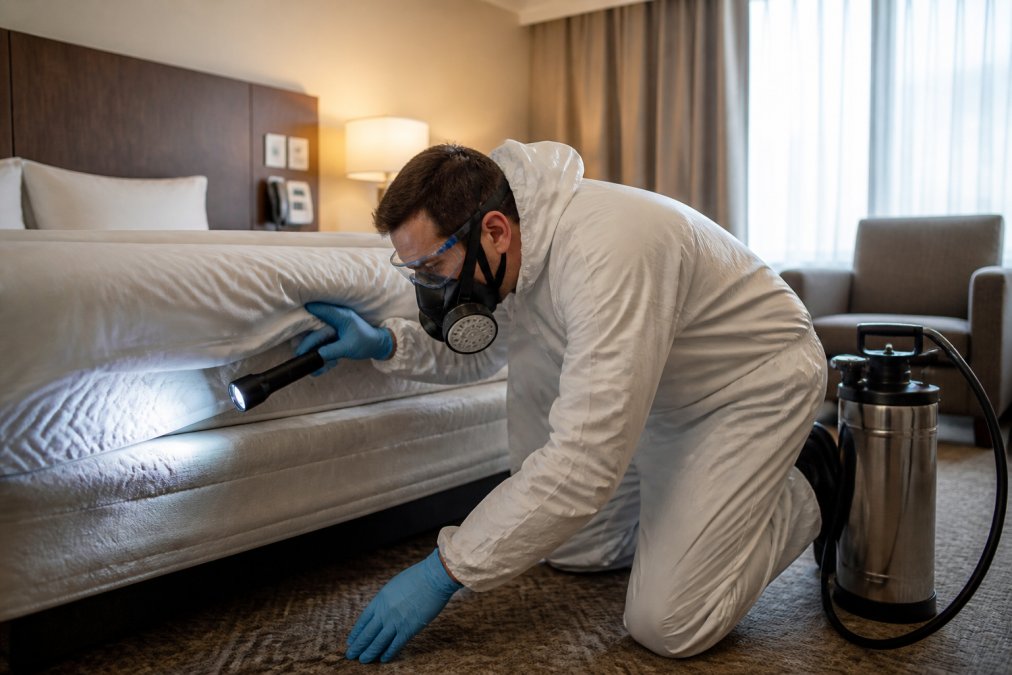
- Inspect the mattress and box spring: Check seams, tufts, and the underside using a flashlight. Look for live bugs, shed skins, or rust-colored fecal spots.
- Check the headboard and bed frame: These are prime harborage areas. Remove the headboard if possible and inspect all joints and screw holes.
- Scan upholstered furniture: Examine chairs, sofas, and curtains, focusing on seams and folds.
- Look for eggs and nymphs: These are much smaller than adult bed bugs and often require a magnifying glass to spot.
- Document findings: Take photos and log the exact location of any evidence. This record is critical for the pest control professional and for liability purposes.
Step 2: Isolate the Room and Prevent Cross-Contamination
Once an infestation is confirmed, your immediate priority is containment. Cross-contamination is the single biggest reason infestations spread, and it usually happens through housekeeping equipment and staff movement.
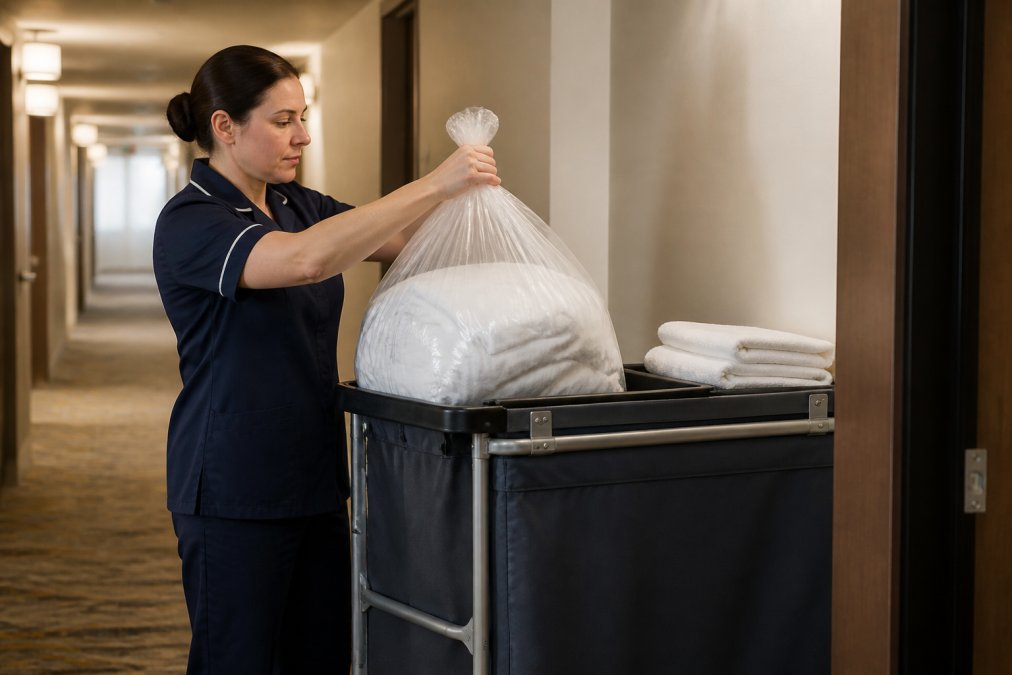
Post a clear sign on the door and place a physical barrier, such as a door stop, to prevent automatic access. All linens, towels, and bedding from the affected room must be removed in sealed plastic bags and tagged for high-heat drying. Do not sort these items in the regular laundry area.
The room itself needs a thorough vacuuming to remove any wandering bugs and eggs before treatment begins. Focus on baseboards, carpet edges, and the seams of upholstered furniture. Dispose of the vacuum bag in a sealed outdoor container immediately after use.
Step 3: Choose the Fastest Treatment Method: Heat vs. Chemical
When speed is the priority, the treatment method matters more than any other decision. Thermal remediation, or whole-room heat treatment, is the fastest method available for hotels because it kills all life stages of bed bugs, including eggs, in a single session.
Heat treatment works by raising the room's internal temperature to a lethal level for bed bugs and maintaining it for several hours. Chemical treatments typically require multiple visits and a longer waiting period before the room is safe for guests.
However, heat is not always the right first choice. It requires specialized equipment and careful preparation to ensure the heat penetrates all harborage areas. Chemical treatments, including residual treatments and insecticidal dusts, can be effective for targeted spot treatments but are slower and may face issues with chemical resistance.
| Treatment Method | Speed to Room Re-Entry | Effectiveness on Eggs | Residue |
|---|---|---|---|
| Whole-Room Heat | 24 hours | High | None |
| Chemical Spray | 2-3 visits over weeks | Moderate (requires reapplication) | Yes |
| Steam + Chemical Combo | 48-72 hours | High | Minimal |
How Long Does Professional Bed Bug Treatment Take?
How long professional bed bug treatment takes depends on the method and the severity of the infestation. A whole-room heat treatment typically requires 6 to 8 hours of active heating plus a few hours for setup and post-treatment inspection, allowing the room to be released the next day (the EPA).
Chemical treatments are a longer commitment. A professional will usually need to make an initial application, wait 7 to 14 days for eggs to hatch, and then return for a second application to target the newly emerged nymphs. This cycle can take two to three weeks before the room is cleared for occupancy.
For fast bed bug solutions for hotels, heat treatment is almost always the recommended path when a room must be turned around quickly. The trade-off is cost, which is generally higher per treatment than a chemical application. But when you factor in lost room revenue and potential guest compensation, the faster method often proves more economical.
Step 4: Implement Integrated Pest Management for Hotels
Killing the existing bed bugs is only half the battle. Integrated pest management for hotels combines reactive control with proactive monitoring and prevention strategies to stop future infestations.
It includes regular inspections of high-risk rooms, the strategic placement of monitoring devices like bed bug interceptors, and staff training on what to look for during routine housekeeping. The goal is to catch an infestation while it is still limited to a single bug or a few eggs.
A key component of this system is documentation. Every inspection, whether routine or reactive, should be logged. This data helps you identify patterns, such as which rooms or floors have recurring issues, and allows you to take preventative action before a problem escalates.
Step 5: Communicate with Guests and Manage Liability
How you handle guest communication during a bed bug incident can significantly impact your legal liability and your property's reputation. Transparency is critical, but so is discretion. Most guides stop at 'apologize and move the guest', but the real business risk lies in the legal and financial framework you establish before, during, and after an incident.
Immediate Guest Response Protocol
When a guest reports a potential bed bug issue, your front desk team should respond with empathy and a clear action plan. Offer to move the guest to a room in a different area of the property, preferably on a different floor, and arrange for their luggage to be inspected and, if necessary, treated. Document every interaction and the steps you take to resolve the issue.
The Legal Framework: Occupier's Liability and Negligence
In Canada, a hotel's duty of care to guests falls under occupier's liability legislation, which varies by province (e.g., the Occupiers Liability Act in British Columbia and Ontario) (canlii.org). A guest claiming damages from bed bug bites must typically prove that the hotel knew or ought to have known about the infestation and failed to take reasonable steps to address it. A documented, rapid-response protocol is your primary defense against a negligence claim.
Compensation and Refund Protocols
A common pattern in the hospitality industry is to offer a full refund for the affected night plus a discount on a future stay. However, a refund alone does not extinguish liability. For a confirmed bite case, many properties also cover the guest's out-of-pocket expenses for laundry, replacement of heavily contaminated items, and any medical consultation. Before offering compensation, require the guest to complete a written incident form that includes the date, room number, description of the issue, and any photos they have. Do not admit fault in writing; instead, state that you are 'extending a courtesy' while you investigate.
Documentation as Your Legal Shield
Every step of your response must be logged: the initial report time, the inspection findings, the isolation of the room, the treatment method and date, and the final certification. This log creates a timeline that proves your response was fast and systematic. If a guest escalates to a legal claim months later, your documentation is the evidence that you met the standard of care.
Notification of Adjacent and Former Guests
Your liability extends beyond the affected guest. If bed bugs are confirmed, you have a duty to prevent them from spreading to other guests. This means checking adjacent rooms and notifying any guests who have already checked out of nearby rooms so they can take preventative measures with their belongings. In practice, this notification should be a discreet phone call or email, not a public announcement. Offer these guests a complimentary inspection of their luggage if they are still on property.
Insurance and Claim Reporting
Most commercial property insurance policies cover pest-related incidents, but only if you report them promptly. Contact your insurance broker as soon as an infestation is confirmed to understand your coverage for guest compensation and business interruption. Delaying this report can void coverage. Keep a copy of your insurance policy's pest exclusion clause on file.
Preventative Monitoring and Staff Training
The most effective bed bug solution is the one you never need. Preventative monitoring and staff training are the cornerstones of a long-term strategy that protects your property's reputation and bottom line. The missing piece in most guides is the 'who' and the 'verification', how you choose a professional partner and how you certify a room is clear before it goes back on the market.
Staff Training: Beyond the Basics
Staff training should be conducted regularly, not just once at onboarding. Housekeeping teams should understand the bed bug life cycle, from eggs to nymphs to adults, and know how to identify the signs of an infestation during their daily room turnover. They should also be trained on the proper protocol for isolating a room and reporting their findings to management without alarming other guests.
A common pattern in high-performing properties is to run a 15-minute refresher on bed bug identification at every monthly staff meeting, not just once a year. This keeps the signs fresh in memory, the rust-colored fecal spots, the shed skins, the tiny white eggs, so that a sighting during a 30-minute room turnover is actually noticed.
Post-Treatment Room Certification: The Missing Verification Step
After a professional treatment, the room is not automatically safe to re-rent. A post-treatment room certification process is a documented, final inspection that verifies the treatment was effective and the room is clear of all life stages. This is a gap in most operational guides, yet it is the single most important step to avoid a recurring infestation and a second guest complaint.
The certification should be a two-part process. First, the pest control professional should provide a written treatment report that includes the method used, the target temperatures or chemical applications, and their own post-treatment inspection findings. Second, a trained staff member, not the same person who cleaned the room, should conduct an independent visual inspection using a documented checklist. This checklist should include the mattress seams, the headboard, the baseboards, and the upholstered furniture. Only when both the professional report and the internal inspection are complete and filed should the room be released to the front desk for re-booking.
Vendor Vetting: Choosing the Right Professional Partner
Not all pest control providers are equal when it comes to bed bugs. Many generalist exterminators are skilled at ants and rodents but lack the specialized equipment and training for whole-room heat remediation. When vetting a provider, ask these specific questions:
- Do you use whole-room heat treatment, and what is your success rate on the first pass? Most specialized firms report a 95% or higher first-pass success rate with heat.
- Do you provide a written, itemized treatment report? You need this for your liability file and for your own certification process.
- What is your response time for a hotel emergency? A provider that cannot be on-site within 24 hours is not a partner for a fast-turnaround property.
- Do you offer a warranty or a follow-up inspection? A standard warranty is 30 to 90 days, during which the provider will return at no charge if live bugs are found.
Proactive Monitoring Systems
Proactive monitoring systems, such as the automated trapping technology used by some hospitality programs, can provide real-time alerts to housekeeping staff. These systems, which integrate into furniture legs, eliminate the need for constant manual inspections and offer a visible safety certification for guests. Combining staff vigilance with technology is the gold standard.
The Cost of Prevention vs. The Cost of an Outbreak
A proactive monitoring and training program costs a fraction of a single multi-room outbreak. Consider the math: a single heat treatment for one room typically costs between $1,000 and $2,500 (extension.org), and if the infestation spreads to adjacent rooms, that cost multiplies. Add in lost room revenue for each night the rooms are out of service, plus potential guest compensation, and a single incident can easily exceed $10,000. A year of proactive monitoring devices and monthly staff training is often less than the cost of one single-room treatment.
Frequently Asked Questions
How do hotels get rid of bed bugs fast?
Hotels get rid of bed bugs fastest by combining whole-room heat treatment with targeted chemical residuals. Professional heat treatment can eliminate all life stages, including eggs, in a single day, allowing the room to be re-occupied within 24 hours. This is faster than chemical-only approaches, which often require multiple visits and longer re-entry times. A professional pest control provider will confirm the infestation first, then recommend the most rapid method for your specific situation.
How do hotels get infested with bed bugs?
Bed bugs are expert hitchhikers. Hotels typically get infestations when guests unknowingly bring them in on luggage, clothing, or personal items. Because bed bugs are small and nocturnal, a guest may not notice them until a bite reaction occurs. The pests can then crawl from an infested room to adjacent rooms through wall voids, electrical outlets, or along baseboards, spreading the problem quickly if not contained with a proper response plan.
What should hotel staff do if they suspect bed bugs in a room?
Staff should follow a bed bug inspection checklist for hotel staff. Immediately remove all linens and place them in sealed plastic bags for high-heat washing. Do not move furniture to other rooms. Visually inspect the mattress seams, box spring, headboard, and baseboards for live bugs, shed skins, or dark fecal spots. Isolate the room by placing a note on the door and alerting management to schedule a professional inspection before any new guest is checked in.
How long does a professional bed bug treatment take for a hotel room?
A professional heat treatment for a single hotel room typically takes four to eight hours of active heating, plus setup and cool-down time. This means a room can often be treated and ready for guests within 24 hours. Chemical treatments may require a shorter initial application but often need a second follow-up visit two weeks later to catch newly hatched nymphs, extending the total time before the room is considered fully clear.
This article was written using GrandRanker


