 how-to
Signs of Bed Bugs in Mattresses: A Detection Guide
Table of Contents
- What You'll Need Before You Inspect
- Visual Signs of Bed Bugs in Mattresses
- Identifying Bed Bug Fecal Spots on Mattress Seams
- How to Check for Bed Bugs in Box Springs
- Recognizing Bite Patterns and Allergic Reactions
- Step-by-Step Mattress Inspection Process
- Common False Positives and What to Ignore
- When to Call Professional Bed Bug Inspection Services
- Frequently Asked Questions
Last Updated: September 2, 2026
What You'll Need Before You Inspect
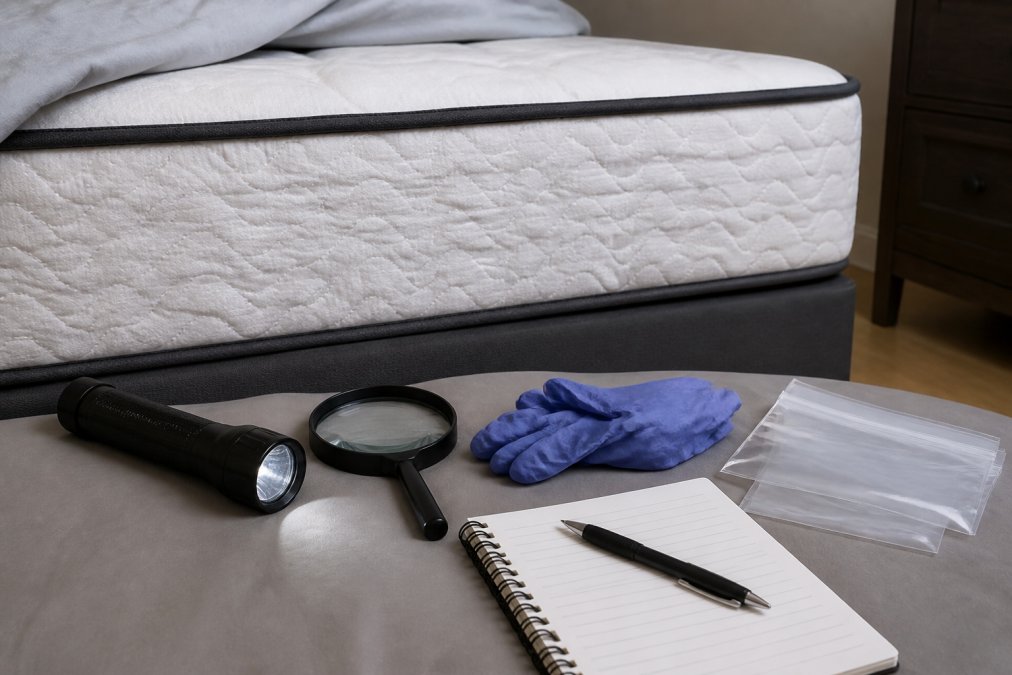
Before you start searching your mattress for bed bugs, gather the right tools. A flashlight with a bright beam is essential, bed bugs hide in dark crevices and seams where natural light won't reach. A magnifying glass helps you spot small nymphs and fecal matter that are easy to miss with the naked eye. Wear disposable gloves to protect yourself and avoid transferring any insects to other areas of your home. Have a small container or plastic bag ready to collect samples if you find anything suspicious. A notebook or phone camera lets you document what you see, which is helpful if you decide to call in professional bed bug inspection services later.
Set aside at least 30 to 45 minutes for a thorough inspection (the EPA). Rushing through this process means you'll miss critical evidence. Make sure your bedroom is well-lit and that you have clear access to all sides of the mattress. If you share a bed, inspect it when your partner isn't there, you need unobstructed access to every surface, seam, and edge.
Visual Signs of Bed Bugs in Mattresses
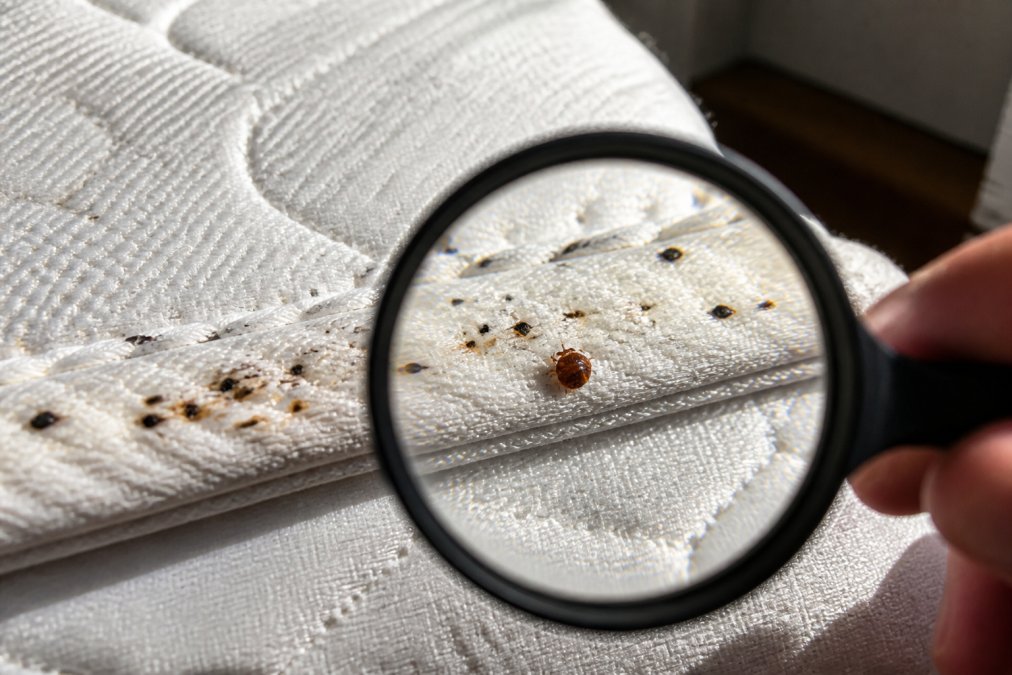
The most obvious visual sign of a bed bug infestation is seeing the insects themselves. Adult bed bugs are reddish-brown, flat, and about the size of an apple seed, roughly 4 to 5 millimetres long (the CDC). They move quickly and hide during the day, so spotting a live one is less common than finding evidence of their presence. Nymphs, which are immature bed bugs, are smaller and paler, ranging from cream-coloured to light tan. They're harder to see but just as much a sign of infestation.
Live bed bugs and nymphs
If you find a live bed bug or nymph on your mattress, you've confirmed an active infestation. Live insects are typically found near the seams, piping, and edges where they rest during the day. They may also be visible just before dawn when they return from feeding. Nymphs are present at every stage of an infestation and indicate that bed bugs are reproducing in your mattress. One live nymph means there are likely many more hiding in crevices you haven't checked yet.
Rusty stains and blood smears
Rusty or reddish stains on your mattress are often dried blood from bed bugs that have fed on you. These stains appear where insects have been crushed, either by you rolling over them in your sleep or by accidental pressure. Blood smears typically show up on the mattress surface, seams, and piping. The colour ranges from dark brown to rust-red depending on how long the blood has been there. If you see these stains clustered in one area, that's a hot spot where bed bugs are actively feeding and resting.
Dark specks and fecal matter
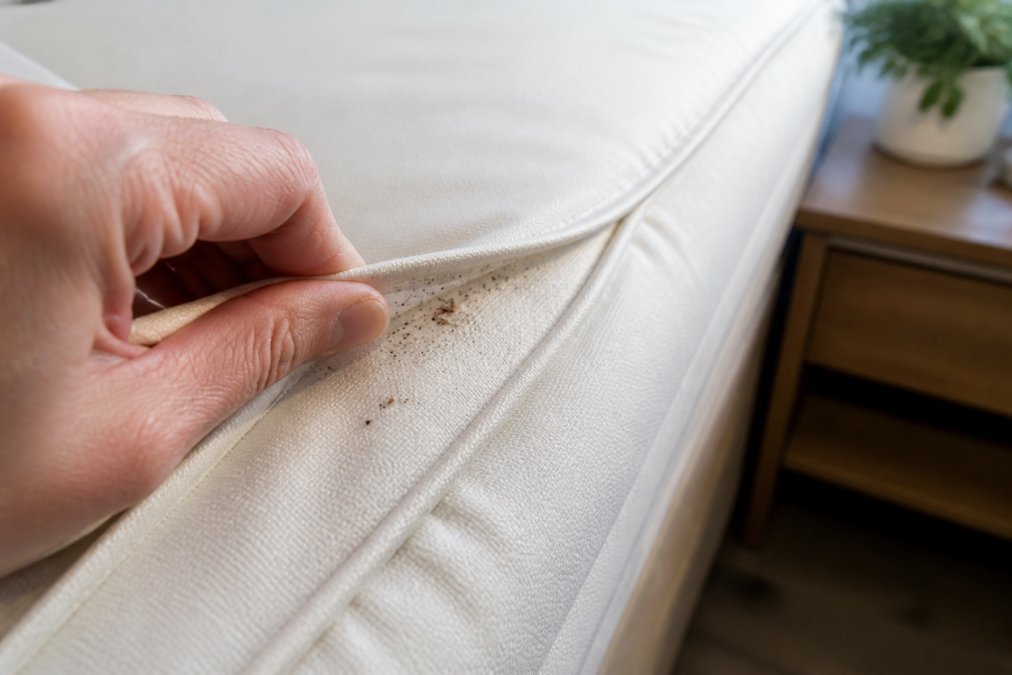
Dark specks on mattress seams are bed bug droppings, also called fecal matter. These tiny black or dark brown dots are smaller than a pinhead and often appear in clusters. Fecal spots accumulate where bed bugs rest and feed, so finding them on your mattress seams is a strong indicator of infestation. Unlike dust or debris, fecal matter doesn't brush away easily, it's embedded in the fabric. If you run a damp cloth over the spots and they smudge or leave a dark residue, that confirms they're organic matter from bed bugs.
Identifying Bed Bug Fecal Spots on Mattress Seams
Bed bug fecal spots are concentrated along mattress seams because that's where the insects spend most of their time. The seams provide shelter and easy access to their host at night. Fecal matter accumulates in these tight spaces, creating visible clusters of dark specks. Learning to distinguish fecal spots from other debris is crucial because mattresses naturally collect dust, lint, and fibres that can look similar at first glance.
The key difference is location and pattern. Fecal spots appear in tight clusters along seams, piping, and edges, not randomly scattered across the mattress surface. They're also darker and more concentrated than dust. If you see a line of dark specks running along a seam, especially near where your body rests, that's almost certainly bed bug fecal matter. The spots don't brush away like dust; they're stuck to the fabric.
When you find fecal spots on your mattress, it means bed bugs have been feeding and hiding in that exact location. This is the strongest evidence of an active infestation. Even if you don't see live insects, fecal spots confirm that bed bugs are present and reproducing. At this point, professional bed bug inspection services become important, fecal evidence alone warrants a thorough assessment by someone trained to identify all stages of infestation.
How to Check for Bed Bugs in Box Springs
Box springs are a favourite hiding spot for bed bugs because they offer multiple layers of fabric and wood where insects can hide undisturbed. The underside of a box spring is especially vulnerable because it's rarely inspected and provides perfect shelter. Start by examining the fabric covering the bottom of the box spring. Look for the same signs you'd find on a mattress: rusty stains, fecal spots, and live insects. Use your flashlight to illuminate dark corners and crevices.
Next, check the seams where the fabric is sewn to the wooden frame. Bed bugs love these seams because they're tight and protected. Run your magnifying glass along every seam on both the top and bottom of the box spring. Look for clusters of dark specks, blood smears, and any movement. If the fabric is torn or separated from the frame, peer inside, bed bugs often hide in these gaps.
Pay special attention to the corners and edges of the box spring. These areas are less frequently disturbed and provide ideal hiding spots. Bed bugs can also hide inside the wooden frame itself if there are cracks or gaps. If your box spring has a zipper cover, open it carefully and inspect the interior. This is where you're most likely to find a concentrated population of bed bugs and their evidence.
Recognizing Bite Patterns and Allergic Reactions
Bed bug bites appear as small, itchy welts on your skin, usually in clusters or lines. The bites are often found on exposed areas like your arms, legs, neck, and face. Unlike mosquito bites, bed bug bites frequently appear in a linear or clustered pattern, sometimes called "breakfast, lunch, and dinner" because the insects feed multiple times in one night (the CDC). The bites are typically red and raised, with a darker centre. They're intensely itchy and can last for days or even weeks.
Not everyone reacts the same way to bed bug bites. Some people develop severe allergic reactions with large welts, blistering, and significant swelling. Others have minimal reactions and may not notice bites at all. This variation in allergic response makes it harder to diagnose an infestation based on bites alone. You could have bed bugs without realizing it if you're not prone to visible reactions.
The timing of bites is telling. Bed bugs feed at night when you're asleep, so new bites typically appear in the morning or after a night away from your home. If you notice new bite clusters appearing regularly on your body, especially in the same locations, that's a sign of an active infestation. Combine this observation with a physical inspection of your mattress to confirm the presence of bed bugs. Bites alone aren't conclusive proof, you need to find physical evidence on the mattress or box spring.
Step-by-Step Mattress Inspection Process
A systematic approach to mattress inspection ensures you don't miss evidence of infestation. This process takes 30 to 45 minutes but is essential for accurate detection. Follow these steps in order to cover every potential hiding spot.
Step 1: Prepare your inspection area
Clear the area around your bed so you have full access to all sides of the mattress. Remove all bedding, pillows, and blankets. Place them in a separate room or sealed bag, don't leave them on the floor where insects might escape. Turn on all lights in the bedroom and use your flashlight to supplement natural light. Have your magnifying glass, gloves, notebook, and collection container within arm's reach. This preparation prevents bed bugs from escaping during your inspection and ensures you can see everything clearly.
Step 2: Examine the mattress surface and seams
Start with the top surface of the mattress. Look for live insects, fecal spots, blood stains, and shed skins. Pay close attention to the seams that run around the perimeter and across the middle of the mattress. These seams are where bed bugs congregate. Use your magnifying glass to inspect the piping and edges. Check every inch, bed bugs can hide in the smallest crevices. Document anything you find with photos or notes.
Step 3: Check the mattress underside
Flip the mattress or rotate it so you can inspect the bottom. This side is often neglected, making it a prime hiding spot for bed bugs. Examine the fabric covering, seams, and any tears or holes. Look for the same signs: dark specks, rusty stains, live insects, and shed exoskeletons. Use your flashlight to illuminate dark areas. The underside is where you're most likely to find concentrated populations because it's undisturbed.
Step 4: Inspect the bed frame and headboard
Bed bugs don't stay confined to the mattress, they also hide in the bed frame and headboard. Examine every joint, crevice, and screw hole in the wooden or metal frame. Look for fecal spots and blood smears on the frame where it contacts the mattress. Check the headboard thoroughly, especially if it's upholstered. Inspect any cracks in wood or gaps where the frame connects. This step is easy to skip, but bed bugs often hide in the frame when the mattress is inspected.
Common False Positives and What to Ignore
When you're searching for signs of bed bugs, it's easy to mistake other things for evidence of infestation. Understanding what to ignore prevents unnecessary panic and false alarms. Dust, lint, and debris naturally accumulate in mattress seams. These particles are lighter in colour and scattered randomly, unlike the concentrated clusters of bed bug fecal matter. Lint doesn't stick to fabric the way fecal spots do, it brushes away easily.
Mould or mildew can appear as dark spots on mattresses, especially in humid environments. However, mould spots are usually larger, softer, and have a musty smell. Bed bug fecal spots are tiny, hard, and clustered along seams. If you're unsure, use a damp cloth to test the spot. Fecal matter will smudge slightly but remain embedded; mould will spread or wash away.
Other small insects can be mistaken for bed bugs. Dust mites, carpet beetles, and booklice are common household pests that might appear on or near mattresses. Dust mites are microscopic and invisible to the naked eye. Carpet beetles are larger and have a distinctive spotted pattern. Booklice are tiny and pale. None of these insects leave the same pattern of evidence as bed bugs, rusty stains combined with fecal spots and live insects.
Pet hair, food crumbs, and stains from spills can also cause false alarms. These are easily distinguished from bed bug evidence by their appearance and location. Food debris is usually visible and isolated; bed bug evidence is concentrated in seams and crevices. If you find only one or two suspicious spots with no other signs of infestation, it's likely a false positive. However, if you find multiple types of evidence, fecal spots, stains, and live insects, in the same location, infestation is confirmed.
| Sign | Bed Bug Evidence | False Positive | How to Tell |
|---|---|---|---|
| Dark specks | Clustered in seams, tiny, hard | Dust or lint | Fecal spots don't brush away; dust does |
| Stains | Rusty-red, on seams and surface | Mould or food | Bed bug stains are small; mould smells musty |
| Live insects | Flat, reddish-brown, 4-5mm | Dust mites or beetles | Bed bugs hide in seams; other insects are visible elsewhere |
| Shed skins | Pale yellow, paper-thin, in clusters | Debris | Exoskeletons are intact and shaped like insects |
When to Call Professional Bed Bug Inspection Services
If your inspection reveals any signs of bed bug infestation, live insects, fecal spots, rusty stains, or exoskeletons, it's time to call professional bed bug inspection services. While DIY inspection can confirm the presence of bed bugs, professional inspectors have the training and equipment to assess the full extent of infestation. They can identify all hiding spots you might have missed and determine whether the infestation is isolated to your mattress or spread throughout your home.
Professional inspectors use specialized detection tools to locate insects in areas you can't easily access. They'll inspect not just your mattress but also furniture, walls, electrical outlets, and other potential hiding spots. This comprehensive assessment is crucial for developing an effective treatment plan. Attempting to treat an infestation without knowing its full scope often fails because you'll miss hidden populations of bed bugs.
At Meridian Bed Bug Treatment, we provide thorough professional bed bug inspection services for homes, condos, apartments, hotels, and short-term rentals across Vancouver and the Lower Mainland. Our specialists identify all signs of infestation and develop customized treatment plans based on what we find. If your inspection confirms bed bugs, professional treatment is almost always more effective than DIY approaches. The cost of professional services depends on the scope of the infestation and the specific treatment required. Contact us for a quote.
Don't delay calling for professional help. Bed bugs reproduce quickly, and a small infestation can become severe within weeks. The sooner you address the problem, the easier and less expensive it is to resolve. Early detection through careful mattress inspection, followed by prompt professional treatment, gives you the best chance of eliminating bed bugs completely.
Finding signs of bed bugs in your mattress is stressful, but early detection makes treatment far more effective. If your inspection reveals evidence of infestation, whether it's fecal spots, rusty stains, or live insects, professional intervention is your best option. Meridian Bed Bug Treatment specializes in identifying and eliminating bed bug infestations in homes, apartments, and rental properties throughout Vancouver and the Lower Mainland. Our team conducts detailed inspections, locates hidden populations, and implements targeted treatment strategies. Contact Meridian Bed Bug Treatment today for a professional assessment and take the first step toward a bed bug-free home.
Frequently Asked Questions
Q: What are the very first signs of bed bugs on a mattress?
A: The earliest indicators of bed bugs in mattresses include small dark specks (fecal matter) concentrated in mattress seams and corners, tiny rusty or reddish stains from crushed insects, and occasionally live nymphs or pale yellow eggshells. Early detection requires a thorough inspection using a flashlight and magnifying glass, particularly along the mattress seams and box spring edges where bed bugs prefer to hide. Many infestations go undetected for weeks because initial signs are subtle and easily mistaken for other debris.
Q: Can I see bed bugs with the naked eye?
A: Adult bed bugs are visible to the naked eye, measuring about 5-7 millimetres long and appearing reddish-brown or tan. However, nymphs (younger bed bugs) are much smaller, pale, and harder to spot without magnification. Bed bug fecal spots on mattress surfaces are often the first evidence you'll notice, as they appear as dark specks clustered in seams and crevices. A magnifying glass and flashlight significantly improve your ability to identify both live insects and evidence of infestation during your inspection.
Q: How do I know if I have bed bugs or just a dirty mattress?
A: Bed bug evidence has distinct characteristics. Fecal matter appears as dark specks concentrated along mattress seams, box spring edges, and bed frame crevices, rather than scattered randomly. Rusty stains form linear patterns where insects have been crushed. You may also find shed exoskeletons or pale yellow eggshells. If you notice bite clusters on your body (often in lines or groups), combined with a musty odor near your bed, these together strongly suggest an infestation. Dust and dirt lack these specific patterns and don't correlate with bite marks or odor.
Q: What should I do if I find signs of bed bugs in my bed?
A: First, avoid panic and resist the urge to discard your mattress immediately, as this can spread the infestation. Isolate the bed by moving it away from walls and other furniture. Do not move bedding to other rooms. Document what you've found with photos if possible. Contact professional bed bug inspection services to confirm the infestation and assess its extent, as this determines the appropriate treatment approach. Professional inspectors can identify whether the infestation is localized or widespread, which affects treatment strategy and timeline. Attempting DIY treatments without professional confirmation often fails and delays effective eradication.
This article was written using GrandRanker


