 comparison
Is Professional Bed Bug Treatment Worth It?
Table of Contents
- The Case for Professional Bed Bug Treatment
- Why DIY Bed Bug Removal Often Fails
- Heat Treatment vs Chemical Spray for Bed Bugs
- How Much Does Professional Bed Bug Treatment Cost
- How to Prepare for Bed Bug Extermination
- What to Expect During and After Treatment
- Long-Term Maintenance and Prevention
- Conclusion: Making the Right Choice
- Frequently Asked Questions
Last Updated: September 4, 2026
For most people facing an active bed bug infestation, professional treatment is the clear answer. This guide from Meridian Bed Bug Treatment breaks down what professional treatment involves, why DIY efforts fail, and how to weigh costs against the likelihood of success.
The Case for Professional Bed Bug Treatment
Professional treatment combines licensed expertise, professional-grade equipment, and products unavailable to the public. Bed bugs hide in cracks the width of a credit card and reproduce quickly, a single missed female can restart an entire infestation within weeks.
Licensed technicians know where to look, baseboards, electrical outlets, headboards, mattress seams, and understand the egg cycle, timing follow-up visits to catch newly hatched nymphs before they mature.
Professional treatment is not a single spray event but a process of inspection, targeted application, and verification.
Why DIY Bed Bug Removal Often Fails
DIY removal fails because consumer-grade pesticides are ineffective against resistant bed bug populations and fail to reach hidden harborage sites.
Home treatments fail because consumer sprays cannot penetrate hard-to-reach areas, miss eggs protected by tough shells, and skip the larger hidden population. Washing and vacuuming remove only a fraction of the infestation.
Bed bug bombs and foggers scatter insects deeper into walls and adjacent rooms, spreading the problem. After weeks of failed DIY attempts costing hundreds of dollars, residents typically call professionals like Meridian Bed Bug Treatment.
Heat Treatment vs Chemical Spray for Bed Bugs
The two primary professional methods, heat treatment and chemical application, have distinct advantages and trade-offs.
Heat Treatment (Thermal Remediation)
Heat treatment raises temperatures to 48-54°C, lethal to bed bugs at every life stage. Heat penetrates deep into furniture, walls, and fabrics, eliminating the entire population in one session.
Key advantages: single-visit eradication with no follow-ups; no chemical residue (suitable for hospitals and sensitive populations); reaches hidden harborages in walls and furniture; no resistance risk.
Key drawbacks: requires removing heat-sensitive items; less practical for large multi-unit buildings.
Chemical Spray (Residual Pesticide Application)
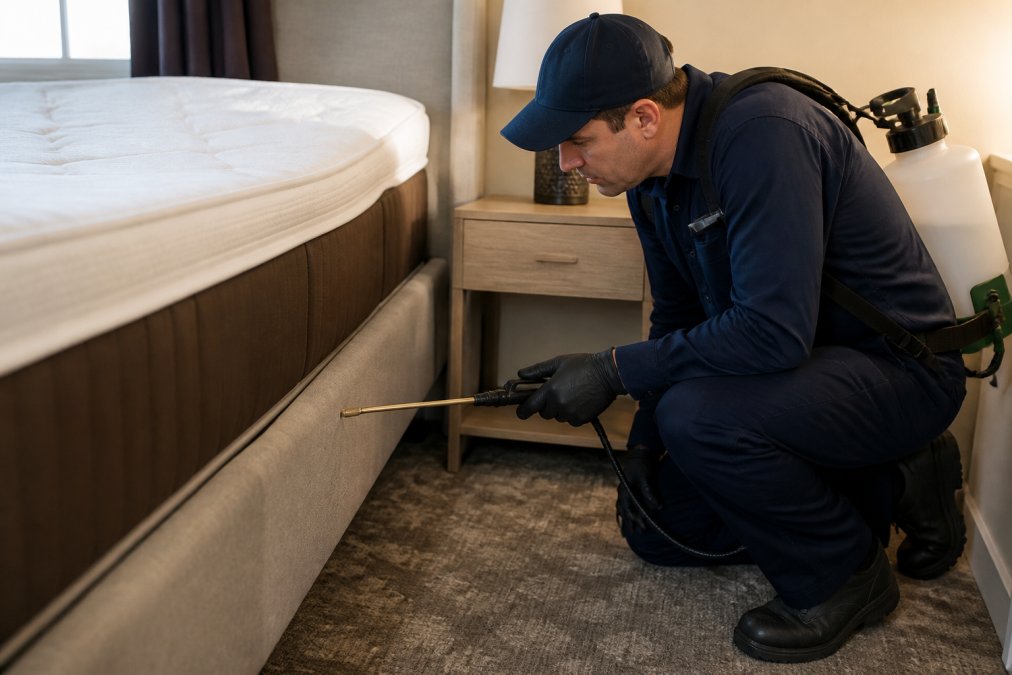
Chemical treatment applies professional-grade pesticides to harborage sites. The residual product remains active for 2-4 weeks, killing bed bugs as they emerge or move across treated surfaces.
Key advantages: flexible scheduling; suitable for multi-unit buildings; proven track record when applied by licensed professionals.
Key drawbacks: multiple visits often required (1-2 weeks apart); resistance concerns in some regions; incomplete coverage risk if harborage sites are missed; chemical residue requires occupant evacuation.
Comparative Efficacy
Both methods achieve high success rates when applied by licensed professionals.
| Factor | Heat Treatment | Chemical Spray |
|---|---|---|
| Timeline to eradication | 1 day | 3-4 weeks (with follow-up) |
| Upfront cost | Higher | Lower |
| Total cost (including follow-ups) | Often comparable | May be higher if multiple visits needed |
| Best for | Severe infestations, hotels, urgent situations, sensitive populations | Budget-conscious homeowners, multi-unit buildings, properties with heat-sensitive items |
| Re-infestation risk | Low (if prevention measures followed) | Low (if prevention measures followed) |
Integrated Pest Management Approach
A reputable provider will assess your situation and recommend the method most likely to succeed based on severity, property type, timeline, and budget.
How Much Does Professional Bed Bug Treatment Cost
Professional treatment costs vary by space size, infestation severity, treatment method, and legal responsibility. Most companies provide quotes after inspection rather than flat rates.
Factors Influencing Treatment Cost
Variables affecting price include square footage, infestation severity, treatment method, property type, geographic location, and follow-up visits.
The Hidden Cost of DIY Failure
DIY attempts often cost $200-$500 in sprays, foggers, and discarded furniture before professional help is called, totalling more than professional treatment from the start while extending the infestation.
Landlord vs. Tenant Responsibility: A Critical Cost Question
Determining who pays for treatment is a legal question that varies by province and lease terms.
In most Canadian provinces, bed bug infestations are a landlord responsibility because they are not caused by tenant behaviour, can enter through shared building systems, and are required to be controlled under habitability standards (Health Canada's pest control tips).
Under provincial residential tenancy legislation, landlords must provide and pay for professional pest control. Tenants cannot be charged, and costs cannot be deducted from rent or deposits.
Exceptions exist if a tenant deliberately introduced bed bugs or refuses treatment access, though these are difficult to prove. Landlords remain responsible for arranging and paying for treatment.
Homeowners bear the cost. Homeowner insurance typically does not cover bed bug treatment, though some policies may cover it if the infestation resulted from a covered event.
For property managers and landlords, treatment costs are tax-deductible maintenance expenses, though costs can be significant in multi-unit buildings where infestations spread between units.
Getting an Accurate Quote
A reputable provider will conduct an inspection to confirm bed bugs, assess infestation extent, identify harborage sites, recommend the most cost-effective method, and provide a detailed written quote.
Do not accept quotes without inspection or assume the cheapest option is best value. Low-cost providers may use inferior products, skip inspection, or omit follow-up visits.
The True Cost Calculation
Compare upfront professional treatment cost against failed DIY attempts, extended infestation costs, potential legal disputes, and re-treatment. Professional treatment from the start is typically most cost-effective.
How to Prepare for Bed Bug Extermination
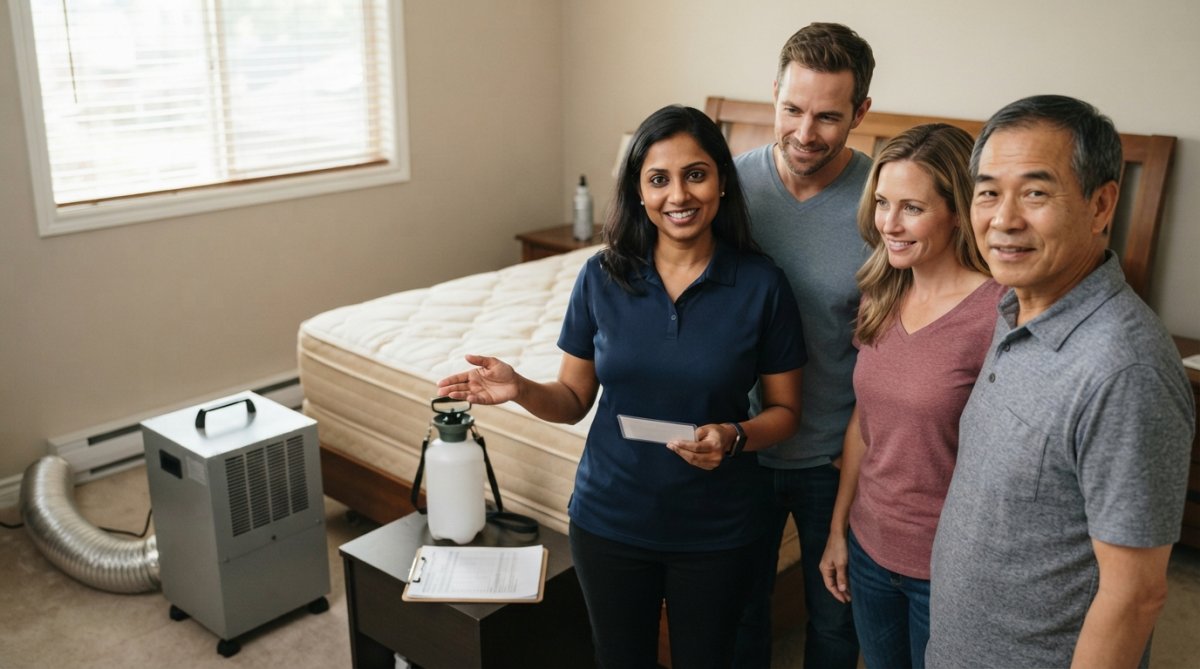
Preparation is critical to treatment success. Your exterminator will provide a checklist to reduce clutter, expose hiding spots, and ensure treatment reaches all areas.
Typical steps: wash bedding and clothing in hot water; declutter floors, closets, and under-bed areas; vacuum thoroughly; move furniture away from walls; empty drawers.
Your technician will provide safety instructions. For heat treatment, remove heat-sensitive items. For chemical application, vacate for several hours while the product dries.
What to Expect During and After Treatment
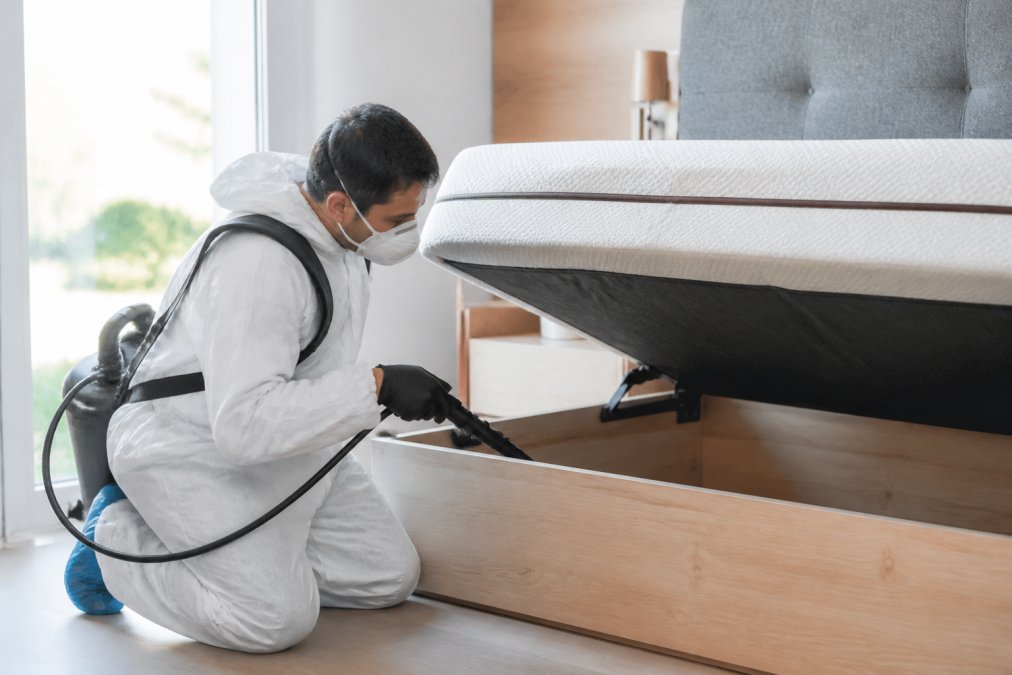
A treatment visit begins with thorough inspection to confirm infestation extent and identify nesting areas, followed by the chosen treatment method.
After treatment, do not expect immediate results. Residual pesticides work for weeks, and surviving eggs may hatch before dying. Follow-up visits confirm eradication and address any re-infestation signs.
Keep mattress encasements on and avoid washing treated areas. Monitor for new bites or live bugs and report to your technician. The final verification visit confirms success.
Long-Term Maintenance and Prevention
Once eradicated, prevent re-infestation. Bed bugs are excellent hitchhikers, especially in multi-unit buildings and homes with frequent visitors.
A maintenance plan includes regular inspections after travel or guest visits. For property managers, coordinate between units since infestations spread through wall voids and shared plumbing. Meridian Bed Bug Treatment provides solutions to prevent building-wide problems.
Prevention habits: inspect secondhand furniture; use luggage racks in hotels; vacuum regularly; keep clutter minimal; use mattress encasements.
Conclusion: Making the Right Choice
Professional treatment is worth it when you calculate the true cost of inaction or DIY failure. Untreated infestations spread and worsen; failed DIY attempts delay eradication and complicate professional treatment.
For residents and property managers across Vancouver and the Lower Mainland, Meridian Bed Bug Treatment offers specialized services for homes, condos, apartments, hotels, and short-term rentals. Our team handles the inspection, the treatment, and the follow-up so you can return to a comfortable, pest-free space without guessing whether the job was done right.
Get started with Meridian Bed Bug Treatment and end the infestation cycle for good.
Frequently Asked Questions
Why do DIY bed bug treatments often fail?
DIY treatments fail because bed bugs hide in hard-to-reach areas like wall voids, electrical outlets, and furniture seams that standard sprays cannot penetrate. Many homeowners miss nesting areas entirely, leaving eggs and hidden populations to re-emerge. Additionally, bed bugs have developed chemical resistance to over-the-counter pesticides. Professional exterminators use integrated pest management, targeting multiple life stages and applying residual pesticides in strategic locations that DIY approaches overlook.
What are the success rates of professional bed bug extermination?
Professional bed bug treatment success rates vary by method. Heat treatment can achieve high eradication rates in a single application because thermal remediation kills all life stages, eggs, nymphs, and adults, simultaneously. Chemical treatment typically requires multiple follow-up visits spaced 7-14 days apart to break the egg cycle. Success depends on thorough inspection, proper preparation by homeowners, and adherence to follow-up schedules.
How long does professional bed bug treatment take to work?
Heat treatment typically shows results quickly, with complete eradication often confirmed after a single application. Chemical treatments work more slowly: you may notice improvement within a week, but full eradication usually takes 3-4 weeks due to the need for multiple applications to target eggs as they hatch. Most licensed technicians recommend follow-up inspections 2-3 weeks after the final treatment to confirm elimination and prevent re-infestation.
Is professional bed bug treatment worth the cost compared to DIY methods?
Professional treatment costs more upfront but typically costs less overall. Many homeowners spend $300-$500 on failed DIY attempts before calling a professional. Professional services offer higher success rates, faster results, and come with follow-up support. For renters and property managers, professional treatment protects against liability and prevents spread to neighboring units. The psychological relief of effective eradication often justifies the investment for most homeowners.
This article was written using GrandRanker
Frequently Asked Questions
Q: Why do DIY bed bug treatments often fail?
A: DIY treatments fail because bed bugs hide in hard-to-reach areas like wall voids, electrical outlets, and furniture seams that standard sprays cannot penetrate. Many homeowners miss nesting areas entirely, leaving eggs and hidden populations to re-emerge. Additionally, bed bugs have developed chemical resistance to over-the-counter pesticides. Professional exterminators use integrated pest management, targeting multiple life stages and applying residual pesticides in strategic locations that DIY approaches overlook.
Q: What are the success rates of professional bed bug extermination?
A: Professional bed bug treatment success rates vary by method. Heat treatment can achieve high eradication rates in a single application because thermal remediation kills all life stages—eggs, nymphs, and adults—simultaneously. Chemical treatment typically requires multiple follow-up visits spaced 7-14 days apart to break the egg cycle. Success depends on thorough inspection, proper preparation by homeowners, and adherence to follow-up schedules.
Q: How long does professional bed bug treatment take to work?
A: Heat treatment typically shows results quickly, with complete eradication often confirmed after a single application. Chemical treatments work more slowly: you may notice improvement within a week, but full eradication usually takes 3-4 weeks due to the need for multiple applications to target eggs as they hatch. Most licensed technicians recommend follow-up inspections 2-3 weeks after the final treatment to confirm elimination and prevent re-infestation.
Q: Is professional bed bug treatment worth the cost compared to DIY methods?
A: Professional treatment costs more upfront but typically costs less overall. Many homeowners spend $300-$500 on failed DIY attempts before calling a professional. Professional services offer higher success rates, faster results, and come with follow-up support. For renters and property managers, professional treatment protects against liability and prevents spread to neighboring units. The psychological relief of effective eradication often justifies the investment for most homeowners.