 comparison
Orkin Alternatives for Bed Bug Removal
Table of Contents
- Why Homeowners Look Beyond Orkin for Bed Bug Removal
- Specialized Bed Bug Removal Services as Orkin Alternatives
- Heat Treatment for Bed Bugs vs. Chemical Methods
- How to Prepare for Bed Bug Extermination
- Understanding Bed Bug Exterminator Cost and Value
- Vetting Local Exterminators: What to Ask Before Hiring
- Eco-Friendly and Non-Toxic Bed Bug Removal Options
- Conclusion
Last Updated: August 30, 2026
Why Homeowners Look Beyond Orkin for Bed Bug Removal
Choosing a bed bug removal service based on brand recognition alone is like choosing a surgeon based on TV commercials. Bed bug removal alternatives have emerged because generalist pest control companies treat bed bugs as one problem among dozens, rotating technicians and applying generic protocols rather than specialized expertise.
Bed bugs require specific knowledge: understanding their life cycles, recognizing treatment-resistant populations, and knowing which heat treatment protocols actually work. A technician who spends 80% of their time on general pest control won't have the depth of expertise that someone treating bed bugs daily will have.
At Meridian Bed Bug Treatment, we've worked with homeowners, property managers, and short-term rental operators across Vancouver and the Lower Mainland who tried big-name services first without results. Specialization changes the outcome. When you're looking at bed bug removal alternatives, you're asking: do I want a generalist or a specialist?
Specialized Bed Bug Removal Services as Orkin Alternatives
Meridian Bed Bug Treatment
Meridian Bed Bug Treatment is a specialized bed bug removal service serving homes, condos, apartments, hotels, and short-term rentals across Vancouver and the Lower Mainland. Unlike generalist pest control companies, Meridian focuses exclusively on bed bugs, meaning every technician, protocol, and treatment method is optimized for one problem.
The advantage is precision. Meridian offers solutions tailored to your specific situation rather than forcing one method to fit all cases. For properties with severe infestations or treatment-resistant populations, this flexibility matters enormously. Property managers dealing with bed bugs in multiple units can't afford a one-size-fits-all approach.
For landlords and property managers, Meridian understands how bed bugs spread in multi-unit buildings and the unique challenges of rapid re-infestation risk, discreet treatment, and quick unit turnaround. Pricing depends on infestation scope and treatment method required. Contact Meridian directly for a quote tailored to your situation.
Bed Bug Exterminator Pro
Bed Bug Exterminator Pro operates across Canada with three distinct advantages: nationwide availability, K9 detection services, and combined heat and chemical treatment methods. Dogs trained to detect bed bugs identify infestations in early stages when visual inspection might miss them, reducing the risk of undetected spread before infestations become severe. This is particularly valuable for short-term rentals with rapid turnover.
The combination of heat and chemical treatments provides flexibility. Heat treatment raises temperature to 48-50°C for several hours, killing bed bugs at all life stages. Chemical treatments target specific areas and can be used between heat cycles or standalone. Having both options means treatment plans can adapt if one method isn't sufficient.
Bed Bug Exterminator Pro's national service area is useful beyond the Lower Mainland, though confirm local availability in your specific area before committing.

Action Pest Control
Action Pest Control serves the Lower Mainland and Fraser Valley, handling rodents, insects, and commercial infestations. For homeowners with multiple pest problems, using one company simplifies coordination. The trade-off is that bed bug expertise won't match a specialized service. Action Pest Control's experience is broad rather than deep.
Long history in pest control signals credibility, but history in general pest control doesn't necessarily translate to bed bug excellence. When choosing between a generalist with 20 years of experience and a specialist with 8 years, the specialist's focused knowledge usually wins on bed bug outcomes.

Heat Treatment for Bed Bugs vs. Chemical Methods
Heat treatment and chemical insecticides represent two fundamentally different approaches to bed bug extermination, with choice depending on infestation severity, property type, and tolerance for chemical exposure.
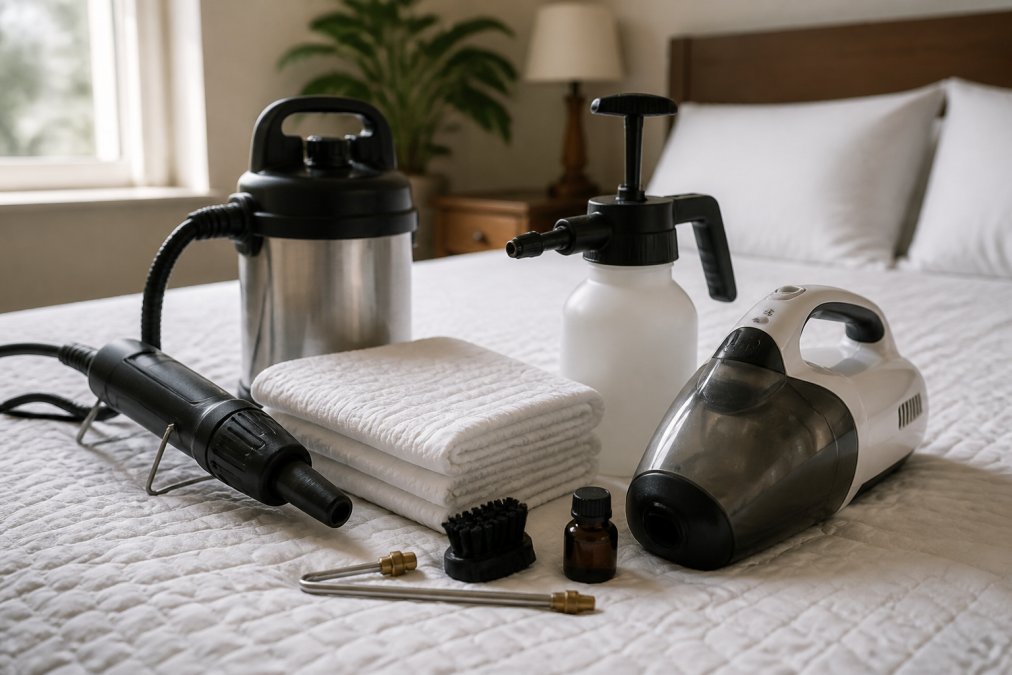
Heat treatment raises sealed space temperature to 48-50°C for several hours. At this temperature, bed bugs at all life stages cannot survive. The advantage is comprehensive: every bed bug dies regardless of hiding location. Heat penetrates walls, furniture, and crevices that chemicals might miss, with no chemical residue. Limitations are practical: you must vacate during treatment (6-8 hours), some items can't tolerate the temperature, and heat treatment is more expensive than chemical methods.
Chemical insecticides use residual sprays, aerosols, or dusts that remain active on surfaces for days or weeks. Common active ingredients include pyrethroids, neonicotinoids, and diatomaceous earth. The advantage is cost-effectiveness and flexibility: you can treat specific areas without vacating the entire property. The problem is pesticide resistance. Some bed bug populations have developed resistance to common insecticides, meaning chemical-only approaches might fail. Chemicals also require precise application to cracks and crevices where bed bugs hide.
Many professional services use integrated pest management, combining chemical treatments with heat or steam in multi-step protocols. Chemicals handle initial reduction, heat or steam address remaining populations, and monitoring catches re-infestation early.
How to Prepare for Bed Bug Extermination
Preparation directly impacts treatment success. Most professional services require specific steps before arrival, and skipping these can reduce effectiveness by 30-50%.
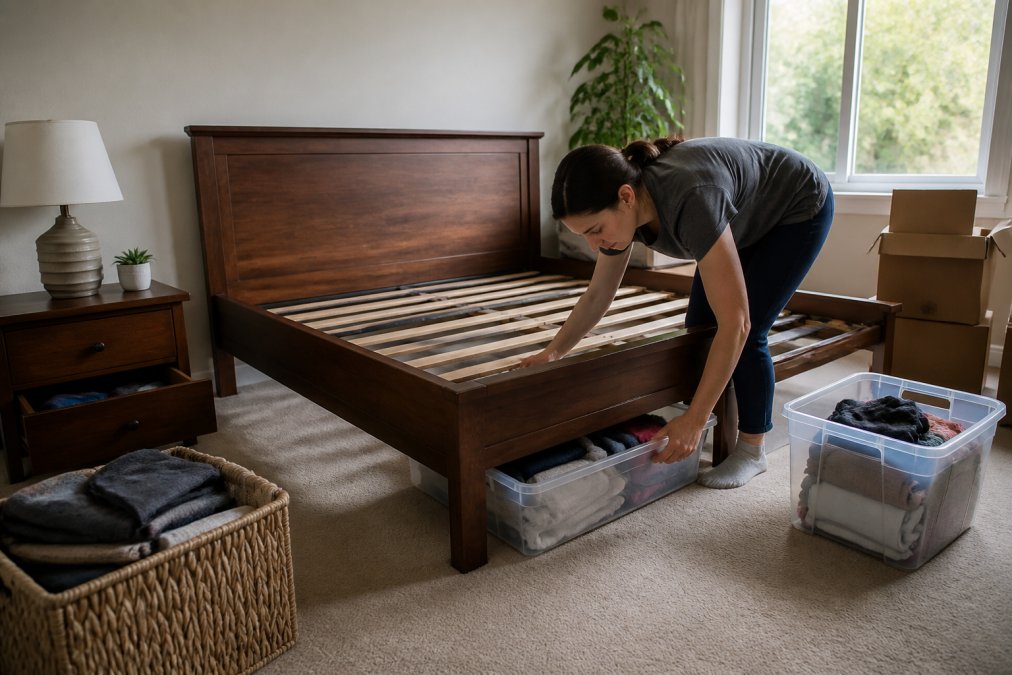
Remove clutter and expose hiding spots. Bed bugs hide in cracks, crevices, under baseboards, inside furniture, and behind wall hangings. Remove items from under beds and nightstands. Pull furniture away from walls. Remove wall hangings, pictures, and outlet covers. This exposes 95% of potential hiding spots versus 60%.
Wash all bedding and clothing in hot water. Use water at least 60°C and dry on high heat (the CDC). This kills bed bugs and eggs in fabrics. Bag clean items in sealed plastic to keep them bed-bug-free until after treatment.
Vacuum thoroughly, then dispose of the vacuum bag. Vacuuming removes some bed bugs and eggs before treatment. Seal the bag immediately in plastic and throw it away outside.
Inform your service about pets and sensitivities. If you have fish tanks, birds, or respiratory sensitivities, tell the technician before arrival. They may adjust chemical concentrations or treatment timing.
Arrange to be away during treatment. Most heat treatments require 6-8 hours of vacancy. Chemical treatments might require 2-4 hours. Confirm the timeline in advance.
Don't treat the space yourself before professional service. DIY bed bug sprays often drive bed bugs deeper into walls and furniture, making professional treatment harder. Tell the technician if you've already tried DIY treatments.
Understanding Bed Bug Exterminator Cost and Value
Bed bug removal pricing varies based on infestation severity, treatment method, property size, and follow-up treatment needs. Understanding cost drivers helps evaluate whether a quote is reasonable.
Infestation severity is the primary cost driver. A single infested bedroom costs less than an entire home or multi-unit building. Severe infestations with bed bugs in multiple rooms, inside furniture, and in walls require more intensive treatment.
Treatment method affects cost significantly. Heat treatment is typically more expensive than chemical treatment because it requires specialized equipment and full-day technician time. Steam treatment falls in the middle. Combination approaches cost more but often deliver better success rates.
Property type and size matter. Treating a 1,000-square-foot condo costs less than a 3,500-square-foot house. Hotels and multi-unit buildings require coordination across multiple spaces, increasing labor costs.
Follow-up treatments and guarantees vary by service. Some include follow-up inspections in initial quotes; others charge separately. Ask whether your quote includes follow-up visits and what "guarantee" means, some services retreat at no cost, others credit the cost toward new treatment.
Compare what's included rather than raw prices. A higher-priced service with two follow-up visits and a 60-day re-infestation guarantee may deliver better value than a cheaper service with no follow-ups.
Vetting Local Exterminators: What to Ask Before Hiring
Not all pest control services are equally qualified to handle bed bugs. Asking the right questions before hiring separates competent services from those that waste your time and money.
Ask about their bed bug experience specifically. How many bed bug jobs do they do per month? What percentage of their business is bed bugs versus other pests? A service doing 20 bed bug jobs monthly has more expertise than one doing two.
Ask which treatment methods they offer. Do they offer heat treatment, chemical treatment, steam, or combinations? If they only offer one method, ask why. A service adapting treatment to your situation is more likely to succeed than one with a one-size-fits-all approach.
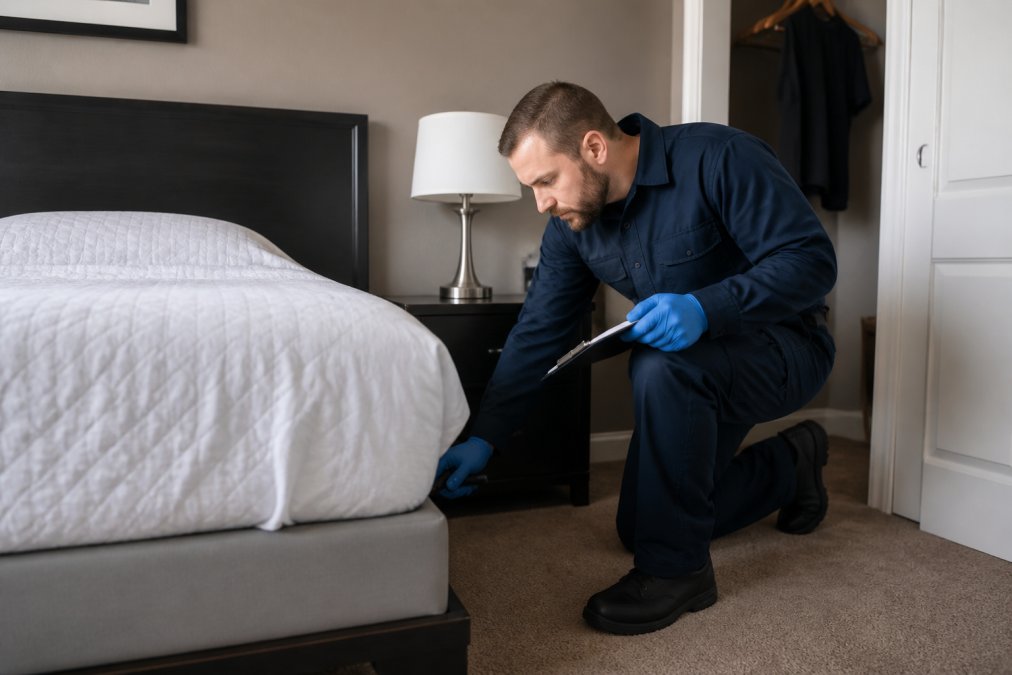
Ask about their inspection process. Do they inspect before quoting? A thorough inspection takes 30-45 minutes and identifies infestation extent and appropriate treatment methods (peer-reviewed research). Services quoting over the phone are cutting corners.
Ask about follow-up visits. Are follow-up inspections included in the initial quote or extra? How many follow-ups do they typically recommend? Good services plan for at least one follow-up 10-14 days after initial treatment.
Ask about their guarantee. What happens if you still see bed bugs after treatment? Do they retreat at no cost? Is there a time limit (30, 60, or 90 days)? A strong guarantee shows confidence in their work.
Ask about preparation requirements. Services with detailed preparation instructions usually understand that preparation directly impacts treatment success.
Ask about certifications and training. Are technicians certified in pest management? Have they completed bed bug-specific training? Certifications like Certified Pest Management Professional (CPMP) indicate commitment to expertise.
Ask for references. Request contact information for recent clients (ideally within the last 6 months). Call them and ask whether bed bugs returned and how quickly the service responded to issues.
Ask about multi-unit building approaches. If you're a property manager or landlord, ask how they coordinate treatment across multiple units and prevent cross-infestation.
Eco-Friendly and Non-Toxic Bed Bug Removal Options
For homeowners concerned about chemical pesticides, particularly those with young children, pets, or respiratory sensitivities, non-toxic alternatives exist, though effectiveness varies with infestation severity.
Diatomaceous earth is a natural powder made from fossilized algae that damages bed bugs' waxy outer coating, causing dehydration and death. It's non-toxic to humans and pets at pest control concentrations, though inhaling the powder can irritate lungs. The advantage is cost-effectiveness and safety. The limitation is slow action and the requirement for precise application into cracks and crevices. For severe infestations, diatomaceous earth alone is usually insufficient.
Steam treatment uses high-temperature steam (60-80°C) to kill bed bugs on contact. Unlike heat treatment, steam targets specific areas: mattress seams, furniture crevices, baseboards. Steam is non-toxic and leaves no chemical residue. The limitation is that it doesn't penetrate deep into walls or furniture like heat treatment does. Steam works best for early-stage infestations or as follow-up treatment.
Essential oils and natural sprays have some repellent properties but lack the killing power of registered insecticides. Marketing often overstates their effectiveness. For mild infestations, they might slow reproduction, but they won't eliminate active infestations.
Heat treatment is technically non-toxic because it uses temperature rather than chemicals. For pesticide-free options that actually work for moderate to severe infestations, heat treatment is most reliable. The trade-off is cost and inconvenience.
Integrated pest management combining non-toxic methods (steam, vacuuming, clutter reduction) with monitoring can work for very early-stage infestations. Most homeowners discover bed bugs after progression beyond what non-toxic methods alone can handle. A realistic approach uses non-toxic methods as part of a broader strategy including professional treatment.
According to Health Canada's guidance on pest management, the safest approach for households with vulnerable populations is using registered, low-toxicity products under professional application rather than non-toxic alternatives that may not be effective.
Conclusion
Choosing an Orkin alternative for bed bug removal means prioritizing specialization over brand recognition. Meridian Bed Bug Treatment offers the focused expertise, flexible treatment methods, and personalized approach that homeowners, property managers, and short-term rental operators need when bed bugs have taken hold. Whether you require heat treatment, chemical applications, steam, or combination strategies, Meridian's ability to tailor solutions to your specific situation and serve homes, condos, apartments, hotels, and rental properties across Vancouver and the Lower Mainland positions it as the specialized alternative that delivers results where generalist services fall short. Contact Meridian Bed Bug Treatment for a consultation and quote tailored to your infestation.
Frequently Asked Questions
Q: How do specialized bed bug removal services compare to national chains like Orkin?
A: Specialized bed bug removal companies focus exclusively on bed bug infestations, often resulting in more targeted treatment protocols and deeper expertise. National chains handle multiple pest types, which can mean less specialized knowledge. Specialized providers typically offer integrated pest management strategies and personalized preparation guidance. Local specialists also understand regional infestation patterns and can respond faster. The trade-off is that national chains have established brand recognition and wider service areas, while specialists may offer more customized solutions at competitive rates.
Q: What should I look for when hiring a bed bug exterminator?
A: Verify credentials through industry certifications and professional pest management associations. Ask about their experience with bed bug infestations specifically, treatment methods available (chemical, heat, steam), and whether they provide written guarantees or warranties. Request references from recent clients and inquire about their inspection process. Confirm they understand integrated pest management principles and can explain their follow-up protocol. Ask about pricing transparency and what's included in their quote to avoid hidden costs.
Q: How much does professional bed bug removal cost, and what affects pricing?
A: Bed bug exterminator cost varies based on infestation severity, treatment method selected, property size, and location. Heat treatment typically costs more upfront but may require fewer follow-up visits. Chemical treatments often have lower initial costs but may need multiple applications. Property managers and landlords with multiple units may negotiate different rates. Rather than guessing, contact local providers for a detailed quote that accounts for your specific situation. Pricing depends on quantity of treatments, dates, and delivery of services, so transparency from your chosen exterminator is essential.
Q: What's the difference between heat treatment and chemical insecticides for bed bugs?
A: Heat treatment for bed bugs exposes infested areas to temperatures of 49-54°C, killing all life stages including eggs, nymphs, and adults in a single treatment cycle. This method requires thorough preparation and temporary evacuation but typically eliminates the need for follow-up applications. Chemical insecticides work through residual sprays, liquid applications, and insecticidal dusts that target bed bugs over multiple treatment cycles. Heat treatment has higher upfront costs but fewer applications needed; chemical methods are often less expensive initially but require monitoring and repeat visits. Some providers use integrated pest management combining both methods for stubborn infestations.
Q: How do I prepare my home for professional bed bug extermination?
A: Preparation steps before extermination include decluttering your bedroom and living areas to reduce hiding spots, washing all bedding in hot water, and vacuuming thoroughly. Remove or seal personal items in plastic bags if advised. Clear access to walls, baseboards, and furniture so technicians can apply treatments. For heat treatment, you may need to remove pets and plants and ensure the property can reach and maintain required temperatures. For chemical treatments, ensure proper ventilation and follow safety precautions. Your exterminator will provide a detailed preparation checklist, following these instructions directly impacts treatment success rates and reduces re-infestation risk.
This article was written using GrandRanker