 ultimate-guide
Bed Bug Treatment Guarantee Explained
Table of Contents
- What a Bed Bug Treatment Guarantee Actually Covers
- Re-infestation vs. Treatment Failure: A Critical Distinction
- How to Verify a Pest Control Company's Guarantee Claims
- Your Bed Bug Treatment Preparation Checklist
- How Long Does Bed Bug Treatment Take to Work?
- Signs of Bed Bug Infestation Recurrence After Treatment
- Reading a Bed Bug Treatment Guarantee Contract: A Checklist
- Conclusion
Last Updated: August 20, 2026
What a Bed Bug Treatment Guarantee Actually Covers
A bed bug treatment guarantee is a contractual commitment from a pest control company to address any surviving bed bug activity within a defined period after the initial service. Understanding what a guarantee covers, and what it doesn't, is the difference between a service agreement that protects you and one that protects the company.
Re-Treatment Guarantees vs. Money-Back Guarantees
A re-treatment guarantee means the company will return and treat the infestation again at no additional charge if bed bugs are still detected within the warranty period. This is the industry standard, with guarantee periods typically ranging from 30 days to several months.
A money-back guarantee is less common and harder to find. It means the company refunds your payment if treatment fails, but "failure" is almost always defined narrowly by the provider with strict qualifying conditions.
Neither guarantee type is inherently superior. A re-treatment guarantee from a company with a strong track record is often more valuable than a money-back guarantee with extensive exclusions.
Common Exclusions Hidden in the Fine Print
Most clients skip to the guarantee summary and miss the exclusions section entirely. That's where the real terms live.
Common exclusions to watch for:
- Re-infestation from external sources: If bed bugs enter from a neighboring unit after treatment, many companies will not cover this under the original guarantee.
- Incomplete preparation by the client: Failing to follow pre-treatment instructions can void the guarantee entirely.
- Untreated areas: If you declined treatment of a specific room, surviving bed bugs from that area are typically excluded.
- Structural inaccessibility: Spaces the technician could not physically access during treatment are often excluded from the warranty.
- Time limitations: Guarantee periods are fixed. Bed bug activity detected after the warranty window expires is a new service call.
Re-infestation vs. Treatment Failure: A Critical Distinction
Treatment failure occurs when the original infestation was not eliminated by the treatment. Surviving bed bugs continue to reproduce and spread. This should be covered under any legitimate guarantee.
Re-infestation is a new introduction of bed bugs from an external source after successful treatment. A guest brings them in, or a neighboring unit's infestation migrates through shared walls. The original treatment did its job; the new infestation is a separate event.
The problem is that distinguishing between the two is not always straightforward. An egg that survived treatment can hatch weeks later, producing nymphs that look like a new infestation. A licensed exterminator conducting a follow-up inspection should be able to assess infestation severity and likely origin.
According to Health Canada's guidance on bed bug control, bed bugs can survive for extended periods without feeding, which means eggs and nymphs present during treatment may not be exposed to lethal chemical concentrations. A credible guarantee should account for this through scheduled follow-up inspections.
How to Verify a Pest Control Company's Guarantee Claims
A guarantee is only as good as the company standing behind it. Before signing any service contract, verify the company's credibility independently.
Questions to ask before signing:
- Is the guarantee documented in the written service agreement, or only mentioned verbally?
- What is the exact definition of "treatment failure" in the contract?
- What documentation do you need to submit to activate the guarantee?
- Are follow-up inspections included, or do they count as separate service calls?
- Does the guarantee cover all treated areas, or only specific zones?
- What happens if the technician cannot access a required area during the follow-up?
Licensing and Certification Standards in Canada
Pest control in Canada is regulated provincially. In British Columbia, pest control operators must be licensed under the BC Integrated Pest Management Act. A licensed exterminator has completed certified training, carries liability insurance, and is subject to regulatory oversight.
Verify a company's license number before any service agreement is signed. Integrated pest management certification indicates training in evidence-based methods that reduce chemical application while maintaining elimination success rates.
Documentation That Protects You as a Client
Documentation is your primary protection if a guarantee dispute arises. Keep copies of:
- The signed service agreement, including all guarantee terms and exclusions
- The pre-treatment inspection report, noting infestation severity and affected areas
- The treatment record, including chemicals applied, concentrations, and areas treated
- Any monitoring device readings from post-treatment inspections
- Photographs of bed bug activity before, during, and after treatment
- Written correspondence with the company about any follow-up concerns
A responsible pest control professional will provide most of this documentation automatically. If a company resists providing written inspection reports or treatment records, treat that as a serious warning sign.
Your Bed Bug Treatment Preparation Checklist
Proper preparation is not optional. Most service agreements make it a condition of the guarantee. Incomplete preparation gives the company grounds to deny a re-treatment claim if bed bugs persist.
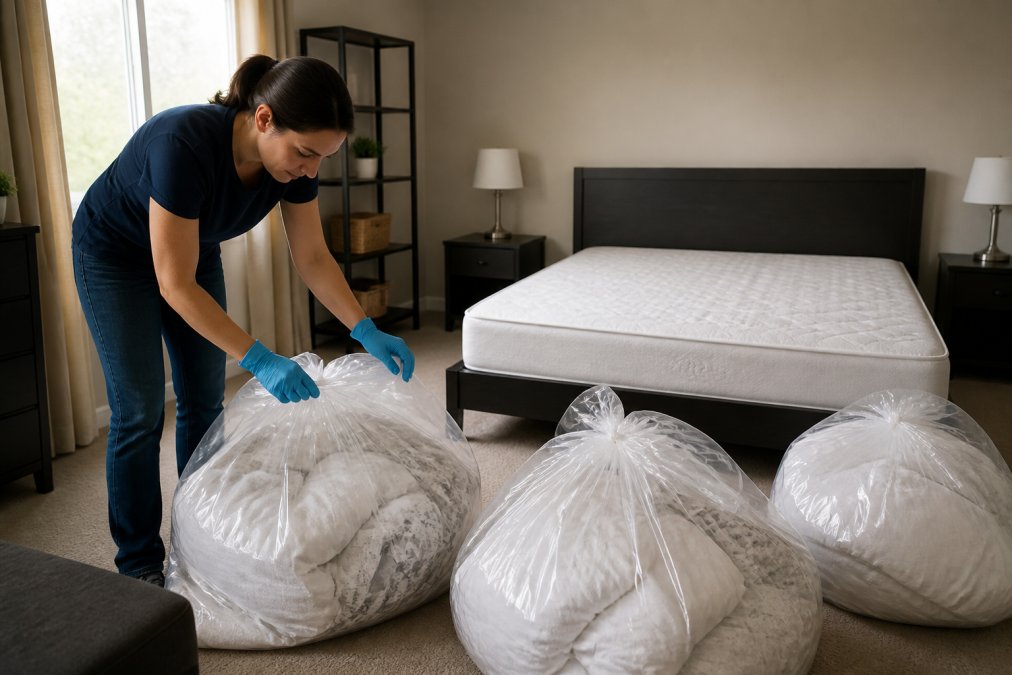
Work through this checklist before the technician arrives:
- Remove all bedding, including mattress covers, pillowcases, and duvet covers. Wash on the highest heat setting and dry on high heat for at least 30 minutes.
- Bag all washed items in sealed plastic bags until the treatment is complete.
- Clear clutter from floors, under beds, and inside closets.
- Pull furniture at least 30 centimetres away from walls to allow full perimeter access.
- Empty and vacuum all drawers in bedroom furniture. Dispose of the vacuum bag immediately in a sealed bag outside the home.
- Remove items from under the bed entirely.
- Arrange for pets and people to vacate the premises for the period specified in the pre-treatment protocol.
- Inform the technician of any areas that cannot be accessed, and note this in writing.
Avoid bringing second-hand furniture or used mattresses into the treated space during the warranty period. This is one of the most common ways clients inadvertently create a re-infestation situation that falls outside the guarantee.
How Long Does Bed Bug Treatment Take to Work?
Bed bug treatment does not produce instant results. Understanding realistic timelines prevents unnecessary alarm and helps you accurately assess whether a treatment is working or failing.
Heat Treatment vs. Chemical Application Timelines
Heat treatment works by raising the ambient temperature of the treated space to levels lethal to bed bugs at all life stages, including eggs. When done correctly, heat treatment can eliminate an active infestation in a single treatment session. Most clients should expect the treated area to be safe to re-enter within hours.
Chemical application works differently. Residual treatment chemicals remain active on surfaces for weeks, killing bed bugs that contact treated areas. However, eggs are often resistant to chemical application. This means a chemical treatment protocol typically requires multiple visits, with follow-up inspections scheduled to address newly hatched nymphs.
| Treatment Method | Typical Timeline | Follow-Up Visits | Egg Efficacy |
|---|---|---|---|
| Heat treatment | Same-day elimination | 1 follow-up inspection | High (all stages) |
| Chemical application | 2-6 weeks for full elimination | 2-3 visits required | Lower (eggs resistant) |
| Integrated pest management | 4-8 weeks | Multiple monitoring visits | Moderate to high |
A legitimate service guarantee should reflect these timelines. A company offering a 30-day guarantee on a chemical application protocol without scheduling follow-up visits within that window is setting up a situation where the guarantee expires before the treatment cycle is complete.
Signs of Bed Bug Infestation Recurrence After Treatment
Knowing what to look for after treatment is essential for activating your guarantee within the warranty period.
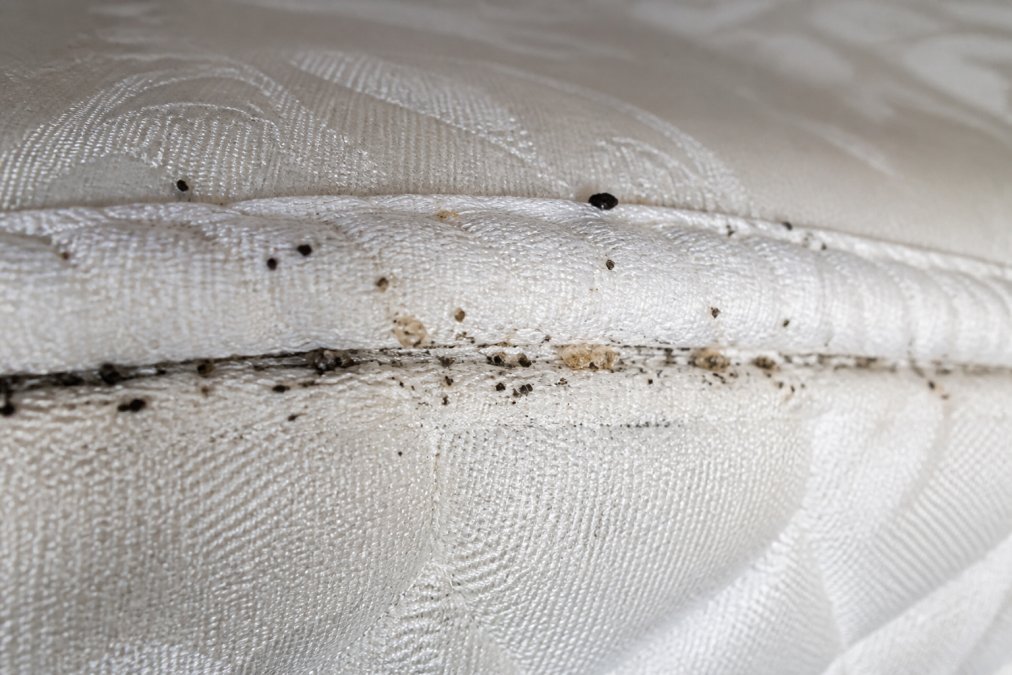
Watch for:
- Live bed bugs: Any live bug, at any life stage, is a definitive sign of active infestation. Nymphs are translucent and small, roughly the size of a sesame seed.
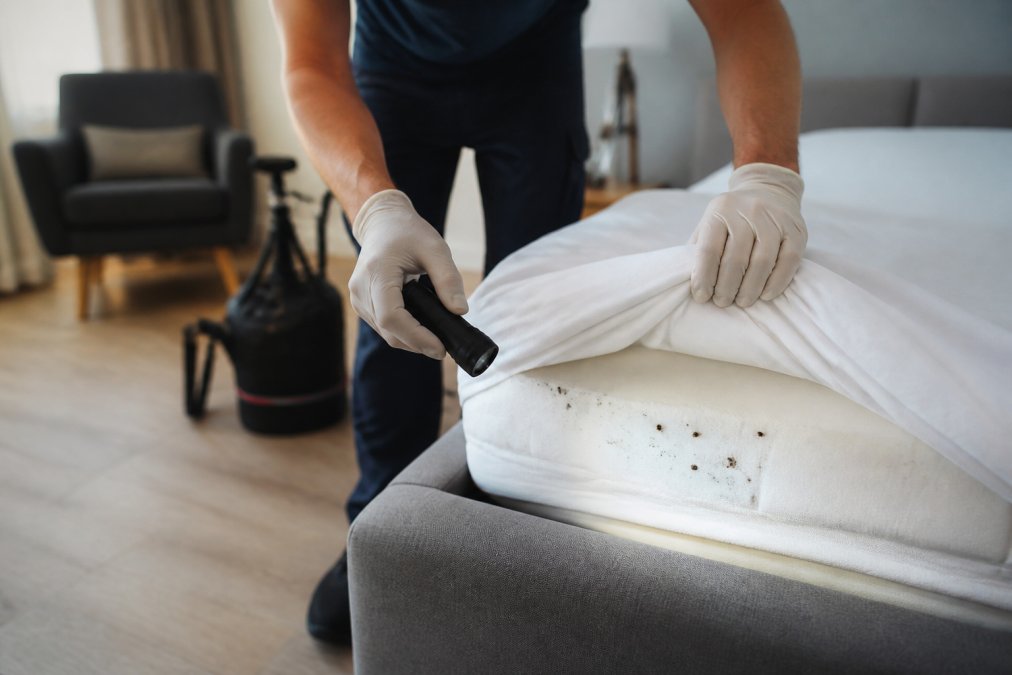
- Dark fecal spots: Small dark marks on mattress seams, bed frames, baseboards, or upholstered furniture indicate active feeding.
- Shed casings: Pale, translucent casings along seams and in crevices indicate recent activity.
- Blood staining: Small rust-colored stains on bedding from crushed bugs or post-feeding excretion.
- Bite patterns: New bites in linear or clustered patterns on exposed skin during sleep.
If monitoring devices were placed during the post-treatment inspection, check them according to the schedule your technician provided. Document anything you find with photographs and a written log noting the date, location, and what you observed.
According to the Canadian Centre for Occupational Health and Safety guidance on bed bugs, bed bugs are highly mobile and can travel between units through shared walls, plumbing conduits, and electrical pathways. This mobility is why property managers of multi-unit buildings need a guarantee that addresses adjacent unit inspection.
Reading a Bed Bug Treatment Guarantee Contract: A Checklist
Before signing any bed bug treatment guarantee contract, use this checklist to evaluate the terms.
Coverage Scope
- Are all treated areas explicitly listed in the contract?
- Is the guarantee period clearly stated with a start date and end date?
- Does the guarantee cover re-treatment, refund, or both?
Definitions
- Is "treatment failure" defined in writing?
- Is "re-infestation" defined separately from treatment failure?
- Is the infestation severity documented in the pre-treatment inspection report?
Exclusions
- Are all exclusions listed in a dedicated section?
- Do the exclusions reference preparation requirements by the client?
- Are structural inaccessibility exclusions defined?
Activation Process
- What evidence do you need to submit to activate the guarantee?
- Is there a deadline for reporting suspected treatment failure?
- Who is the contact for guarantee claims, and is that documented?
Follow-Up Protocol
- Are follow-up inspections included in the service agreement?
- Are monitoring device installations part of the post-treatment protocol?
- Is the number of included follow-up visits specified?
As noted in the National Pest Management Association's bed bug resources, documentation requirements and follow-up protocols vary widely across service providers. Comparing written contracts, not just verbal summaries, is the only reliable way to assess what you are actually purchasing.
The hardest part of dealing with a bed bug infestation is knowing whether the company you hired will stand behind their work when it matters. Meridian Bed Bug Treatment provides specialized bed bug treatment for homes, condos, apartments, hotels, and short-term rentals across Vancouver and the Lower Mainland. Our focus on bed bug treatment specifically means our protocols and service agreements are built around the realities of eliminating this particular pest. Get in touch with Meridian Bed Bug Treatment for a property inspection and a clear, written explanation of what a guarantee actually covers.
Frequently Asked Questions
Can you 100% get rid of bed bugs in one visit?
A single visit rarely eliminates a bed bug infestation completely. The bed bug life cycle means eggs can survive an initial treatment and hatch afterward, requiring at least one follow-up inspection and often a second service call. Reputable pest control professionals structure their service agreements around this reality, building follow-up treatments into the contract rather than promising total elimination after one chemical application or heat treatment.
What happens if bed bugs return after professional treatment?
The answer depends on your service contract. Most bed bug treatment guarantees cover re-treatment at no additional cost if live bugs are confirmed within the warranty period, provided you met all post-treatment protocol requirements. However, if a new infestation is traced to an outside source, such as travel or a neighboring unit, most providers classify that as re-infestation rather than treatment failure, which is typically excluded from warranty terms. Always clarify this distinction before signing.
Are there provincial regulations for pest control service guarantees?
Pest control service guarantees are not directly regulated by a single provincial statute, but licensed exterminators in British Columbia must hold a valid Structural Exterminator licence under the Integrated Pest Management Act. The service contract itself is governed by general consumer protection principles under the BC Business Practices and Consumer Protection Act, which requires that contractual obligations, service limitations, and cancellation terms be disclosed clearly before payment is collected.
How do I know if a bed bug treatment guarantee is legitimate?
A legitimate bed bug treatment guarantee is written, specific, and attached to a signed service agreement. Verify that the company holds a valid Integrated Pest Management licence in BC, that the warranty period and covered treatments are stated clearly, and that exclusions such as re-infestation or missed preparation steps are explicitly defined. Vague verbal assurances with no documentation are a reliable warning sign. Ask for the full contract before any service payment is made.
This article was written using GrandRanker