 ultimate-guide
Effective Bed Bug Removal for Condos: 2026 Guide
Table of Contents
- How to Identify a Bed Bug Infestation in Your Condo
- Effective Bed Bug Removal for Condos: DIY vs. Professional Treatment
- How to Prepare for Bed Bug Extermination in a Condo Unit
- Multi-Unit Containment: Condo Legal Responsibilities and Landlord Obligations
- Why Bed Bugs Return After Professional Treatment
- Bed Bug Prevention for Condo Owners After Treatment
- The Psychological Impact of a Bed Bug Infestation and How to Cope
- Effective Bed Bug Removal for Condos: Choosing the Right Professional Service
Last Updated: August 22, 2026
How to Identify a Bed Bug Infestation in Your Condo
Bed bug removal for condos starts with accurate identification. Many residents treat the wrong pest, waste weeks on ineffective products, and only call a professional after the infestation has spread to adjacent units.
Bed bugs are small, reddish-brown insects roughly the size of an apple seed. Their eggs and nymphs are much harder to spot, pale in color, and often mistaken for dust. The biological cycle from egg to reproductive adult takes as little as a month under warm conditions, meaning a small problem becomes large quickly.
Signs in Bedding, Furniture, and Baseboards
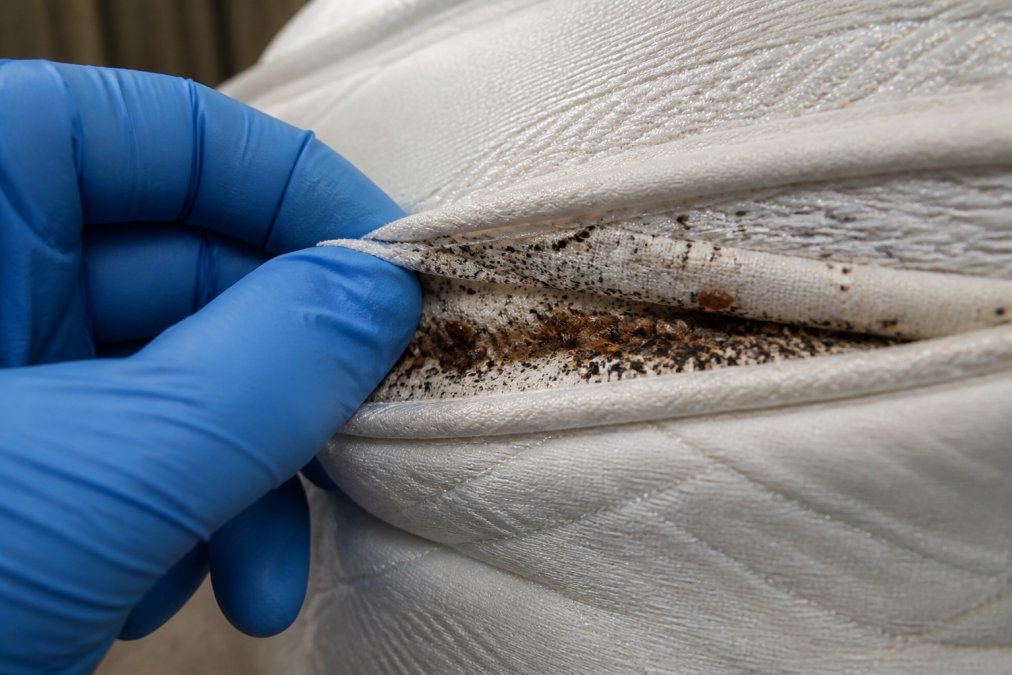
The clearest early indicators are physical traces rather than live insects. Check your mattress seams, box spring edges, and upholstered furniture for:
- Small dark stains (fecal spotting) on fabric or wood surfaces
- Shed exoskeletons left behind as nymphs grow
- Rust-colored smear marks on sheets or pillowcases from crushed insects
- A faint, sweet, musty odor in heavily infested rooms
- Clusters of tiny pale eggs in fabric folds or wood joints
Baseboards are a commonly missed hiding spot. Run a flashlight along the gap where baseboards meet flooring and press a credit card into the seam to check for insects or eggs.
Inspecting Cracks, Crevices, and Hiding Spots
Bed bugs gravitate toward any warm, dark space within a few metres of where people sleep or sit for extended periods. Condo units present specific challenges: shared walls mean insects can migrate through electrical outlets, plumbing penetrations, and gaps in drywall.
Inspect electrical outlet covers, picture frame edges, curtain rod brackets, and the underside of nightstands. A systematic inspection using a bright flashlight and a thin probe takes about 45 minutes for a standard one-bedroom unit. Document what you find before starting any treatment, as that record becomes important if you need to coordinate with your property manager or building strata.
Effective Bed Bug Removal for Condos: DIY vs. Professional Treatment
The biggest mistake most condo residents make is underestimating the scope of an infestation before treating it. DIY products can suppress surface populations, but they rarely reach eggs hidden deep in cracks and crevices, and they do nothing to address insects migrating from neighboring units.
Mechanical Control: HEPA Vacuuming and Steam Treatment
HEPA vacuuming physically removes live insects, nymphs, and eggs from mattress seams, baseboards, and furniture surfaces. A standard household vacuum is inadequate; HEPA filtration prevents insects from escaping through the exhaust. Immediately seal and dispose of the vacuum bag in an outdoor bin after each use.
Steam treatment kills bed bugs on contact by delivering heat above 48°C directly to hiding spots. A commercial-grade steamer penetrates fabric and wood joints where sprays cannot reach. Steam is particularly effective along mattress seams, sofa cushion edges, and baseboard gaps, but requires slow, methodical passes and will not treat an entire room alone.
Neither method provides residual protection. An insect not present during treatment, or that migrates in afterward, survives.
Chemical Control: Residual Sprays, Desiccant Dusts, and Aerosol Insecticides
Residual sprays applied to baseboards, furniture edges, and cracks remain active for days to weeks. Desiccant dusts, including diatomaceous earth and silica-based products, damage the insect's outer layer, causing dehydration. They are slow-acting but highly effective in wall voids and electrical outlets where liquid sprays cannot be safely applied.
Aerosol insecticides provide fast knockdown of visible insects but offer minimal residual protection. They are best used as a contact killer during active inspections rather than as a standalone treatment.
Chemical resistance is a real and growing problem. Many bed bug populations have developed resistance to pyrethroid-based products, which make up the majority of consumer-grade sprays. According to Health Canada's Pest Management Regulatory Agency guidance on bed bug control, pesticides used for pest control must be registered under the Pest Control Products Act, and consumers should always follow label directions precisely. Using unregistered products or applying registered products incorrectly risks treatment failure and creates safety hazards in enclosed living spaces.
When to Call a Pest Management Professional
Call a pest management professional when:
- You have confirmed bed bugs in two or more rooms
- DIY treatments have not produced visible results within two weeks
- You live in a multi-unit building where adjacent units are also affected
- You or a household member has a health condition that limits safe pesticide exposure
- You are a landlord or property manager with tenant unit obligations
A licensed pest management professional brings access to professional-grade products, thermal treatment equipment, and integrated pest management protocols that consumer products cannot replicate. For condo-specific infestations, professional coordination across units is often the only approach that produces lasting results.
How to Prepare for Bed Bug Extermination in a Condo Unit
Preparation determines whether a treatment succeeds or requires a second visit. A technician cannot treat what they cannot access.
Follow these steps before any treatment:
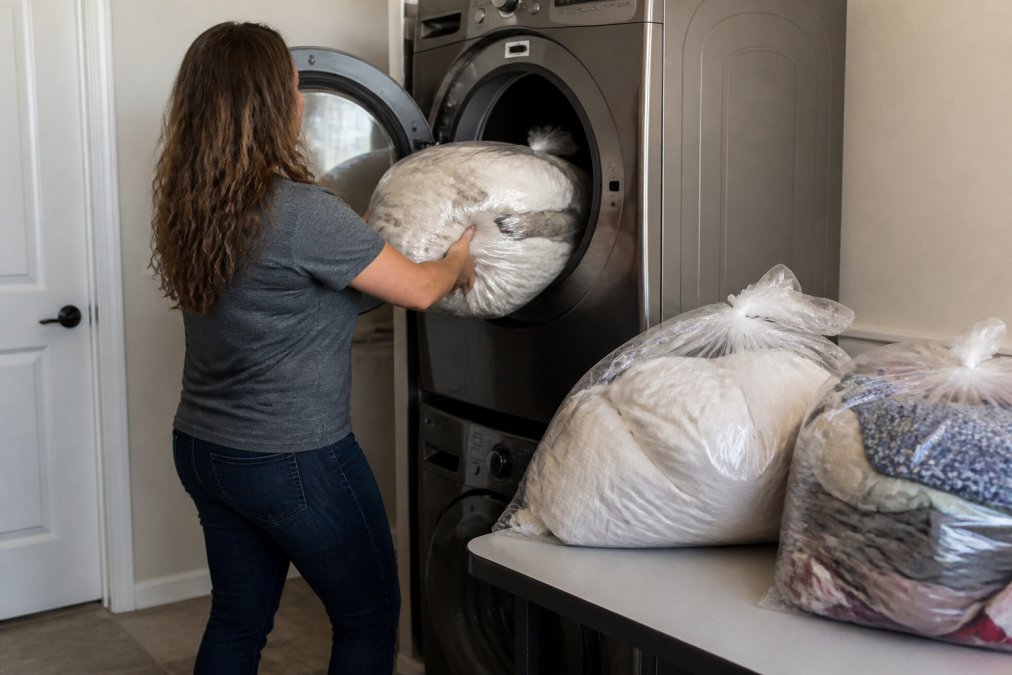
- Launder all bedding, clothing, and curtains on the highest heat setting your fabrics allow, then dry on high heat for at least 30 minutes.
- Seal laundered items in clean, labeled plastic bags until treatment is complete.
- Clear clutter from floors, under beds, and inside closets. Clutter reduction directly determines how thoroughly a technician can treat the space.
- Vacuum all floors and furniture immediately before the appointment, then dispose of the vacuum contents in a sealed bag outside the unit.
- Pull furniture away from walls by at least 30 centimetres to give the technician access to baseboards and wall junctions.
- Remove items from drawers and shelving in affected rooms and bag them separately for inspection.
- Inform your property manager in writing that treatment is scheduled, especially in strata buildings where coordination may be required.
Do not re-enter treated rooms until the technician confirms it is safe to do so. For chemical treatments, this typically means waiting until surfaces are dry.
| Preparation Step | Timing | Why It Matters |
|---|---|---|
| Launder and bag bedding | Day before treatment | Kills eggs; prevents re-contamination |
| Clear clutter from floors | Day before treatment | Maximizes treatment access |
| Vacuum and dispose of bag | Morning of treatment | Removes live insects before technician arrives |
| Pull furniture from walls | Morning of treatment | Exposes baseboard and crevice hiding spots |
| Notify property manager | At least 48 hours prior | Allows building coordination in multi-unit settings |
Multi-Unit Containment: Condo Legal Responsibilities and Landlord Obligations
Responsibility for bed bug treatment in a condo depends on tenure structure, building bylaws, and applicable tenancy legislation. Under British Columbia's Residential Tenancy Act, as referenced in BC's Residential Tenancy Act guidance for landlords, landlords are required to maintain rental units in a state of health, safety, and good repair. This obligation generally includes addressing pest infestations, including bed bugs, regardless of how the infestation originated.
For strata owners who occupy their own unit, responsibility typically falls on the individual owner, though the strata corporation may have obligations related to common property and shared building systems that allow pest migration.
If you rent, notify your landlord in writing immediately. If you own, contact your strata council and review your bylaws. Delay benefits no one, and in multi-unit buildings, delay almost always means spread.
Coordinating Inspections Across Multiple Units
Treating a single unit in a multi-unit building without inspecting adjacent units is one of the most common reasons bed bug infestations persist after professional treatment. Insects migrate through shared walls, plumbing chases, and electrical conduits. A thorough property management response involves:
- Inspecting the units immediately above, below, and on either side of the confirmed infestation
- Sealing penetrations between units with silicon caulk after treatment
- Scheduling follow-up unit inspections at 2-week intervals for at least 60 days
- Using monitoring traps in adjacent units to detect migration early
According to integrated pest management guidelines from the Canadian Pest Management Association, coordinated multi-unit inspections are a core component of effective bed bug management in residential buildings.
Why Bed Bugs Return After Professional Treatment
Professional treatment does not guarantee permanent elimination on the first visit. Understanding why re-infestation happens is the first step to preventing it.
Chemical Resistance and Missed Eggs
Chemical resistance is a documented and growing challenge. Populations exposed repeatedly to pyrethroid insecticides develop resistance across generations, meaning standard residual sprays may now have reduced effectiveness against certain populations. This is why integrated pest management protocols combine multiple treatment methods rather than relying on a single chemical class.
Missed eggs are the other primary cause of treatment failure. A single female bed bug can lay hundreds of eggs over her lifetime, and eggs are resistant to many chemical treatments. If even a small cluster survives in an overlooked hiding spot, a new generation of nymphs emerges within 10 to 14 days.
Post-Treatment Verification: Monitoring Traps and Follow-Up Inspections
Monitoring traps (also called interceptor traps) are placed under bed legs and furniture feet. They catch insects attempting to climb up to a host, providing early evidence of surviving or migrating populations. Check traps weekly for at least 60 days after treatment.
Follow-up inspections by a pest management professional at 14 and 30 days post-treatment allow technicians to assess residual effectiveness, treat any newly hatched nymphs, and adjust the protocol if chemical resistance is suspected.
Build follow-up inspections into your treatment plan from the start.
Bed Bug Prevention for Condo Owners After Treatment
Bed bug prevention is an ongoing practice, not a one-time event. The most common re-infestation sources are secondhand furniture, travel, and migration from neighboring units.
- Mattress encasements: Install laboratory-grade mattress encasements on all mattresses and box springs to seal existing hiding spots and make future inspections faster.
- Inspect secondhand items: Never bring upholstered furniture, mattresses, or clothing from unknown sources into your unit without thorough inspection.
- Travel protocols: After travel, inspect luggage before bringing it inside. Launder all travel clothing on high heat immediately.
- Seal entry points: Use silicon caulk to seal gaps around baseboards, electrical outlets, and plumbing penetrations, particularly on shared walls.
- Monitor regularly: Keep interceptor traps under bed legs year-round as an early detection system.
- Communicate with neighbors: In a strata building, a neighbor's infestation is your risk. Encourage open communication and prompt reporting to property management.
The Psychological Impact of a Bed Bug Infestation and How to Cope
A bed bug infestation is not just a pest problem. Sleep disruption, stigma, anxiety about biting at night, and uncertainty about whether treatment has worked create significant stress that many people underestimate until they experience it.
- Acknowledge the stress directly. Dismissing it delays recovery. Talking to someone you trust reduces isolation.
- Focus on what you can control. Follow your preparation checklist, schedule professional treatment, and set up monitoring traps. Action reduces anxiety more effectively than rumination.
- Set a verification milestone. Knowing you will have a professional follow-up inspection at day 30 gives you a concrete endpoint to work toward.
- Recognize the stigma is unfounded. Bed bugs are a vector control challenge, not a reflection of cleanliness. They appear in five-star hotels and carefully maintained condos.
If anxiety persists significantly after the infestation is resolved, speaking with a healthcare provider is appropriate.
Effective Bed Bug Removal for Condos: Choosing the Right Professional Service
Not all pest control services are equivalent. A generalist exterminator who treats bed bugs occasionally is not the same as a specialist who focuses on them exclusively.
When evaluating a professional service, ask:
- Do they offer a multi-unit inspection protocol, or do they treat single units in isolation?
- What treatment methods do they use, and do they combine mechanical, chemical, and thermal approaches?
- Do they include follow-up inspections as part of the treatment plan?
- Are their technicians familiar with the legal and logistical requirements of strata buildings?
- Can they accommodate urgent timelines for short-term rental operators or property managers?
Meridian Bed Bug Treatment specializes in bed bug treatment solutions for condos, apartments, homes, hotels, and short-term rentals across Vancouver and the Lower Mainland. Specialization matters because bed bug biology, chemical resistance patterns, and multi-unit containment strategies require focused expertise.
The Canadian Pest Management Association's consumer guidance on selecting a pest control professional recommends verifying that any provider you hire holds a valid provincial pest control licence and carries appropriate liability insurance before work begins.
Bed bug infestations in condos are more complex than single-family home cases because shared walls, legal obligations, and multi-unit dynamics all affect the outcome. DIY treatments rarely resolve the problem fully, and delayed professional intervention almost always means wider spread. Meridian Bed Bug Treatment provides specialized bed bug removal services tailored to the specific challenges of condo and multi-unit buildings, with treatment protocols that address the biological cycle from egg to adult and follow-up verification to confirm lasting results. Get started with Meridian Bed Bug Treatment and address your infestation with a plan built for the realities of condo living.
Frequently Asked Questions
Q: Who is responsible for bed bug treatment in a condo?
A: Responsibility depends on whether the unit is owner-occupied or rented. Under provincial residential tenancy legislation, landlords must maintain rental units in a habitable condition, which includes addressing pest infestations. In owner-occupied condos, the individual owner typically bears the cost for their unit, while the strata corporation may be responsible for common areas. When an infestation spreads across multiple units, coordinated treatment through property management is usually required to stop re-infestation.
Q: Can bed bugs be fully exterminated in a condo building?
A: Yes, a full extermination is achievable, but it requires treating all affected units simultaneously. Treating only one unit while neighboring units remain infested almost guarantees re-infestation within weeks. Integrated pest management that combines various treatment methods, including thermal treatment, residual spray, desiccant dusts, and follow-up monitoring traps, can lead to a high success rate. A pest management professional can assess the scope of the infestation and design a coordinated plan for multi-unit buildings.
Q: How do I prevent bed bugs from spreading between condo units?
A: Seal cracks and crevices along shared walls, baseboards, and around plumbing penetrations with silicon caulk. Install mattress encasements on all beds. Reduce clutter, which eliminates hiding spots. Use monitoring traps under bed legs to catch any bugs moving between units. When one unit is confirmed infested, immediately notify property management so adjacent and surrounding units can be inspected, even before visible signs appear. Early detection is the most effective containment strategy.
Q: Why do bed bugs keep coming back after professional treatment?
A: The most common reasons are untreated neighboring units, chemical resistance in local populations, and surviving eggs. Bed bug eggs are resistant to many contact killers and can hatch two to three weeks after treatment. If only one unit in a building is treated, bugs from adjacent units repopulate the space. A follow-up inspection 10 to 14 days after the initial treatment, combined with ongoing monitoring traps, is essential to confirm the infestation is fully resolved.
Q: What is the fastest way to get rid of bed bugs in a condo?
A: Thermal treatment, which raises room temperatures above 50°C for several hours, kills bed bugs at all life stages including eggs in a single visit. Combined with a residual spray applied to baseboards, cracks, and crevices, this approach offers a fast path to effective bed bug removal. Preparation before the treatment, including laundering all bedding on a high-temperature dryer cycle and reducing clutter, significantly improves results and reduces the chance of re-infestation.
Q: What time of year is worst for bed bugs?
A: Bed bug activity does not follow a strict seasonal pattern the way outdoor pests do. That said, infestations are often reported more frequently in late summer and fall, coinciding with increased travel and the return of post-secondary students to shared housing. Bed bugs spread through luggage, used furniture, and shared laundry facilities year-round, so condo residents and property managers should maintain vigilance and use monitoring traps continuously rather than only during peak travel periods.
This article was written using GrandRanker