 blog
blog
Heat vs Chemical Bed Bug Treatment: Which Works?
Table of Contents
- Heat vs Chemical Bed Bug Treatment: The Core Trade-Offs
- How Heat Treatment Works and Where It Falls Short
- How Chemical Treatment Works and What It Leaves Behind
- Bed Bug Heat Treatment Effectiveness: Eggs, Nymphs, and Adults
- How Long Does Bed Bug Heat Treatment Take?
- Bed Bug Treatment Preparation: What Each Method Demands
- Cost, Safety, and Pest Control Regulations
- Bed Bug Treatment Follow-Up: Verification and Preventing Reinfestation
- Frequently Asked Questions
Last Updated: October 12, 2026
Heat vs Chemical Bed Bug Treatment: The Core Trade-Offs
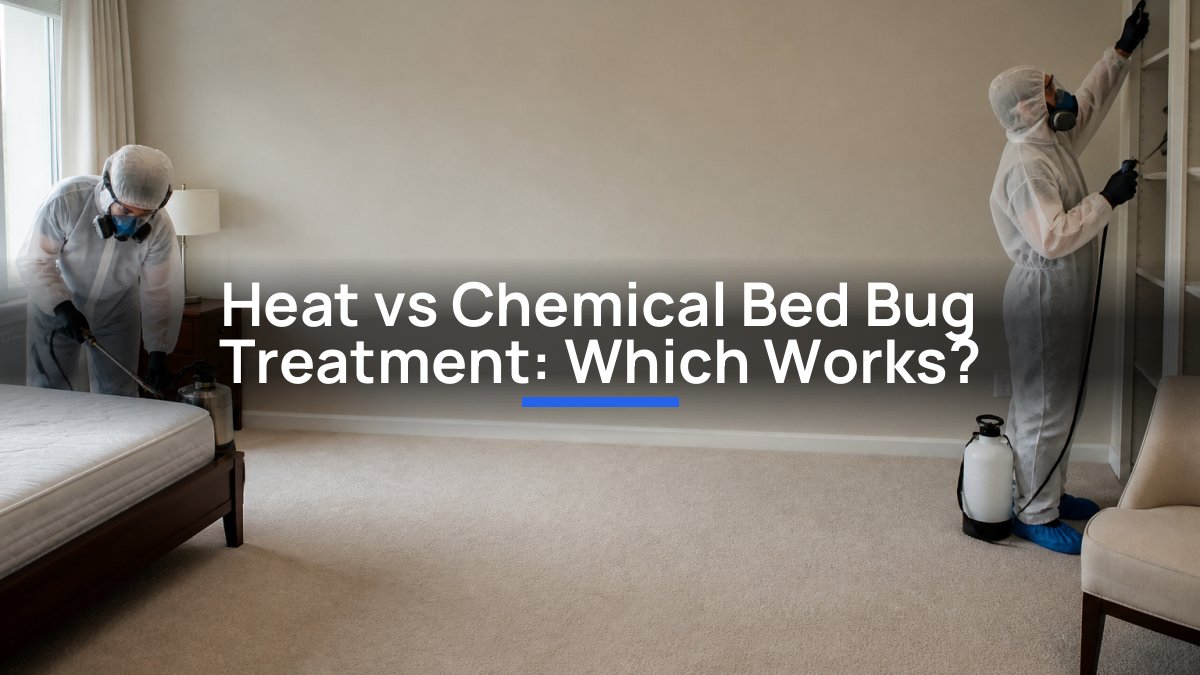
When bed bugs move in, the first real decision is heat vs chemical bed bug treatment. Heat raises a room to a lethal temperature and kills every life stage in hours; chemical treatment applies insecticide to surfaces and hiding places, killing over days or weeks and leaving residual protection behind.
Neither method is universally better: heat is fast, chemical is patient, and the right pick depends on your infestation, your building, and how much disruption you can tolerate.
The sections below cover how each method works, what it costs in prep time, and how to verify the bugs are gone. What most comparison guides skip: the follow-up inspection matters more than the method you choose.
How Heat Treatment Works and Where It Falls Short
Heat treatment is the practice of raising the temperature of an entire room, or the whole home, to a level that kills bed bugs at every life stage, then holding it there long enough for the heat to reach inside mattresses, furniture, and wall voids.
Professional thermal remediation uses industrial heaters and fans to push a treated area to roughly 50-60°C and hold it for several hours.
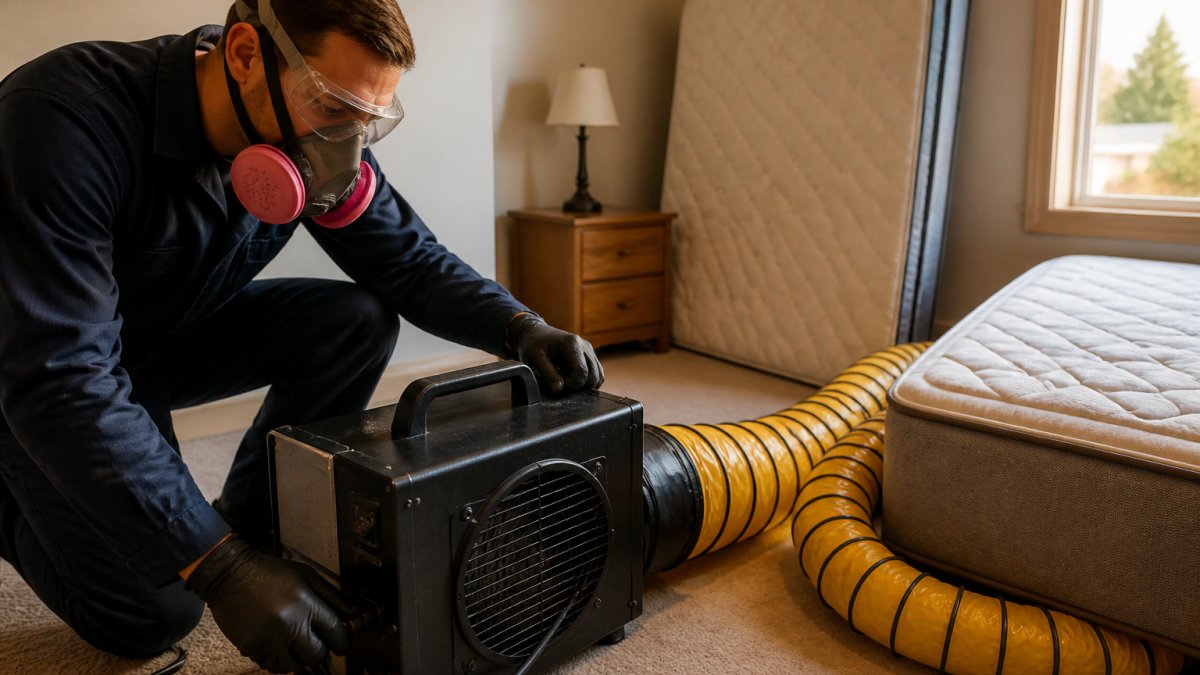
Where it falls short: heat does nothing to prevent reinfestation. Once the equipment leaves, there is no residual effect, and harborages inside sealed wall cavities or behind baseboards can stay cool enough to let survivors live. A heat job without monitoring is a gamble.
How Chemical Treatment Works and What It Leaves Behind
Chemical treatment relies on pesticide application to cracks and crevices, baseboards, bed frames, and other harborages where bed bugs shelter.
The trade-off is speed: a chemical application does not kill every bed bug the same day. Expect survivors for several days as bugs cross treated surfaces, and some products need a repeat treatment to catch newly hatched nymphs.
What it leaves behind is the real advantage: residual control. Treated surfaces keep working after the technician leaves, which helps with reinfestation from adjacent units. The downside is chemical residues, which matter with pets, young children, or respiratory sensitivities in the home.
Bed Bug Heat Treatment Effectiveness: Eggs, Nymphs, and Adults
Heat kills all life stages when it is done right. Bed bug heat treatment effectiveness comes down to temperature, exposure time, and heat penetration into every harborage, not the equipment brand.
A properly executed thermal job reaches adult bed bugs, nymphs, and bed bug eggs. This matters because eggs are the hardest stage to kill with chemicals. Many insecticides do not penetrate the eggshell, so nymphs hatch days after a spray and restart the infestation.
Chemical treatment effectiveness varies by product and by how thoroughly the technician covers cracks and crevices. Most insecticides do not kill eggs, which is why chemical protocols almost always include a follow-up visit two to three weeks later.
- Heat: kills eggs, nymphs, and adults in one session, no residual
- Chemical: kills on contact or over time, weak on eggs, strong residual
- Combined: heat for the kill, chemical for the residual, monitoring for proof
How Long Does Bed Bug Heat Treatment Take?
A typical whole-room heat treatment takes 6 to 8 hours from setup to cool-down. Whole-house treatment runs longer, often a full day, because every room needs to reach temperature and hold it.
How long does bed bug heat treatment take in practice? The clock starts when the room hits target temperature, not when the heaters switch on. A single bedroom might finish in a day; a three-bedroom home with a finished basement can take a full day plus a return visit.
Chemical treatment is faster on site, often 1 to 3 hours, but slower to finish: the kill continues over days, and a second application usually follows in two to three weeks. For short-term rental hosts protecting bookings, heat's one-day turnaround is usually the deciding factor.
Bed Bug Treatment Preparation: What Each Method Demands
Bed bug treatment preparation is where most failed treatments are lost, and heat demands far more than chemical. Heat only kills what it reaches, and chemicals only kill what they contact, so prep removes the barriers to both.
Why heat prep is unforgiving
Professional thermal remediation pushes a treated area to roughly 50-60°C and holds it for several hours. Bed bugs and their eggs die when their internal temperature reaches about 45°C, so the goal is heat penetration, not just hot air. University of Minnesota bed bug heat treatment research documents the temperature and exposure time relationship in detail. Anything that blocks airflow or absorbs heat, a packed closet, a stack of blankets, a mattress left flat on the floor, can create a cool pocket where survivors wait out the treatment.
That is why heat prep is really about airflow:
- Remove anything that can melt, warp, or catch fire: candles, aerosols, pressurized canisters, vinyl records, chocolate, medications, and pets.
- Unplug and clear electronics, and confirm with the technician before leaving anything plugged in.
- Open closet doors, pull furniture slightly away from walls, and lift mattresses and box springs so heated air can circulate around and under them.
- Clothes and linens can usually stay, since heat treats them too, but do not pack them tightly.
- Plan to be out for the day, and expect the technician to place temperature sensors in the hardest-to-heat spots.
Why chemical prep is about access
Chemical treatment relies on pesticide application to cracks and crevices, baseboards, bed frames, and other harborages where bed bugs shelter. Modern products are applied as targeted sprays or dusts rather than broadcast fogging. The technician can only treat what they can reach, so prep is about clearing a path:
- Declutter so baseboards, bed frames, and furniture seams are accessible.
- Wash and bag bedding, and keep the bags sealed until the follow-up inspection.
- Vacate the unit for the posted re-entry time.
- Do not move items between rooms, or you spread the infestation.
The prep mistakes that cause repeat calls
A common pattern is a treatment that kills the visible bugs but leaves a harborage untouched. Two prep failures drive most of these:
-
Moving items mid-treatment. Carrying a single infested pillow to the couch can seed a new harborage in a room that was already treated.
-
Leaving clutter in place. Boxes, laundry piles, and stored items give bed bugs somewhere to sit out the application and re-emerge afterward.
-
Heat prep: remove heat-sensitive items, unplug and clear electronics, open airflow paths, plan to be out for the day
-
Chemical prep: declutter, launder bedding, vacate during application and re-entry window
-
Both: do not move items between rooms, and keep bagged items sealed until verification
| Factor | Heat Treatment | Chemical Treatment |
|---|---|---|
| Kill time | Hours | Days to weeks |
| Eggs | Killed in one session | Often survive, need repeat |
| Residual protection | None | Weeks of residual control |
| Prep effort | High | Moderate |
| On-site time | 6-8 hours | 1-3 hours |
| Best for | Fast turnaround, heavy infestation | Residual defense, multi-unit buildings |
Cost, Safety, and Pest Control Regulations
Pricing for either method depends on the size of the treated area, the number of rooms, and how many follow-up visits are needed.
What actually moves the price
- Treated volume, not floor area. Heat is priced by the cubic space that must reach and hold temperature. A cluttered two-bedroom with a finished basement can cost more to heat than a larger but emptier unit, because furniture slows heat penetration and extends hold time.
- Infestation severity and spread. A single-room infestation is a smaller job than one that has reached multiple bedrooms, a sofa, and adjacent units. Severity drives both the number of treatment zones and the number of follow-up visits.
- Preparation burden. Heat jobs require more labor to remove heat-sensitive items, protect electronics, and stage the space. Chemical jobs shift labor toward decluttering and access to baseboards and bed frames.
- Follow-up visits. A protocol with a two-to-three-week verification visit costs more up front than a single application, but it is usually cheaper than paying for a second full treatment after a failed first attempt.
- Building type. Apartments and condos add inspection and coordination costs because treating one unit without checking neighbours usually means a repeat infestation within weeks.
A useful habit: ask each provider to break the quote into treatment, preparation support, and follow-up, then compare those line items rather than the bottom line.
Safety for occupants and pets
Heat leaves no chemical residues, which matters in homes with infants, elderly residents, or respiratory conditions. The trade-offs are practical: heat-sensitive belongings must be removed, and occupants and pets need to be out for the treatment day.
Regulation and licensing
In Canada, pesticide application is regulated provincially, and the rules differ by province.
Before work starts, ask any technician for their applicator licence and, for multi-unit buildings, ask how they will notify and inspect neighbouring units.
Bed Bug Treatment Follow-Up: Verification and Preventing Reinfestation
The treatment is not finished when the technician packs up. Bed bug treatment follow-up separates a resolved infestation from a repeat call in six weeks.
Verification means a return inspection at two to three weeks, using visual checks and monitors placed at bed frames and harborages. If survivors appear, a targeted repeat treatment catches them before they establish a new generation. Skipping this step is the most common reason people pay twice.
Preventing reinfestation comes down to monitoring and early detection. Encasements on mattresses and box springs trap survivors and speed future inspections, while interceptors under bed legs catch bugs travelling to and from the bed. If you travel or host guests, inspect the bed frame monthly, not just the mattress.
That is where a specialized provider earns its keep. Meridian Bed Bug Treatment handles homes, condos, apartments, hotels, and short-term rentals across Vancouver and the Lower Mainland, with discreet service for multi-unit buildings and property managers who need the problem solved without alarming every neighbour. If DIY attempts have failed, or you manage units where a single missed harborage means a second call, get an inspection and a written treatment plan before committing to a method. Get started with Meridian Bed Bug Treatment and put a verified end date on your infestation.
Frequently Asked Questions
Is heat treatment more effective than chemical treatment for bed bugs?
Neither method is universally better. Heat penetrates mattresses, furniture, and cracks and crevices quickly, killing all life stages including bed bug eggs. Chemical treatment leaves residual control that keeps working after application, which helps with survivors and reinfestation. A professional assessment of your infestation level and home layout determines which method or combination works best. Many severe infestations respond best to a combined approach.
Can heat and chemical treatments be used together?
Yes, and combining methods is often the most thorough approach. Heat kills bed bugs and eggs in the treated area, while a targeted pesticide application adds residual protection in harborages and cracks and crevices. This integrated pest management strategy reduces the chance that survivors cause reinfestation. A professional exterminator can determine the right sequence and timing for your situation.
How long does bed bug heat treatment take?
A typical heat treatment runs six to eight hours, including setup, bringing the space to lethal temperature, holding it long enough for heat penetration into furniture and walls, and cooling down. Larger homes or units with heavy clutter may take longer. Chemical treatments usually involve two or three visits spaced one to two weeks apart, so the total timeline is longer even though each application is quicker.
Do bed bugs come back after heat treatment?
They can if bed bugs or eggs survive in untreated spaces such as adjacent units, wall voids, or items that were not exposed to lethal temperatures. Follow-up inspection and monitoring are essential. A professional treatment plan includes verification steps and, where needed, a residual pesticide application or repeat treatment to address survivors. Without follow-up, reinfestation from missed harborages or reintroduction is possible.