 how-to
How to Prepare Home for Bed Bug Treatment: 2026 Guide
Table of Contents
- What You'll Need Before Treatment Day
- Room-by-Room Preparation: Clearing Access Points and Decluttering
- Laundry Procedures for Bed Bug Extermination
- How to Bag Items for Bed Bug Treatment
- Kitchen and Pantry: Food Storage and Sanitation
- Pet and Child Safety Precautions During Treatment
- How Long to Stay Out of House After Bed Bug Spray
- Apartment vs. Single-Family Home: What Changes
- Frequently Asked Questions
Last Updated: September 12, 2026
What You'll Need Before Treatment Day
Preparation is the difference between a treatment that works and one you pay for twice. Learning how to prepare home for treatment properly means giving your technician clear access to every hiding spot, and that starts with a short list of supplies you can gather in an afternoon to prepare home before the appointment.
Here's what to have on hand before your appointment:
- Heavy-duty plastic bags or sealed bins for clothing and small items
- A vacuum with a disposable bag or canister you can empty outside
- Laundry detergent and access to a washer and dryer
- A mattress encasement sized to your bed
- Screwdriver or Allen key for removing switch plates and outlet covers
- Flashlight for checking seams and crevices
We walk every client through this list before we arrive, because a prepared home lets technicians treat faster and more thoroughly. The Health Canada pest control product safety guidance is also worth a read if you want to understand what's being applied to your home before treatment day.
Room-by-Room Preparation: Clearing Access Points and Decluttering
Clearing access points means pulling furniture away from walls, emptying drawers and closets, and reducing clutter so a technician can reach baseboards, seams, and crevices where bed bugs hide. Most failed treatments trace back to blocked access, not weak chemicals.
Start with a walk-through of each room and ask one question: can a technician reach the wall edge without moving anything? If the answer is no, that's your first job.
Bedroom: Bedding, Furniture, and Drawer Access
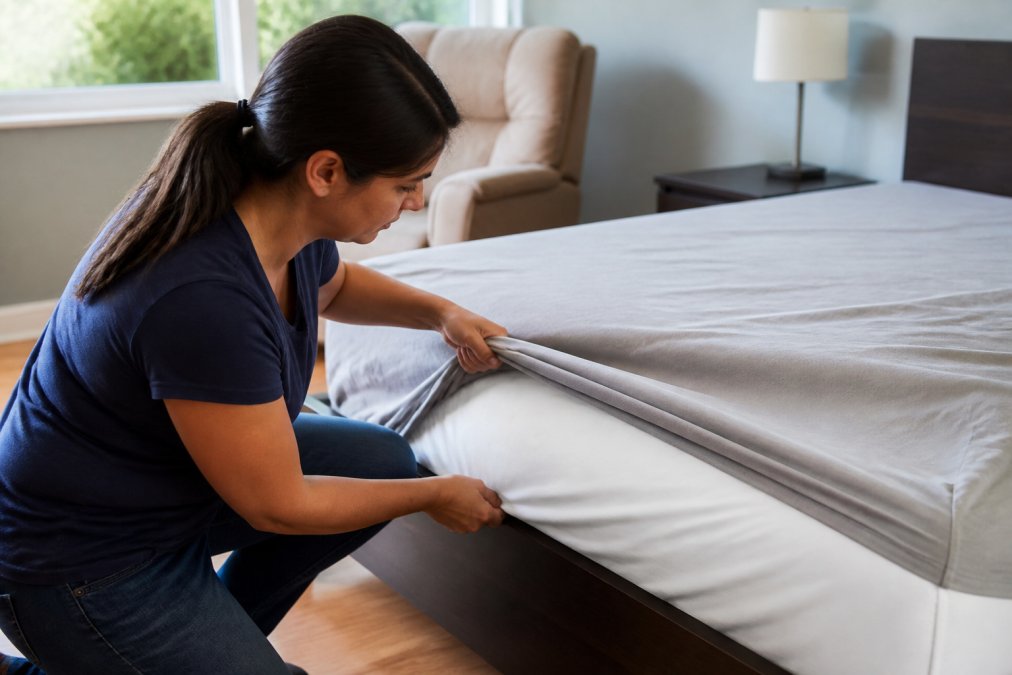
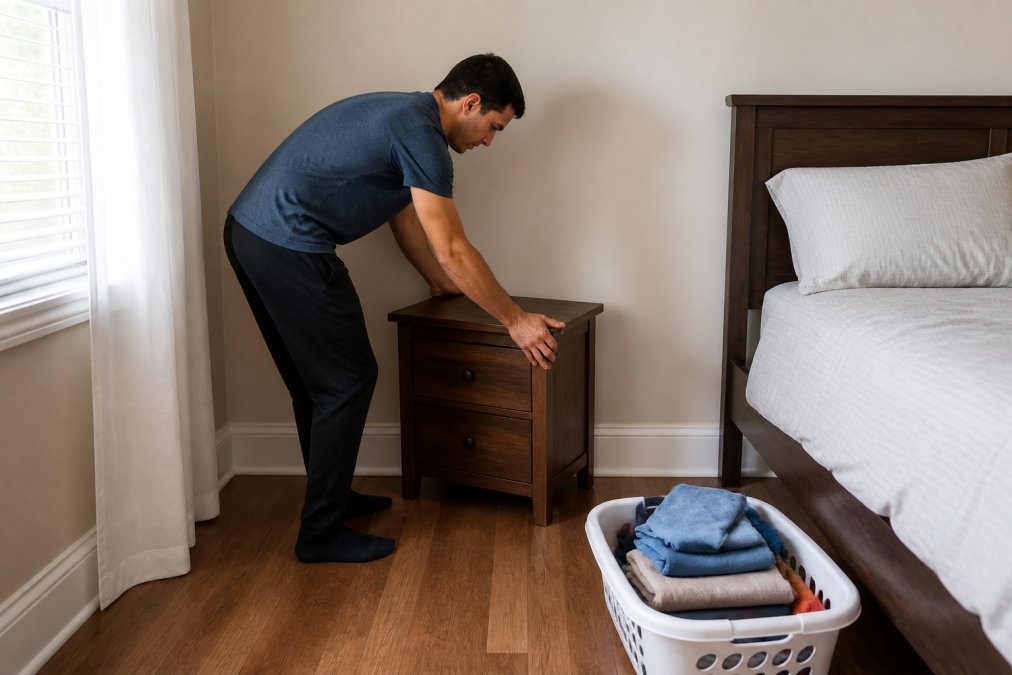
Strip the bed completely and set bedding aside for laundering. Pull the bed frame away from the wall so the headboard and all four legs are reachable, and empty nightstand and dresser drawers into bags so the technician can treat inside the furniture, not just around it.
Living Areas: Upholstered Furniture and Baseboards
Pull sofas and armchairs away from walls and check under seat cushions for signs of infestation before treatment. Remove items stored under the bed and clear the floor along baseboards so a residual spray can reach the full perimeter of each room.
Laundry Procedures for Bed Bug Extermination
Laundry procedures for bed bug extermination follow one rule: heat kills every life stage, including eggs and larvae. Wash items on the hottest cycle the fabric allows, then dry on high heat for at least 30 minutes.
- Sort clothing, bedding, and curtains into washable and non-washable piles
- Wash washable items in hot water with regular detergent
- Dry on the highest heat setting for a full 30 minutes minimum
- Bag clean items immediately in sealed plastic so they can't be re-infested
- Set aside non-washable items for the technician to treat directly
Don't overload the dryer. A packed drum leaves the centre of the load below the temperature needed to kill bed bugs, and that's how infestations survive a laundry day.
How to Bag Items for Bed Bug Treatment
Bagging items correctly keeps bed bugs from spreading to clean rooms while you prepare. Use heavy-duty plastic bags or sealed bins, and double-bag anything you're unsure about.
When learning how to bag items for bed bug treatment, the sequence matters more than the bag itself:
- Place the item directly into the bag without shaking it
- Seal the bag tightly, pressing out excess air
- Label the bag with the room it came from
- Move sealed bags to a staging area away from treated rooms
- Leave sealed bags closed until your technician confirms it's safe to reopen them
Kitchen and Pantry: Food Storage and Sanitation
Move all food, pet food, and dishware out of cabinets before treatment and store them in airtight containers or sealed bags. Bed bugs don't feed on food, but they hide in cabinet seams and along shelf edges, so those spaces need to be empty and reachable.
Wipe down counters and shelves after clearing them, and check the seals around your fridge and dishwasher. A service technician will treat cabinet interiors and baseboards, and sanitation before treatment helps the residual spray bond to clean surfaces rather than dust and grease.
Pet and Child Safety Precautions During Treatment
Confine pets and keep children away from treated rooms until the technician confirms reentry. Chemical application requires an empty, ventilated space, and the reentry time depends on the product used, not on how the room looks or smells afterward.
- Move pet bowls, toys, and beds out of treated areas before the technician arrives
- Arrange for pets to stay elsewhere during treatment and the reentry window
- Keep children out of treated rooms until surfaces are fully dry
- Ask your technician for the specific reentry time for the product applied
- Ventilate treated rooms by opening windows once reentry is permitted
If anyone in your household has chemical sensitivities or respiratory conditions, tell your technician before treatment day. Knowing about sensitivities lets the technician adjust the approach rather than apply a standard treatment.
How Long to Stay Out of House After Bed Bug Spray
Most people can reenter a treated home once surfaces are dry, which typically takes a few hours, but the exact reentry time depends on the product your technician applies. Ask for that number in writing before the appointment, not after.
The Government of Canada pest control product regulation overview explains how these products are approved and labelled, and the label is what sets the safe reentry window. Treat any generic online answer, including this one, as a starting point rather than a substitute for what your technician tells you.
A Practical Reentry Timeline You Can Plan Around
Because the label controls the number, the most useful thing you can do is build a timeline with your technician before treatment day. A common pattern looks like this:
- Hour 0, treatment ends. The technician finishes application and leaves the space closed. Do not reenter, even briefly, to grab a phone charger or check on a pet.
- Drying window, usually a few hours. Surfaces need to be fully dry, not just dry to the touch in the middle of the room. Corners, baseboards, and the undersides of furniture dry last.
- Ventilation window, once reentry is permitted. Open windows and run fans to clear residual odor. Odor is not a reliable safety signal; a product can be dry and still off-gassing, or smell faint and be fully dry.
- First night back. Sleep in the treated room if the technician confirms it is safe. Sleeping elsewhere in the home can pull bed bugs toward an untreated room and undo part of the work.
- First 24-48 hours. Keep pets and young children out of treated rooms until the technician's stated window has fully passed, and wash any dishes or utensils that were left out before treatment.
What Changes the Number
Reentry time is not one-size-fits-all. The label sets the floor, but several factors push the practical window longer:
- Product type. Residual sprays, dusts, and aerosols each carry different reentry language on their labels.
- Ventilation. A closed apartment with one window takes longer to clear than a house with cross-breeze.
- Household members. Asthma, allergies, pregnancy, or chemical sensitivity usually means a longer buffer and a conversation with the technician before treatment, not after.
- Pets. Birds and fish are especially sensitive to airborne residues; ask about them specifically rather than assuming the general pet guidance covers them.
What to Do If You Feel Symptoms After Reentry
If anyone in the household develops headache, nausea, dizziness, or breathing difficulty after reentering, leave the space, get fresh air, and contact your provincial poison control service or seek medical attention. Keep the product label or the technician's written reentry note handy so you can tell a health professional exactly what was applied.
Apartment vs. Single-Family Home: What Changes
Apartment preparation adds one layer a house doesn't have: shared walls. Bed bugs travel through outlets, baseboards, and wall voids between units, so treating one apartment without checking adjacent units often means the infestation returns within weeks.
For apartments and condos:
- Notify your building manager before treatment day
- Ask whether adjacent units will be inspected at the same time
- Seal gaps around outlets and baseboards after treatment to slow re-entry
- Coordinate with neighbours so no one re-introduces bed bugs from an untreated unit
For single-family homes, the process is more contained. You control every room, so preparation focuses on clearing access points and laundry rather than coordinating with other households. The trade-off is square footage: a larger home takes longer to prep, so start a day or two ahead rather than the morning of your appointment.
If you're a landlord or property manager dealing with a multi-unit building, Vancouver Coastal Health pest control resources covers the public health side of managing infestations across shared spaces.
How Bed Bugs Actually Move Between Units
Understanding the mechanism makes the coordination advice make sense. Bed bugs do not fly or jump; they crawl. In a multi-unit building they move along three main routes:
- Shared wall voids. Gaps around plumbing, electrical outlets, and baseboards let bugs pass from one unit to the next without ever entering a hallway.
- Common corridors and elevators. Bugs hitchhike on bags, laundry carts, and furniture moved between units.
- Stacked plumbing and HVAC chases. Vertical runs behind kitchens and bathrooms connect floors, which is why an infestation on the third floor can reappear on the fourth.
This is why treating a single unit in isolation is a temporary fix. The technician can clear your apartment, but if the source unit next door is untreated, re-infestation is a matter of time.
Landlord and Tenant Responsibilities
In most provinces, landlords are responsible for maintaining pest-free rental units, and tenants are responsible for allowing access and following preparation instructions. The exact split varies by province and by the wording of your lease, so check your tenancy agreement or your provincial residential tenancy authority before assuming who pays for what.
A practical division of labor that works in most buildings:
- Landlord or property manager: arranges the licensed technician, coordinates access to adjacent units, handles common areas, and documents the treatment.
- Tenant: clears clutter, launders bedding and clothing, bags items, confines pets, and follows reentry instructions.
- Both: agree in writing on the treatment date, the reentry window, and what happens if the infestation returns within the warranty period.
Condo-Specific Considerations
Condos add a strata layer. The strata corporation often controls common property, hallways, elevator lobbies, shared laundry rooms, while the owner controls the interior of the unit. If bed bugs are suspected in common areas, the strata council usually needs to be involved, and a building-wide inspection may be required rather than a single-unit treatment. Check your strata bylaws for the process, and expect the strata to have its own pest control contractor or approved vendor list.
A Pre-Treatment Coordination Checklist for Multi-Unit Buildings
- Confirm the treatment date and reentry window in writing with the landlord or property manager
- Ask which adjacent units (above, below, and on both sides) will be inspected or treated on the same day
- Notify neighbours at least 48 hours ahead so they can prepare their own units
- Clear shared storage areas, hallways, and laundry rooms of personal items
- Bag and seal anything moving between your unit and common areas during prep
- Confirm who is responsible for follow-up inspection and what the warranty covers
Frequently Asked Questions
How to prepare a house for bed bug treatment?
Start by decluttering and clearing access to baseboards, outlets, and furniture edges. Wash all bedding and clothing in hot water, then dry on high heat. Bag items you can't wash in sealed plastic bags. Vacuum floors and upholstered furniture thoroughly. Remove pets and children before treatment. Follow your technician's specific instructions for your home's layout and infestation level.
Do I need to wash all my clothes before bed bug treatment?
Yes, wash all clothing, bedding, and linens that may have been exposed. Use the hottest water setting the fabric can handle, then dry on high heat for at least 30 minutes. This kills bed bugs and their eggs. For items that can't be washed, bag them securely and discuss options with your technician. Proper laundry procedures are critical for eliminating hidden infestations.
How long do I need to stay out of my house after bed bug spray?
Reentry time depends on the products used. Many treatments require you to stay out for 4 to 6 hours, but some residual sprays need up to 24 hours. Your technician will give you a specific timeframe based on ventilation and chemical application. Don't return early, and keep pets and children away until the treated areas are fully dry and aired out.
What happens if I don't properly prepare my home for treatment?
Poor preparation can let bed bugs survive in untreated clutter, behind furniture, or inside unwashed fabrics. The treatment may fail, leading to a second visit and extra cost. It also increases the risk of re-infestation. Following the preparation checklist carefully gives the chemicals or heat a clear path to reach hiding spots, making success far more likely.


