 listicle
Questions to Ask Pest Control Before Bed Bug Treatment
Table of Contents
- Why the Questions You Ask Before Treatment Determine Whether It Works
- How Do I Know If a Pest Control Company Is Qualified to Handle Bed Bugs?
- What Should a Bed Bug Treatment Preparation Checklist Cover?
- Heat Treatment vs Chemical Spray for Bed Bugs: Which Method Fits Your Situation?
- How Long Does Bed Bug Treatment Take, and What Happens After?
- What Does a Pest Control Bed Bug Service Guarantee Actually Cover?
- Safety Protocols for Pets, Children, and Re-Entry Time
- Post-Treatment Monitoring and Prevention Strategies
- Frequently Asked Questions
Last Updated: September 16, 2026
Why the Questions You Ask Before Treatment Determine Whether It Works
The single most important factor in whether a bed bug treatment succeeds is not the chemical or the equipment, it is the questions you ask before anyone picks up a sprayer. This guide from Meridian Bed Bug Treatment covers the questions that separate a lasting fix from a costly repeat infestation.
How Do I Know If a Pest Control Company Is Qualified to Handle Bed Bugs?
A qualified bed bug company holds a valid pesticide applicator licence, carries liability insurance, and can explain its treatment method in plain language. Ask for proof before you book.
Licensing and Insurance Verification
Pest control operators must be licensed to apply pesticides, and requirements vary by province. Ask for the licence number and confirm liability coverage, a legitimate company provides both without hesitation.
Vetting Technicians vs. Salespeople
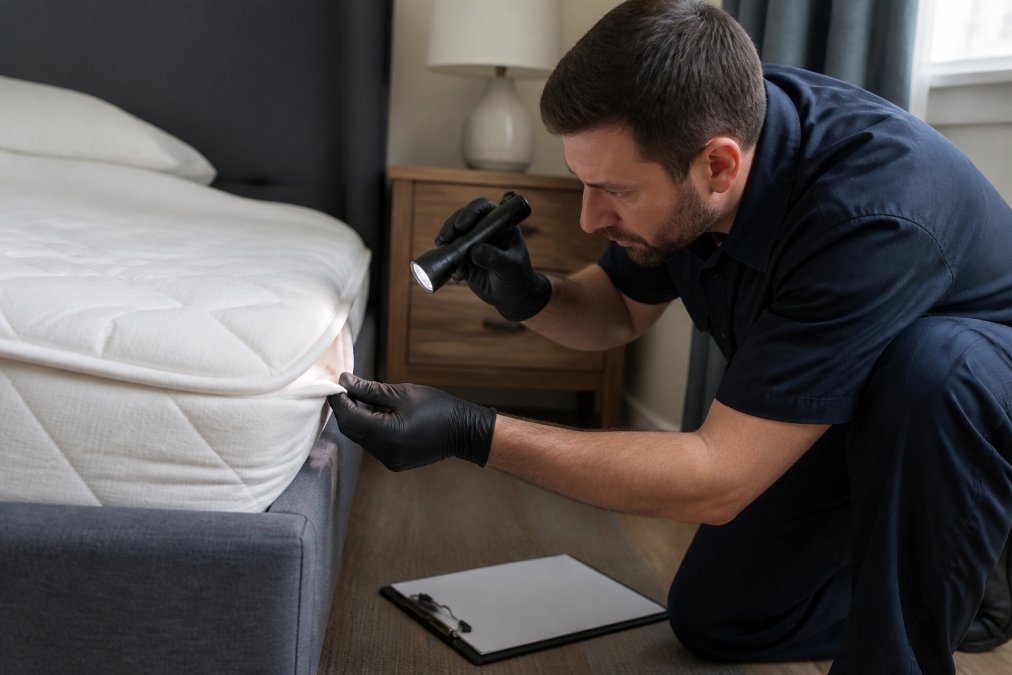
The person who inspects your home should be the same kind of person who treats it. A common mistake is accepting a quote from a salesperson who never examines the infestation. A proper site inspection identifies live bed bugs, nymphs, and signs of the egg cycle before any number is quoted.
What Should a Bed Bug Treatment Preparation Checklist Cover?
A bed bug treatment preparation checklist is the list of tasks you must complete before the technician arrives, and skipping it is the fastest way to waste your money. Most failed treatments trace back to poor preparation, not poor chemicals.
A complete checklist typically covers:
- Laundering and drying all bedding and clothing on high heat
- Vacuuming floors, mattresses, and furniture seams
- Decluttering floors and closets so the technician can reach baseboards
- Removing or bagging items that cannot be treated
- Leaving mattress encasements in place after treatment
Heat Treatment vs Chemical Spray for Bed Bugs: Which Method Fits Your Situation?
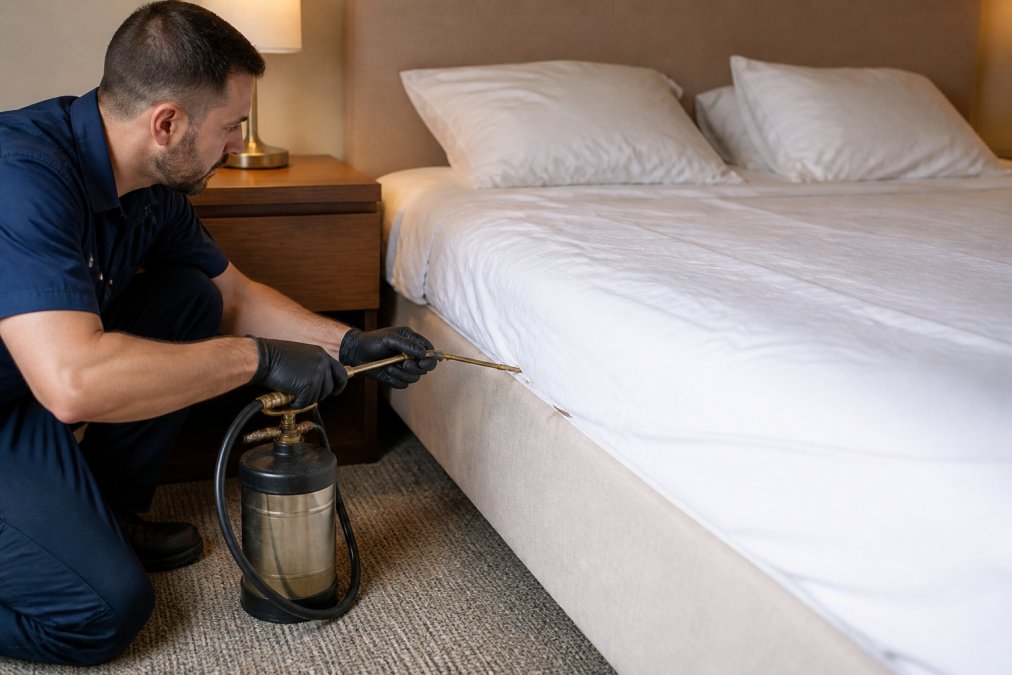
Heat treatment and chemical spray are the two main professional methods, and the right choice depends on your property type, infestation severity, and how quickly you need to return. Neither is universally better.
| Method | How It Works | Best For | Main Trade-off |
|---|---|---|---|
| Heat remediation | Raises room temperature to lethal levels | Severe infestations, single-family homes | Higher cost, prep-intensive |
| Chemical treatment | Applies residual pesticide to harbourage areas | Multi-unit buildings, targeted infestations | Requires re-entry wait |
| Steam treatment | Uses pressurized steam on seams and frames | Mattresses, furniture, spot treatment | Limited to reachable surfaces |
| Integrated pest management | Combines methods with monitoring devices | Complex or recurring cases | Longer timeline |
How Long Does Bed Bug Treatment Take, and What Happens After?
A typical bed bug treatment takes two to six hours depending on method and property size, but the timeline that matters is the full service agreement, which usually spans several weeks. A single visit is rarely the whole job.
Here is what a complete timeline looks like:
- Inspection and confirmation of live bed bugs
- Preparation by the homeowner
- Initial treatment, two to six hours
- Re-entry wait, which varies by method
- Follow-up visit, typically two to three weeks later
- Final monitoring to confirm elimination
What Does a Pest Control Bed Bug Service Guarantee Actually Cover?
A pest control bed bug service guarantee is a written commitment to retreat your home if bed bugs return within a set period, and the details matter more than the promise. Read the fine print before you sign and answer three questions: what counts as a failure, how do I prove it, and what happens when I do.
Warranty and Retreatment Clauses
Ask how long the warranty lasts, what triggers a free retreatment, and what voids it. Then push past the headline number to the clause-level answers:
- What is the warranty period, and does it start on the first treatment or the final follow-up visit? A warranty that starts on day one of a multi-week protocol can quietly expire before the follow-up even happens.
- What counts as a "failed treatment"? This is the clause most homeowners never read. Some agreements define failure as live bed bugs confirmed by the company's own technician, meaning the company decides whether its own work failed. Others require a certain number of bites, a certain number of sightings, or a re-inspection fee before the guarantee activates. Ask which definition applies to you.
- Is retreatment free, discounted, or full price? A warranty that requires you to pay full price for the return visit is not a warranty, it is a scheduling preference.
- What voids the guarantee? Common conditions include skipping the preparation checklist, treating the area yourself between visits, missing a scheduled follow-up, or failing to report new activity within a set window (often 30 to 90 days). Get the void conditions in writing before you sign, not after you have a problem.
- Does the guarantee transfer if you move, or if the property changes tenants? For rentals and multi-unit buildings, this clause determines whether the protection follows the unit or dies with the lease.
How to Document and Enforce a Failed Treatment
A guarantee you cannot enforce is a marketing line. Build a paper trail from day one:
- Keep the signed service agreement and any preparation checklist the company provided. These are the documents the warranty references.
- Date every sighting. Note when you saw a live bug, where, and what it looked like. Photograph it if you can, ideally next to something for scale.
- Report in writing, within the window. Most warranties require notification within a set number of days of new activity. A phone call is easy to dispute; an email with a photo and a date is not.
- Request the re-inspection in writing and ask for the technician's findings in writing too. If the company confirms live activity, you now have their own record triggering the retreatment clause.
- Escalate if the clause is ignored. Pesticide applicators are licensed and regulated, and consumer protection legislation covers service contracts. A complaint to the provincial regulator or a consumer protection office is a legitimate next step if a company refuses to honor its own written terms.
Liability for Property Damage
Heat-based treatments can damage heat-sensitive items, electronics, vinyl records, candles, some adhesives, certain flooring, and chemical treatments can stain fabrics, discolor finishes, or leave residue. Ask what the company's insurance covers if something breaks or discolors, and whether there is a deductible or claim limit. Get the answer in writing, and inventory high-value items before treatment day.
Safety Protocols for Pets, Children, and Re-Entry Time
Safety protocols for pets and children should be spelled out before treatment day, not improvised on the spot. Ask what products will be used, how long pets and kids must stay away, and when it is safe to return.
Key questions to ask:
- What pesticide or heat method will be used, and is it safe around pets once dry?
- How long must children and pets stay out of treated rooms?
- Do I need to remove fish tanks, birds, or reptiles before treatment?
- What is the exact re-entry time, and how will I know it is safe?
Post-Treatment Monitoring and Prevention Strategies
Post-treatment monitoring is how you confirm the infestation is actually gone rather than assuming it. Bed bugs are cryptic, their bites affect people differently, and a single missed egg can restart a colony weeks after the technician leaves. You need a defined monitoring window, method, and threshold for calling the company back.
A 60-Day Monitoring Protocol
Set a calendar reminder and follow this schedule. The goal is to catch a failed treatment inside the warranty window, not after it expires.
- Days 1-3: Expect some activity. Newly hatched nymphs and bugs disturbed by treatment can surface. Do not panic and do not treat anything yourself, that can void your warranty.
- Days 4-14: This is the critical window. Live bugs seen here, especially adults, suggest the treatment did not reach a harbourage. Document each sighting with a date and photo.
- Days 15-30: Activity should be declining or absent. Any new bites, shed skins, or live bugs in this window are a signal to call the company for the scheduled follow-up.
- Days 31-60: Continue passive monitoring. If the warranty window is still open and you see activity, report it in writing immediately.
How to Monitor Without Re-Infesting
Passive monitoring means letting the bugs come to a device you can check, rather than tearing your home apart and spreading them.
- Interceptors (climb-up monitors): Place them under the legs of each bed and sofa. They catch bugs trying to climb up and give you a dated, physical record of activity. Check them weekly with a flashlight.
- Mattress and box spring encasements: Keep them zipped on permanently. They trap any bugs already inside the mattress and make weekly inspection a 30-second job instead of a 30-minute one.
- Double-sided tape or a light dusting of talc around bed legs is a low-cost backup, but interceptors are more reliable and easier to read.
- A flashlight and a credit card are your inspection tools. Run the card along seams, piping, and the gap between the mattress and box spring. Look for live bugs, shed skins, dark fecal spots, and tiny white eggs.
What Counts as a Failed Treatment
Not every sighting means failure. A single dead bug, a shed skin, or an old fecal spot is residual evidence, not necessarily an active infestation. What matters is live activity, a moving bug, a fresh bite cluster, or a nymph. If you confirm live activity inside the warranty window, report it in writing with a photo and a date.
Prevention After a Cleared Infestation
- Keep encasements on mattresses and box springs permanently.
- Vacuum regularly, and empty the vacuum canister outside immediately.
- Inspect secondhand furniture before bringing it inside, and treat luggage as a potential carrier after any trip.
- In multi-unit buildings, report activity in adjacent units early, bed bugs travel through shared walls and conduits, and a cleared unit next to an active one will not stay cleared.
If you still see live activity after the warranty period, call the company back and ask what a re-treatment costs. A good pest management plan includes a clear path for ongoing monitoring, not just a one-time visit.
Frequently Asked Questions
What should I do to prepare my home before a bed bug treatment?
Ask your provider for their bed bug treatment preparation checklist before treatment day. Most require washing and drying all bedding and clothing on high heat, vacuuming thoroughly, and clearing clutter from floors and closets. Do not move items to other rooms, as this spreads the infestation. Do not apply over-the-counter pesticides before professional treatment, because residues can interfere with the products your technician uses. A written checklist from your provider removes the guesswork.
Should I expect a guarantee or warranty on bed bug removal services?
A pest control bed bug service guarantee typically includes a follow-up visit within a set window, often 14 to 30 days after the initial treatment. Ask what triggers a free retreatment, how many visits the guarantee covers, and whether it is voided if you skip preparation steps. Get the terms in writing before you sign. A company that offers no follow-up and no written guarantee is a red flag worth taking seriously.
What is the difference between heat treatment and chemical spray for bed bugs?
Heat-based treatments raise room temperatures to a level that kills bed bugs at every life stage, including eggs, usually in a single visit. Chemical treatment relies on residual pesticides and often requires two or more visits spaced two weeks apart to catch newly hatched nymphs. Heat works faster but costs more and requires more preparation. Chemical treatment costs less but takes longer. Ask your provider which method suits your infestation level and property type.
How long does bed bug treatment take, and when can I return home?
Most professional bed bug treatments take two to six hours depending on the size of the unit and the method used. Re-entry time varies: heat treatments usually allow return the same day once temperatures normalize, while chemical applications may require several hours of ventilation. Your technician should give you a specific re-entry time in writing. Plan to be out of the unit for at least half a day, and arrange for pets to be away during treatment.