 listicle
Top 5 Bed Bug Extermination Methods for Hotels
Table of Contents
- Top 5 Bed Bug Extermination Methods for Hotels
- 1. Thermal Remediation: Heat Treatment for Complete Eradication
- 2. Residual Insecticide Application: Targeted Chemical Control
- 3. Steam Cleaning and Vacuum Extraction
- 4. Integrated Pest Management: Prevention and Monitoring
- 5. Furniture Inspection and Strategic Disassembly
- How Long Does Bed Bug Extermination Take?
- Bed Bug Prevention Checklist for Hotels
- Frequently Asked Questions
Last Updated: September 26, 2026
Top 5 Bed Bug Extermination Methods for Hotels
Bed bug infestations in hospitality settings create operational chaos. A single infestation discovered mid-season forces room closures, triggers guest complaints, damages reputation, and eats into revenue. Hotels need fast, reliable solutions that eliminate bed bugs completely while keeping guests safe and operations running.
Meridian Bed Bug Treatment helps hotels tackle infestations using proven methods. This guide covers the five most effective bed bug extermination methods for hotels, from thermal remediation to integrated pest management strategies. We'll explain how each works, why hotels choose it, and what to expect during treatment.
The methods you choose determine whether bed bugs return in weeks or stay gone for months. Let's walk through the most effective approaches.
1. Thermal Remediation: Heat Treatment for Complete Eradication
Thermal remediation uses controlled heat to eliminate bed bugs at all life stages, including eggs. This method heats affected rooms to temperatures between 48-57°C, which kills bed bugs and their nymphs within minutes.
How thermal remediation works: Specialized equipment raises room temperature uniformly. Heat penetrates walls, furniture, and mattresses where bed bugs hide. Unlike chemical treatments that target only visible harborage points, thermal remediation reaches every crack, crevice, and void. The process typically takes 4-8 hours per room, depending on room size and contents.
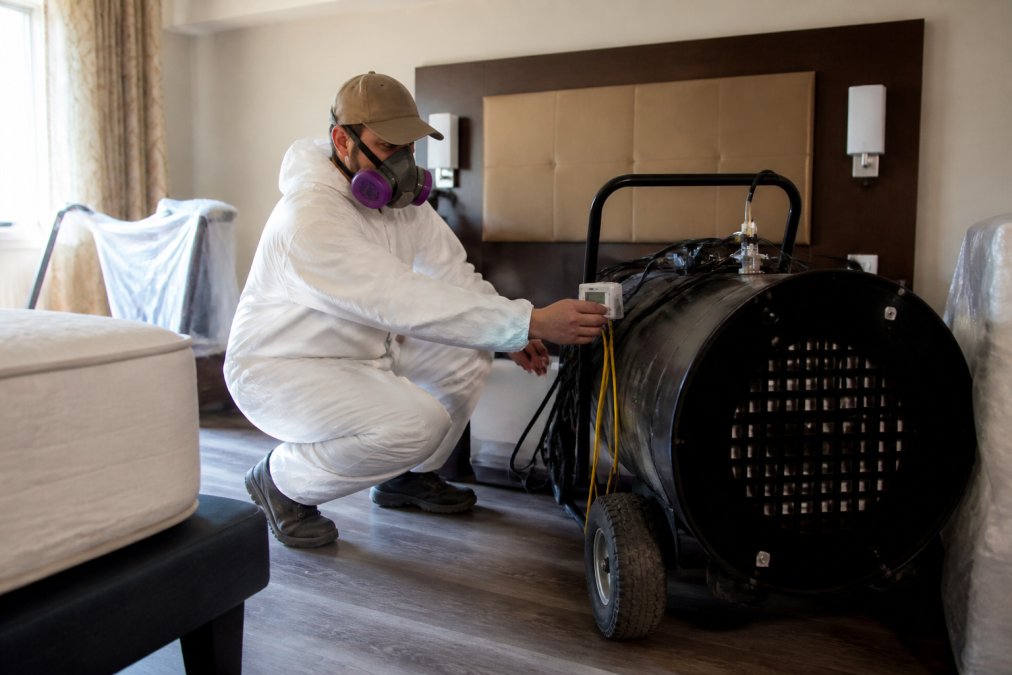
Why hotels choose heat treatment: It's the most thorough method available. Bed bugs cannot develop resistance to heat the way they develop resistance to chemicals. One treatment often eliminates the entire infestation without follow-up visits. Guests don't need to vacate for extended periods, and there's no chemical residue to manage. Hotels appreciate the speed and completeness.
The tradeoff is cost. Thermal remediation requires specialized equipment and trained operators. Many hotels reserve this method for severe infestations or when chemical treatments have failed. For smaller infestations caught early, targeted chemical application may be more cost-effective.
2. Residual Insecticide Application: Targeted Chemical Control
Chemical insecticides remain the most common bed bug extermination method in hotels because they're cost-effective and can be applied quickly.
Residual insecticides are applied to harborage points and cracks and crevices where bed bugs hide: baseboards, behind headboards, inside box springs, and around electrical outlets. The chemicals create a protective barrier that kills bed bugs on contact and continues working for weeks.
Application to harborage points and cracks and crevices requires precision. Pest control operators identify infestation signs, fecal spotting, exoskeleton shedding, and live bugs, then target those exact areas. Box spring inspection is essential; bed bugs cluster inside box springs more than anywhere else. Operators disassemble components when necessary to reach interior surfaces.
Safety protocols for guest rooms are non-negotiable. Operators must use products approved for hospitality environments and apply them only to areas guests won't touch directly. Mattresses and pillows are typically treated with non-toxic alternatives or avoided entirely. Linens are removed and laundered at high heat before re-installation.
Most hotels combine chemical application with other methods for faster results. A pest control operator might apply residual insecticide to harborage points while steam cleaning mattresses simultaneously. This dual approach reduces reinfestation risk.
3. Steam Cleaning and Vacuum Extraction
Steam vapor treatment and vacuum extraction target bed bugs and their eggs in soft furnishings where chemical application alone may not reach effectively.
Steam vapor treatment of furniture and mattresses uses heat around 65-71°C to kill bed bugs on contact. The steam penetrates fabric surfaces and kills eggs that resist chemical treatments. Steam cleaning works best on mattresses, upholstered chairs, and curtains. Hard surfaces like nightstands are less suitable because steam can damage wood finishes.
Vacuum extraction for egg and nymph removal follows steam treatment. High-powered vacuums equipped with HEPA filters remove dead bed bugs, eggs, and fecal spotting. Proper disposal is critical, sealed bags must be removed from the hotel immediately to prevent escape.
Hotels often use this method as a supplementary treatment rather than a standalone solution. Steam cleaning prepares surfaces for follow-up chemical application. The combination reduces the number of live bugs and eggs, making subsequent treatments more effective.
4. Integrated Pest Management: Prevention and Monitoring
Integrated Pest Management (IPM) combines multiple strategies to prevent reinfestation and catch early signs before they become problems.
Bed bug interceptors are small cups placed under furniture legs.
5. Furniture Inspection and Strategic Disassembly
Thorough furniture inspection identifies exactly where bed bugs hide, guiding treatment decisions and preventing missed infestations.
How Long Does Bed Bug Extermination Take?
The timeline for bed bug extermination depends on the method chosen and infestation severity.
Bed Bug Prevention Checklist for Hotels
Prevention reduces the likelihood of infestation and catches problems early before they spread.
Staff Training:
- Train housekeeping to recognize infestation signs: fecal spotting, exoskeleton shedding, live bugs
- Establish protocols for reporting suspected infestations immediately
- Teach staff to inspect rooms systematically, including box springs and headboards
Guest Communication:
- Provide guests with bed bug information cards in rooms
- Include information about reporting signs to front desk
- Establish a discreet reporting process that doesn't embarrass guests
Room Maintenance:
- Inspect all new furniture before it enters guest rooms
- Seal cracks and crevices in walls, baseboards, and trim
- Use mattress encasements on all beds in high-risk rooms
- Install bed bug interceptors under furniture legs for ongoing monitoring
Housekeeping Protocols:
- Establish sanitation standards for room turnover
- Use high-heat laundering for all linens (at least 60°C)
- Vacuum rooms thoroughly between guests, paying special attention to baseboards and under furniture
- Dispose of vacuum bags in sealed containers immediately after use
Vendor Management:
- Vet all furniture and linen suppliers for bed bug history
- Establish delivery protocols that prevent contaminated items from entering the hotel
- Inspect deliveries before accepting them
Monitoring:
- Place bed bug interceptors in high-risk rooms
- Conduct weekly visual inspections of monitored rooms
- Document all inspections and any findings
- Schedule quarterly professional inspections even when no infestation is suspected
Frequently Asked Questions
What do professional exterminators use to eliminate bed bugs in hotels?
Professional pest control operators combine multiple bed bug extermination methods tailored to hotel environments. Heat treatment reaches all life stages at temperatures lethal to bed bugs. Residual insecticides target harborage points and cracks and crevices where bed bugs hide. Steam vapor treatment destroys eggs and nymphs on mattresses and furniture. Integrated pest management adds long-term monitoring with bed bug interceptors and ongoing re-inspection timelines. A pest control operator assesses the infestation severity and room design to select the most effective combination for your property.
How long does bed bug extermination take at a hotel?
Timeline depends on the method and infestation scope. Thermal remediation typically takes 4-8 hours per room, with rooms placed out-of-order for 24 hours post-treatment. Chemical residual insecticide application takes 2-4 hours per room, requiring 4-6 hours for the product to dry before guests return. Multiple treatment cycles spaced 10-14 days apart are often necessary to eliminate all nymphs and eggs. Professional pest control services usually complete initial treatment within 1-3 days for a single room, though full eradication may require 4-6 weeks with monitoring and follow-up visits.
What should be included in a bed bug prevention checklist for hotels?
A comprehensive prevention checklist includes: regular staff training on infestation signs like fecal spotting and exoskeleton shedding; weekly bed bug monitoring in high-risk areas; mattress encasements on all beds; bed bug interceptors under furniture legs; immediate room out-of-order protocols when guests report bed bugs; housekeeping protocols that isolate infested linens; vendor vetting criteria for laundry services to prevent cross-contamination; structural modification to seal cracks and crevices; guest notification procedures that protect reputation while ensuring transparency; and documented re-inspection timelines after any suspected activity. Preventative maintenance reduces the likelihood of severe infestations requiring thermal remediation or extended room closures.
How much do professional pest control services cost for hotel bed bug treatment?
Professional pest control services cost varies based on room size, infestation severity, treatment method selected, and property location. For accurate pricing tailored to your hotel's specific situation, contact a professional pest control operator directly for a quote.
Why should hotels choose professional pest control operators over DIY treatments?
Professional pest control operators bring expertise in identifying all life stages of bed bugs, understanding harborage points specific to hotel room layouts, and applying industry-standard extermination agents safely around guests. They provide post-treatment clearance testing to confirm eradication, protecting your liability. Professionals understand cross-contamination risks in multi-unit properties and implement housekeeping protocols to prevent spread. They document treatment records required by health regulations and insurance. DIY treatments often fail because they miss hidden eggs or nymphs, leading to re-infestation within weeks. Professional services offer guarantees and ongoing monitoring, ensuring your guests remain safe and your reputation stays intact.
| External Sources |
|---|
| Health Canada guidance on pest control and public health |
| Canadian Pest Management Association professional standards |
| Public Health Agency of Canada resources on bed bug management |