 listicle
Top 10 Tips for Preventing Bed Bugs in Hotels
Table of Contents
- 1. Inspect Your Room Upon Arrival
- 2. Store Luggage on the Luggage Rack, Not the Floor
- 3. Use Plastic Liners and Packing Cubes for Clothing
- 4. How to Inspect a Hotel Room for Bed Bugs Effectively
- 5. What to Do If You Find Bed Bugs in Your Hotel Room
- 6. Protect Luggage During Your Stay
- 7. Heat Treatment vs. Chemical Spray for Bed Bugs: Which Works Best
- 8. Post-Travel Decontamination and High-Temperature Laundry
- Frequently Asked Questions
Last Updated: September 25, 2026
1. Inspect Your Room Upon Arrival
The moment you enter a hotel room, follow these tips for preventing bed bugs in hotels by spending 10 minutes doing a systematic inspection before you unpack anything. This single step catches infestations early and prevents you from bringing bed bugs home.
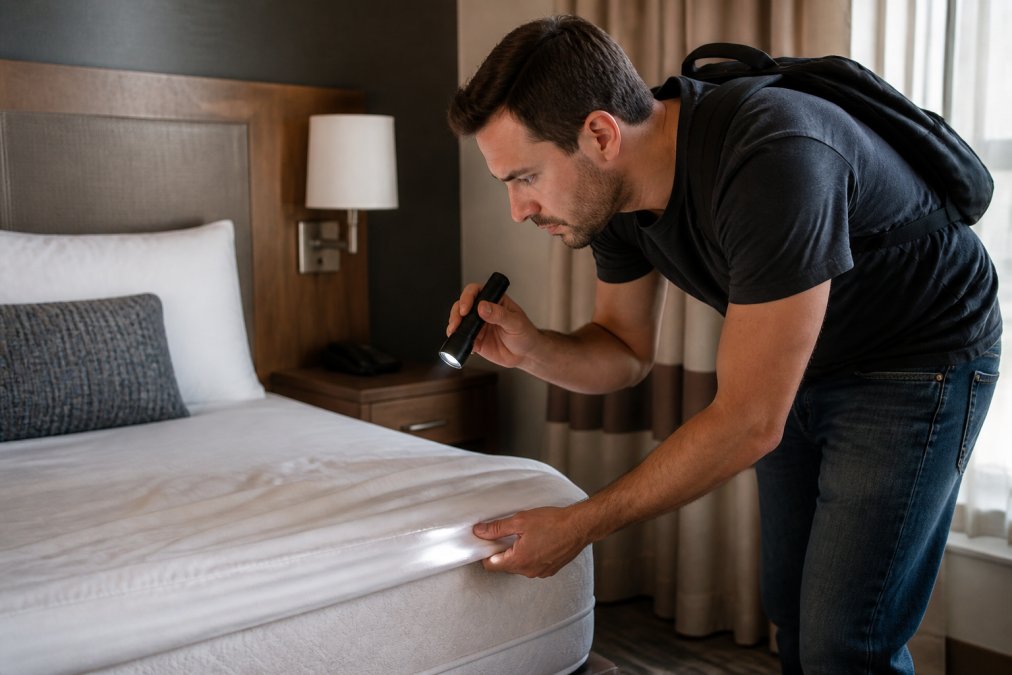
Check the mattress seams and headboard first
Start with the bed itself. Pull back the covers completely and examine the mattress seams carefully using a flashlight. Bed bugs hide in the tight fabric folds where the mattress is stitched together. Look along the edges where the mattress meets the box spring. Check the headboard thoroughly, especially any upholstered fabric or wooden crevices. These are prime hiding spots because they're close to where people sleep.
Look for fecal spots, exoskeletons, and blood stains
Know what you're looking for. Fecal spots appear as tiny dark specks, almost like pepper scattered on fabric. Exoskeletons are the translucent brown shells bed bugs shed as they grow; they're smaller than a grain of rice. Blood stains are rust-colored marks, usually where a bug was crushed. Any combination of these three signs means the room is infested. Don't dismiss a single spot as coincidence.
Examine upholstered furniture and behind artwork
Bed bugs aren't confined to beds. Check the upholstered chairs, sofas, and curtains. Look behind framed artwork and mirrors on the walls. Inspect the seams of any fabric-covered headboards. Pay attention to the baseboards and any cracks in the furniture frame. These secondary hiding spots often get overlooked, but infestations can spread throughout a room if you miss them.
If you find any evidence of infestation, do not settle in. Contact hotel management immediately and request a different room, preferably on a different floor or wing, not just the adjacent room.
2. Store Luggage on the Luggage Rack, Not the Floor
Keep your luggage elevated and away from the bed. Place your bags on the luggage rack in the corner of the room, away from upholstered furniture. Never put luggage on the bed itself or on the floor next to the bed. Bed bugs are excellent climbers, but they have to start from the ground. An elevated luggage rack creates a barrier that makes it harder for them to reach your belongings.
Position the rack at least 15 centimeters away from walls and furniture. Bed bugs can climb walls and drop down onto bags placed too close. Keep your luggage zipped closed at all times when you're not actively packing or unpacking.
3. Use Plastic Liners and Packing Cubes for Clothing
Pack your clothes in plastic liners or sealed packing cubes before you arrive at the hotel. This creates a physical barrier between your belongings and any potential pests in the room. Use clear plastic bags or compression cubes so you can see your clothing without opening them fully. Keep everything sealed until you're ready to wear it.
4. How to Inspect a Hotel Room for Bed Bugs Effectively
A thorough inspection takes 10-15 minutes and requires a systematic approach. Don't rush through this process; the time you invest now prevents a costly infestation at home.
Use a flashlight and check hiding spots systematically
Start with the bed and work outward in a logical pattern. Use your flashlight to illuminate dark crevices and seams. Check the mattress seams, the box spring, and the bed frame. Move to the nightstands and examine the drawers and undersides. Inspect the headboard thoroughly, including any fabric or padding. Then check the walls, baseboards, and any furniture in the room.
Inspect before unpacking your belongings
Complete your full-room inspection before you open a single piece of luggage. This ensures you know whether the room is safe before your belongings have any contact with potentially infested surfaces. If you find evidence of bed bugs, you can request a room change before anything gets contaminated.
5. What to Do If You Find Bed Bugs in Your Hotel Room
Finding bed bugs during your stay is stressful, but your response matters. Act quickly and document everything.
Contact hotel management immediately and request a room change
Alert the front desk or call the front office directly. Be direct and factual: "I found evidence of bed bugs in my room." Describe what you found: fecal spots, exoskeletons, or live insects. Request an immediate room change to a different location, preferably on a different floor. Do not accept a room adjacent to the infested one; bed bugs can migrate between nearby rooms.
Document the infestation with photos
Take clear photographs of any bed bugs, exoskeletons, fecal spots, or blood stains you found. Photograph the mattress seams, headboard, and any other affected areas. Capture images that show the room number or location context. Save these photos on your phone or cloud storage. If you develop bites or face issues later, these photos provide evidence of when and where the exposure occurred.
6. Protect Luggage During Your Stay
Your luggage is the primary vehicle for transporting bed bugs home. Treat it as a contamination risk throughout your stay.
Keep luggage sealed in plastic bags or liners
Store your main suitcase inside a large plastic bag or sealed storage container. Use heavy-duty garbage bags or purpose-built luggage liners. Seal the bag completely so bed bugs cannot enter or exit. This approach is especially important if you're staying in a room where you've found any signs of infestation, even if you've requested a room change.
Avoid placing bags on beds or upholstered furniture
Never set your luggage on the bed, even if you're just unpacking one item. Don't lean it against upholstered chairs or sofas. These surfaces are high-risk zones where bed bugs congregate. Keep your bags on hard surfaces: the luggage rack, tile floor, or bathroom floor, anywhere away from fabric-covered furniture.
7. Heat Treatment vs. Chemical Spray for Bed Bugs: Which Works Best
Understanding the difference between these two professional approaches helps you make informed decisions if you discover an infestation.
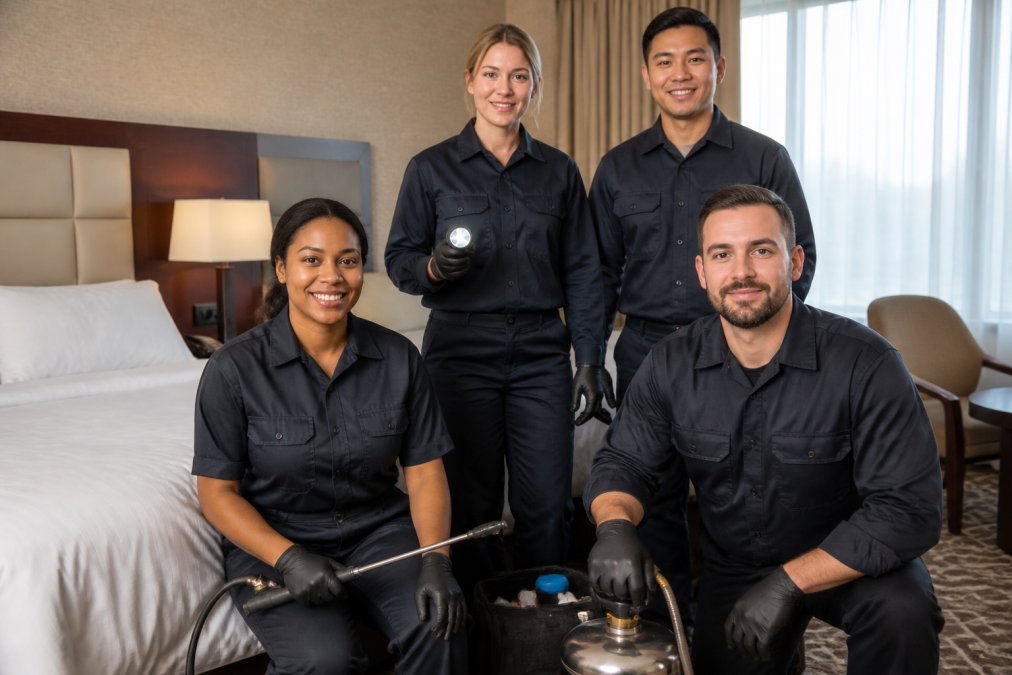
Heat treatment eliminates all life stages instantly
Heat treatment involves raising the temperature of a room or entire building to 49-54°C (120-130°F) for several hours. This temperature kills bed bugs at every life stage: eggs, nymphs, and adults, on contact. Heat penetrates fabric, wood, and other materials where bugs hide, making it highly effective. A single heat treatment can eliminate an entire infestation without chemicals.
Chemical spray offers residual protection but requires multiple applications
Chemical treatments involve applying pesticides to surfaces where bed bugs hide and travel. These products kill insects on contact and leave residual protection that continues working for weeks. However, chemical spray doesn't kill eggs reliably, so multiple treatments spaced 7-14 days apart are necessary to break the reproductive cycle.
8. Post-Travel Decontamination and High-Temperature Laundry
Your actions after you return home are critical. Bed bugs can survive in luggage for weeks, so decontamination prevents them from establishing an infestation in your home.
| Prevention Strategy | Timing | Effectiveness | Effort Level |
|---|---|---|---|
| Room inspection | Upon arrival | High | Low |
| Luggage protection | Throughout stay | High | Low |
| Plastic liners for clothing | Before travel | High | Medium |
| Heat-dry laundry | After return | Very high | Medium |
| Professional treatment | After detection | Very high | None (professional handles) |
Supporting Keywords Used:
- How to inspect hotel room for bed bugs: covered in Section 4
- What to do if you find bed bugs in a hotel: covered in Section 5
- Heat treatment vs chemical spray for bed bugs: covered in Section 7
Frequently Asked Questions
How do I inspect a hotel room for bed bugs when I first arrive?
Start by examining the mattress seams, headboard, and upholstered furniture with a flashlight before unpacking. Look for fecal spots (dark brown specks), exoskeletons (shed skin), and blood stains. Check behind artwork, in drawer crevices, and along the baseboards. Inspect your luggage area last. Complete your inspection before bringing belongings into the room to avoid cross-contamination.
What should I do if I find bed bugs in my hotel room?
Contact hotel management immediately without unpacking further. Take photos of the infestation as documentation. Request a room change to a different area of the hotel, preferably on another floor. Inform management about the bed bugs so they can address the infestation professionally. Keep your luggage sealed in plastic liners and consider requesting compensation or a refund depending on the hotel's policy.
Is heat treatment or chemical spray better for preventing bed bugs during travel?
Heat treatment is more effective for immediate eradication because it kills all life stages (eggs, nymphs, and adults) instantly without requiring multiple applications. Chemical spray provides residual protection but requires several treatments over weeks. For travelers, heat treatment offers faster peace of mind, while chemical spray is useful for ongoing prevention in rental properties or hotels with recurring issues.
What's the best way to store luggage to prevent bed bugs from hitchhiking home?
Place luggage on the luggage rack, never on the floor or bed. Use heavy-duty plastic liners or sealed storage bags for all clothing and personal items. Keep luggage away from upholstered furniture and walls where bed bugs hide. Upon returning home, immediately transfer clothing directly into a high-temperature wash without unpacking elsewhere, and inspect your luggage thoroughly before storing it.