 ultimate-guide
Professional Pest Control for Landlords: 2026 Guide
Table of Contents
- Why Professional Pest Control for Landlords Beats DIY Every Time
- Landlord Responsibility for Bed Bugs and Other Pests
- Serving a Pest Control Notice to Enter a Rental Unit
- When a Tenant Refuses Pest Control Treatment
- How to Handle a Pest Infestation Report Step by Step
- Preventative Maintenance and Tenant Cooperation Clauses
- Frequently Asked Questions
Last Updated: September 16, 2026
Why Professional Pest Control for Landlords Beats DIY Every Time
Professional pest control for landlords is a licensed service that identifies, treats, and prevents infestations across an entire rental property, not just one unit. Meridian Bed Bug Treatment works with property managers and landlords across Vancouver and the Lower Mainland who have already spent hundreds of dollars on sprays, powders, and traps that never solved the problem. The reason is structural: pests in multi-unit buildings travel through shared walls, plumbing chases, and electrical conduits. Treating one apartment while the source next door goes untouched guarantees a repeat call.
What DIY Treatments Miss in Multi-Unit Buildings
Store-bought products kill what you can see. They rarely reach what you cannot: bed bugs and cockroaches shelter behind baseboards, inside outlet plates, under carpet edges, and in the voids between units. A common mistake is treating the visible bedroom and ignoring the adjacent suite. Without a professional inspection, you also cannot confirm which pest you are dealing with, and misidentification wastes both time and money.
Landlord Responsibility for Bed Bugs and Other Pests
In every province and territory, a landlord carries the primary duty to keep rental units fit for habitation, and a pest infestation is treated as a habitability failure, not a tenant housekeeping problem. Residential tenancy legislation sets out the duty to repair and maintain, and provincial health and safety standards reinforce it. Tenants carry their own obligations: reporting pests promptly, keeping the unit reasonably clean, and allowing access for treatment. When responsibility is genuinely unclear, either party can apply to the housing tribunal for a ruling.
What the Law Says About Habitability and Repairs
Habitability standards require that a rental unit be free of conditions that threaten health or safety. Bed bugs, cockroaches, and rodents all qualify. The practical consequence is that a landlord cannot simply tell a tenant to deal with it. provincial residential tenancy guidance on repairs and maintenance confirms that repair obligations sit with the landlord, and a failure to act can expose the owner to rent abatement orders or tribunal penalties. Document every report, every inspection, and every treatment.
The Financial Risk Most Guides Skip: Liability and Pest-Related Damages
Legal responsibility is only half the exposure. The other half is money, and it is the part most landlord guides never mention.
- Property damage. Bed bugs and rodents damage mattresses, upholstery, carpet, and baseboards. Rodents chew wiring, which is a fire risk and an insurance claim waiting to happen. A single untreated unit can generate thousands of dollars in replacement costs across adjacent suites.
- Loss of rental income. A unit that cannot be rented while it is being treated produces no rent. In a multi-unit building, treating several suites at once can take weeks.
- Liability to tenants. If a tenant can show the landlord knew about an infestation and failed to act, the landlord may face a claim for damaged belongings, relocation costs, or health impacts. Tenant insurance may cover the tenant's contents, but it does not cover the landlord's building or the landlord's legal exposure.
- Insurance gaps. Many commercial property policies exclude pest damage or require the landlord to demonstrate ongoing preventative maintenance. A landlord who cannot produce inspection and treatment records may find a claim denied. Review your policy wording with your broker before an infestation, not after.
A common pattern among property managers is to treat pest control as a reactive line item. The landlords who avoid the largest losses treat it as a risk-management cost: scheduled inspections, documented treatments, and a written record that satisfies both the tribunal and the insurer.
Tenant Cooperation Clauses Belong in the Lease
Put the cooperation clause in the tenancy agreement at signing, not after an infestation starts. A well-drafted clause requires tenants to report pests promptly, prepare the unit for treatment (laundering bedding, clearing closets, emptying kitchen cupboards), and allow access on proper notice. It should also state what happens if the tenant refuses, typically that refusal is a breach of the agreement and grounds for a tribunal application.
Serving a Pest Control Notice to Enter a Rental Unit
A pest control notice to enter a rental unit is the written notice a landlord serves before entering to inspect or treat. In most jurisdictions, that means at least 24 hours' written notice, delivered in the form the tenancy agreement or legislation requires. The notice should name the date, a window of time, and the purpose. Keep a copy.
When a Tenant Refuses Pest Control Treatment
Tenant refusal of pest control treatment is the most common way an infestation spreads through a building. A tenant may refuse because of embarrassment, mistrust, or concern about chemicals. Start by explaining what the treatment involves and what preparation is required. If refusal continues, document the request in writing and consult your provincial tenancy authority, since continued refusal may breach the tenancy agreement and can lead to a tribunal application.
| Situation | Landlord action | Record to keep |
|---|---|---|
| Tenant reports pest | Acknowledge within 24 hours, book inspection | Report date, tenant name, unit number |
| Tenant refuses entry | Re-serve written notice, offer alternatives | Copy of notice, refusal note |
| Infestation confirmed | Book licensed treatment, notify adjacent units | Inspection report, treatment date |
| Tenant still refuses | Apply to housing tribunal | Full correspondence trail |
How to Handle a Pest Infestation Report Step by Step
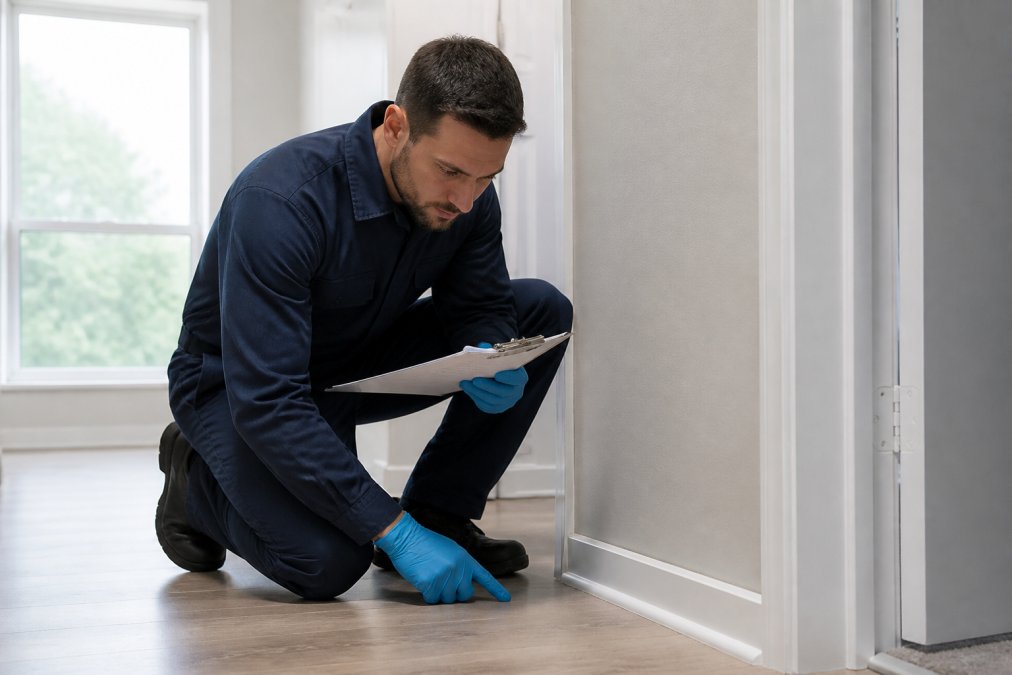
Every infestation report should follow the same sequence so nothing is missed and the paper trail holds up.
- Log the report with the date, time, and unit number.
- Inspect the unit and confirm the pest before booking anything.
- Serve written notice to enter for treatment.
- Book a licensed exterminator and notify adjacent units.
- Inspect and treat neighbouring units, even where no pest is visible.
- Schedule a follow-up inspection to confirm the treatment worked.
- File the inspection report, treatment record, and tenant correspondence.
Ready-to-Use Tenant Communication Templates
Most landlord guides tell you to 'notify tenants in writing' and stop there. Here is the actual language. Adapt the bracketed fields and send by two methods at once.
Template 2, Notice of entry for inspection or treatment
Template 3, Notice to adjacent units
Preventative Maintenance Checklist
The cheapest pest control is the inspection you do before anyone reports a problem. Run this checklist quarterly and after every tenant turnover.
- Walk each unit and check baseboards, outlet plates, and carpet edges for signs of activity.
- Seal cracks and gaps around pipework, conduits, and where walls meet floors.
- Repair peeling baseboards, loose wallpaper, and damaged caulking.
- Keep shared storage areas, garbage rooms, and laundry rooms dry and uncluttered.
- Confirm door sweeps and window screens are intact.
- Check under sinks and behind appliances for moisture and rodent droppings.
- Review the tenancy agreement's cooperation clause with each new tenant at move-in.
- File the walkthrough record, it is your evidence of ongoing maintenance if an insurer or tribunal asks.
Inspecting and Treating Adjacent Units
Adjacent-unit inspection is not optional in a multi-unit building. Bed bugs and cockroaches move through shared voids, so a treated suite will be reinfested within weeks if the source unit is left alone. Treat the unit above, below, and on both sides, and inspect any unit sharing a plumbing wall.
Preventative Maintenance and Tenant Cooperation Clauses
Preventative maintenance catches problems while they are still small. Build a routine inspection schedule, seal cracks and gaps around pipework, repair peeling baseboards, and keep shared storage areas dry and uncluttered. Health Canada guidance on pest control products and safe use is worth reviewing before choosing any chemical treatment.
Frequently Asked Questions
Are landlords legally responsible for pest control in rental units?
In most provinces, yes. Residential tenancy laws require landlords to maintain rental units in a habitable condition, which includes addressing pest infestations. Professional pest control for landlords is typically considered part of property maintenance obligations. If a tenant's own negligence caused the infestation, responsibility may shift, but the landlord usually must act first and pursue costs separately. Check your provincial tenancy legislation or contact your local housing tribunal for the specific rules that apply to your property.
What should a landlord do if a tenant refuses pest control treatment?
Document the refusal in writing immediately. Send a formal letter explaining why treatment is necessary and the consequences of refusal, including potential lease violations. In most provinces, a landlord can provide proper written notice and enter the unit to perform necessary pest mitigation work. If the tenant continues to refuse, consult your provincial tenancy authority or housing tribunal about enforcement options. Persistent refusal that worsens an infestation may also be grounds for cost recovery or eviction proceedings.
How can landlords prevent bed bug infestations in multi-unit buildings?
Schedule annual professional inspections of all units, not just occupied ones. Seal cracks in walls, baseboards, and pipe chases to reduce harborage points. Add a tenant cooperation clause to your tenancy agreement requiring prompt reporting of any pests. Provide mattress encasements in furnished units. When a new tenant moves in, inspect their belongings before they bring them inside. Early detection through routine preventative measures costs far less than treating a building-wide infestation.
Are landlords required to pay for professional extermination services?
In most cases, yes, unless the tenant caused the infestation through negligence or lease violations. Professional pest control for landlords is generally treated as a necessary repair under habitability standards. Some provinces allow landlords to recover costs through the housing tribunal if tenant behavior contributed to the problem. Keep all receipts, inspection reports, and communication records. Your liability insurance may also cover pest-related damages depending on your policy terms.