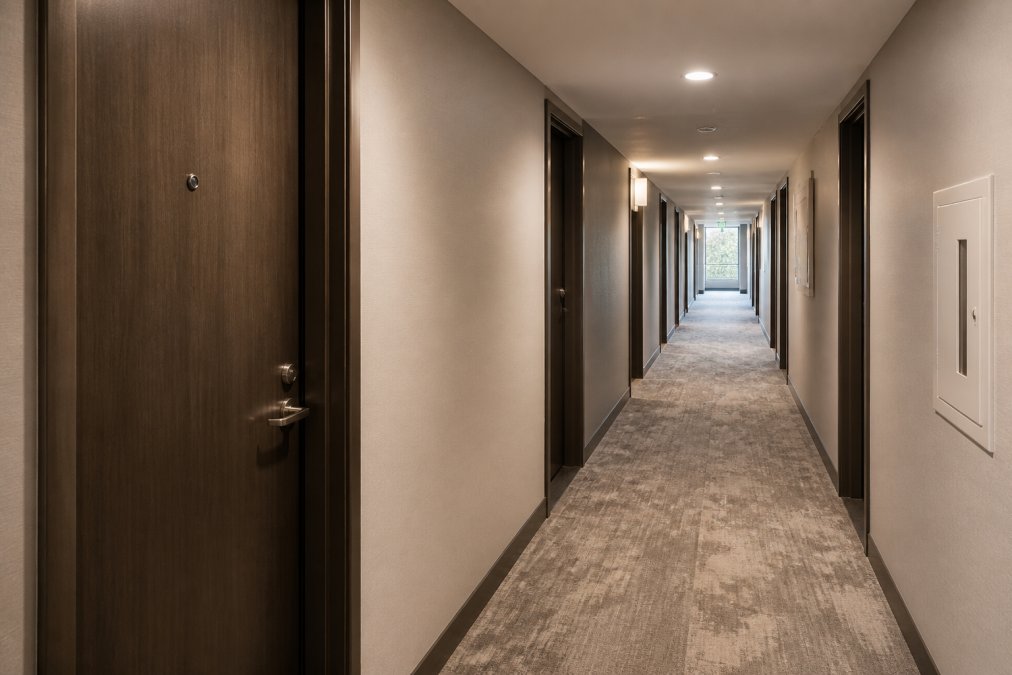
 how-to
Prevent Bed Bugs in Condo Hallways: 2026 Guide
Table of Contents
- Why Condo Hallways Are a Bed Bug Highway
- How to Seal Your Apartment from Pests and Hallway Intruders
- Hallway-Specific Preventative Maintenance for Strata Buildings
- Landlord and Tenant Responsibilities for Pest Control in Condos
- Reporting Bed Bug Infestations to Property Management
- Preparing for Professional Treatment in Shared Spaces
- Pet-Safe Prevention Strategies for Condo Hallways
- Conclusion
- Frequently Asked Questions
Last Updated: September 18, 2026
Why Condo Hallways Are a Bed Bug Highway
Bed bugs treat a condo hallway like a free transit system. They move from unit to unit through shared walls, baseboards, and gaps around pipes, and they do it quietly. This guide from Meridian Bed Bug Treatment explains how to prevent bed bugs in condo hallways before they reach your door.
A hallway is warm, dim, and rarely disturbed. That makes it ideal for bed bugs to spread. Most buildings only act after a sighting, and by then the bugs have already moved.
Below, we'll show you exactly how to stop that cycle.
How Bed Bugs Travel Between Units
Bed bugs move through the gaps you never think about. They crawl through cracks around electrical faceplates, along baseboards, and behind loose wallpaper.
They also travel on shared items. A laundry cart, a vacuum, or a moving box can carry them down the corridor.
This is called unit-to-unit travel, and it is the main reason one infestation becomes five. Bed bugs can survive for months without feeding, so an empty unit is no barrier.
Signs of an Infestation in Common Areas
The first signs usually appear near where people sit or wait. Check these spots with a flashlight:
- Dark spots or small stains on baseboards
- Tiny shed skins near carpet edges
- A sweet, musty smell in enclosed areas
- Live bugs in the seams of hallway chairs
Early detection in common areas is far easier than treating a full infestation. A quick flashlight inspection every week catches most problems early.
How to Seal Your Apartment from Pests and Hallway Intruders
The best defense is a sealed unit. Physical barriers stop bed bugs before they ever reach your living space.
Start with the gaps around your front door. Add a door sweep and seal any space under the frame.
Then work through the rest of the unit:
- Caulk cracks along baseboards and trim
- Seal gaps around pipes under sinks
- Fit foam gaskets behind electrical faceplates
- Repair loose wallpaper and peeling paint
- Screen ventilation systems where possible
These steps take an afternoon. They also block other pests, not just bed bugs.
Hallway-Specific Preventative Maintenance for Strata Buildings
Strata buildings need a shared plan, not scattered effort. Common areas are part of the pest control system, and the strata corporation is usually the only party with the authority to fund and schedule work in hallways, stairwells, elevator lobbies, and shared laundry rooms. That makes hallway maintenance an advocacy task as much as a cleaning task.
What Building-Wide Hallway Maintenance Actually Involves
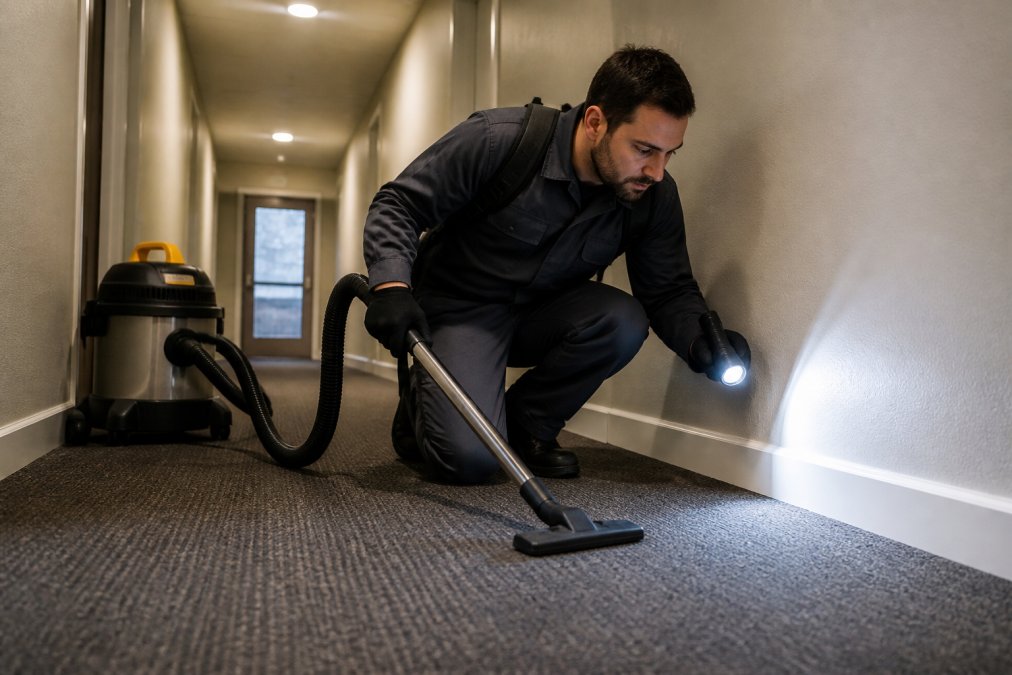
Most practitioners find that bed bugs in common areas cluster in four predictable zones: carpet seams, baseboards, upholstered hallway furniture, and the wall shared with the elevator or stairwell. Maintenance should target those zones directly rather than treating the whole corridor as one surface.
- Carpet seams and edges. Bed bugs and eggs lodge in the gap where carpet meets the tack strip. Commercial HEPA vacuuming along seams weekly removes harborage before it establishes.
- Baseboards. A bead of caulk along the top and bottom edge of baseboards closes the most common travel route between units. Re-caulk any section that has cracked or pulled away.
- Upholstered furniture. Hallway chairs, benches, and ottomans are the single most overlooked harborage in a condo corridor. If the strata will not remove them, they should be vacuumed and inspected weekly.
- Shared laundry and garbage rooms. Laundry carts, folding tables, and recycling bins move between floors. Wipe-downs and inspections here catch hitchhikers before they ride the elevator up.
A Maintenance Schedule That Holds Up
| Task | Frequency | Who Handles It |
|---|---|---|
| HEPA vacuum carpet seams and baseboards | Weekly | Cleaning staff |
| Flashlight inspection of baseboards, seams, and furniture | Weekly | Building maintenance |
| Wipe-down of laundry carts, folding tables, and bin handles | Weekly | Cleaning staff |
| Clear hallway clutter and remove abandoned furniture | Monthly | Strata council |
| Check interceptor traps and monitoring devices | Monthly | Pest control provider |
| Re-caulk baseboards and seal utility penetrations | Quarterly | Building maintenance or contractor |
| Steam-clean carpeted corridors | Quarterly to semi-annually | Contracted vendor |
A written schedule keeps everyone accountable. It also creates a paper trail if a problem grows and the strata needs to justify a special levy or insurance claim.
How to Advocate for Hallway Maintenance as an Owner or Tenant
Individual units cannot solve a building-wide problem. If your strata has no hallway pest schedule, the practical path is a written request to the strata council or property manager asking for three things: a recurring inspection cadence, a documented cleaning protocol for carpets and baseboards, and a named contact for reporting sightings.
Vacuuming and Cleaning Protocols for Common Areas
Vacuuming is your first line of defense. A commercial vacuum with a HEPA filter pulls bugs, nymphs, and eggs out of carpet fibers and traps them in the sealed canister instead of recirculating them into the air.
The Role of Clutter Reduction and Passive Monitoring
Clutter gives bed bugs places to hide. A clear hallway is a hallway you can actually inspect.
Landlord and Tenant Responsibilities for Pest Control in Condos
Landlord and tenant responsibilities for pest control split along clear lines. In most cases, the landlord handles building-wide treatment, and the tenant keeps their unit inspection-ready.
Reporting Bed Bug Infestations to Property Management
Reporting bed bug infestations to property management should be fast, specific, and in writing. A vague report slows everything down, and in a strata building it can stall treatment for weeks while the council decides who is responsible.
What to Include in Your Report
Include these details in your message:
- Where you saw the bugs or signs (unit number, room, and the specific surface, baseboard, mattress seam, hallway chair)
- How many you found, and whether they were adults, nymphs, or eggs
- The date and time of the sighting
- Photos with something for scale, if you have them
- Whether you have seen signs in shared areas such as the hallway, laundry room, or elevator lobby
Send it in writing so there is a record. Ask for a written response with next steps and a timeline.
A Short Template You Can Copy
Subject: Suspected bed bug sighting, Unit [number], [date]
Hi [property manager / strata council],
I am reporting a suspected bed bug sighting in my unit at [address, unit number]. On [date] at [time] I found [describe: live bugs, shed skins, dark spots] on [location]. Photos are attached.
I am requesting: (1) an inspection of my unit, (2) an inspection of the adjacent hallway and shared walls, and (3) written confirmation of the next steps and timeline.
Please confirm receipt and let me know who is coordinating treatment.
[Name, unit number, contact information]
Who to Notify in a Strata Building
For strata buildings, the report may need to go to the strata council as well as the property manager. Keep both informed in the same email thread so nothing is lost between them.
Your Rights and Protections
Tenant rights protect renters from retaliation for reporting a pest issue. A tenant who reports bed bugs is doing the building a favor, not causing trouble. In most provinces, landlords have a duty to keep rental units in a condition fit for habitation, and pest infestations generally fall within that duty.
Keep a Record
Save every email, photo, and written response in one folder. Note the date you first reported, the date of any inspection, and the date treatment was scheduled or completed. If the problem spreads or recurs, that timeline is the difference between a quick resolution and a dispute over who knew what and when.
Preparing for Professional Treatment in Shared Spaces
Preparation makes professional treatment work. Containment keeps bugs from spreading during the process.
Before treatment day:
- Wash and dry all bedding on high heat
- Bag clothing and seal it
- Clear floors and closets
- Vacuum thoroughly
- Pull furniture slightly away from walls
Pet-Safe Prevention Strategies for Condo Hallways
Pet owners need prevention that will not harm animals. Most physical barriers are completely pet-safe.
Conclusion
Bed bugs in condo hallways spread fast, and waiting makes every problem worse. Sealing your unit, cleaning common areas, and reporting early are the steps that actually stop the spread.
Frequently Asked Questions
Do bed bugs spread through condo hallways?
Yes. Bed bugs travel between units through shared walls, electrical outlets, ventilation systems, and along hallway baseboards. They hitchhike on luggage, clothing, and furniture moved through common areas. In condos, unit-to-unit migration is common because the bugs follow gaps around plumbing and wiring. Early detection and physical barriers in hallways reduce how easily they move from one unit to the next.
What are the responsibilities of condo boards regarding pest control?
Condo boards are responsible for maintaining common areas, including hallways, and for coordinating building-wide pest control when an infestation affects multiple units. They should arrange regular inspections, hire licensed pest control professionals, and communicate clearly with owners. Boards also enforce strata bylaws that require owners to report infestations promptly and allow access for treatment.
How can I tell if bed bugs are traveling between units?
Look for live bugs, shed skins, or dark fecal spots along hallway baseboards, in electrical faceplates, and near shared walls. Interceptor traps placed under furniture legs in your unit can catch bugs moving in from adjacent units. If you find bugs near entry points like door frames or outlets, or if multiple units report sightings, unit-to-unit travel is likely. Report findings to property management immediately.
What should I do if I see a bed bug in a common area?
Do not ignore it. Capture the bug in a sealed container or take a clear photo, note the location and time, and report it to property management or the condo board right away. Avoid moving furniture or items through the area until it has been inspected. Early reporting helps prevent the infestation from spreading to multiple units and allows professionals to treat the hallway and adjacent units.


