 how-to
Pest Control in Surrey: A Professional Guide
Table of Contents
- Understanding Pest Infestations in Surrey
- Common Pests and Their Signs
- DIY vs. Professional Pest Control
- Pest Inspection Checklist for Your Home
- Integrated Pest Management Practices
- Understanding Bed Bug Treatment Cost and Options
- What to Expect From Professional Pest Control Services
- Frequently Asked Questions
Last Updated: September 21, 2026
Understanding Pest Infestations in Surrey
Pest infestations create immediate health and safety concerns. Understanding what attracts pests and how quickly they spread is the first step toward effective pest control Surrey residents need. At Meridian Bed Bug Treatment, we help residents and property managers effectively address bed bug infestations.
Common entry points include cracks in foundations, gaps around pipes, unsealed vents, and damaged door seals. Early detection through regular inspection prevents minor issues from becoming major infestations.
Common Pests and Their Signs
Identifying pests correctly determines which treatment approach works best. Different species require different strategies, and misdiagnosis often leads to failed DIY attempts and wasted time.
Bed Bugs
Bed bugs feed on human blood at night and hide in mattress seams, bed frames, and furniture crevices. Signs include red bite marks in clusters, dark fecal spots on bedding, and a musty odor in severe cases.
Bed bugs spread rapidly and resist many common pesticides. Professional pest control uses heat treatment or specialized chemical applications that penetrate hiding spots DIY methods miss.
Rodents and Exclusion
Rodents enter homes seeking food, water, and shelter, leaving droppings, gnaw marks on wood and wiring, and producing squeaking or scratching sounds in walls and attics.
Professional pest control combines trapping, baiting, and exclusion to eliminate existing populations while preventing future invasions. Rodent gnawing can compromise electrical systems and create fire hazards if left untreated.
Ants and Spiders
Ants enter homes seeking food and moisture; carpenter ants tunnel through wood. Spiders become problematic when populations grow large or species like wolf spiders enter homes in autumn.
Ant and spider issues resolve through sanitation improvements and targeted applications in entry areas.
DIY vs. Professional Pest Control
DIY approaches work best for minor issues caught early, but often fail because they don't address root causes like entry points or hidden nesting areas. Many homeowners spend hundreds on failed treatments before calling professionals.
Professional pest control services deliver faster, more reliable results using professional-grade products and follow-up visits. This approach costs more upfront but prevents months of frustration and repeated expenses.
The real threshold comes down to this: if you've tried one treatment and still see activity, professional intervention saves money and time compared to additional failed attempts.
Pest Inspection Checklist for Your Home
Regular inspections catch problems early when treatment is simplest and least expensive. Inspection priorities shift seasonally to focus on pests most active during each month.
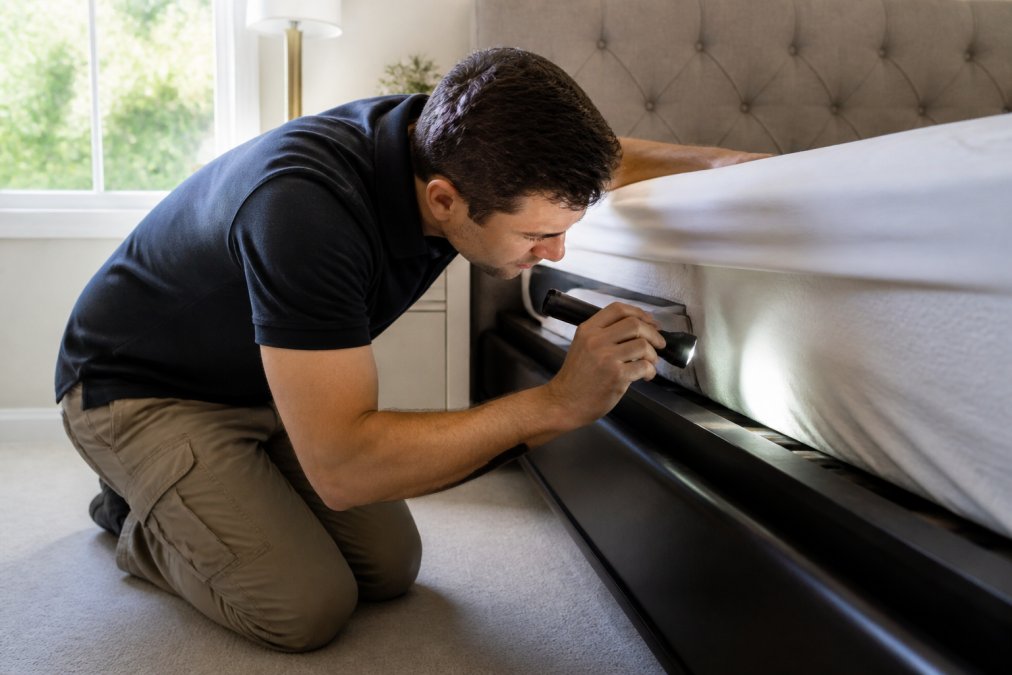
Seasonal pest activity calendar:
January-March (Winter persistence and early spring): Inspect attics, crawl spaces, and foundation cracks for rodent nests and droppings. Check mattress seams for bed bugs from fall/winter infestations.
April-June (Spring emergence): Inspect kitchen baseboards and pantries for ant trails. Look for sawdust-like frass near wooden beams (carpenter ants). Check corners, eaves, and window frames for spiders. Inspect exterior caulking for gaps.
July-September (Summer and early fall peak): Inspect soffit vents and roof overhangs for wasp and hornet nests. Check under sinks and behind appliances for cockroaches. Inspect pantries for rodent gnaw marks and droppings.
October-December (Fall and winter preparation): Inspect foundation cracks and door seals for rodent entry. Check luggage and second-hand items for bed bugs. Inspect basements and attics for spiders seeking shelter.
Year-round inspection priorities:
Foundation and exterior:
- Inspect foundation cracks and gaps around the perimeter
- Check door and window seals for damage or gaps wider than 3 mm
- Examine vents and pipe penetrations for gaps
- Look for droppings, gnaw marks, or grease trails near entry points
Interior spaces:
- Check mattress seams and bed frames for bed bugs, especially after travel
- Inspect cupboards and pantries for ant trails, rodent droppings, or gnaw marks
- Examine baseboards for spider webs and egg sacs
- Fix water leaks and standing water under sinks
Attic and crawl spaces:
- Check for rodent nests, droppings, or gnaw marks on beams
- Look for entry holes in soffit vents and roof penetrations
- Examine electrical wiring for gnaw marks that pose fire hazards
Kitchen and bathrooms:
- Inspect under sinks for water leaks and gaps around pipes
- Check for cockroaches in dark corners and under appliances
- Look for food residue or grease buildup that attracts pests
Perform this inspection seasonally or when you notice signs of pest activity. Document findings with photos to share with professional pest control services if needed.
Integrated Pest Management Practices
Integrated Pest Management (IPM) combines multiple strategies to control pests while minimizing pesticide use and protecting families. This approach prioritizes prevention, monitoring, and targeted treatment over broad chemical applications. For households with children and pets, IPM is the safest framework because it reduces chemical exposure while maintaining effective control.
Core IPM principles:
IPM practices include eliminating food sources through proper food storage and waste management, removing water sources by fixing leaks and reducing humidity, sealing entry points through caulking and exclusion, and maintaining sanitation by decluttering and reducing hiding spots. Monitoring involves regular inspections and using traps to detect pest presence early. Once pests are identified, treatment escalates from least toxic options (traps, exclusion) to professional applications only when necessary.
Pet and child safety protocols within IPM:
When children and pets are present, IPM becomes essential because it delays or eliminates the need for chemical treatments. Here's how to implement IPM safely:
Prevention (no chemicals required):
- Store food in airtight containers; remove pet food bowls after feeding
- Fix water leaks immediately; pests need water as much as food
- Seal cracks and gaps with caulk or hardware cloth (non-toxic barriers)
- Declutter storage areas, closets, and under-sink spaces to eliminate hiding spots
- Wash bedding weekly in hot water and dry on high heat to prevent bed bugs
- Vacuum regularly, especially under furniture and along baseboards
Monitoring (detection without chemicals):
- Use sticky traps or pheromone traps to detect rodents, ants, or cockroaches early
- Place traps in areas inaccessible to children and pets (behind appliances, in wall cavities)
- Inspect traps weekly and document activity to track pest presence
- Early detection allows intervention before populations explode
Targeted treatment (minimal chemical exposure):
If prevention and monitoring fail, escalate to the least toxic option first:
-
Mechanical removal: Traps for rodents and insects eliminate pests without chemicals. Snap traps or electronic traps are effective and leave no residue.
-
Exclusion: Seal entry points with steel mesh, hardware cloth, or caulk. This prevents re-entry and works for rodents, insects, and wildlife.
-
Heat treatment: For bed bugs, professional heat treatment raises interior temperatures to 49-52°C for several hours, killing all life stages. No chemicals are used; the family and pets must vacate temporarily, but there is no residual toxicity.
-
Boric acid or diatomaceous earth (food-grade): These are low-toxicity options for ants and cockroaches. Apply only in areas inaccessible to children and pets (inside wall voids, behind appliances). Food-grade diatomaceous earth is non-toxic if ingested in small amounts, but inhalation should be avoided.
-
Professional chemical treatment (last resort): Licensed technicians use products formulated for low toxicity to children and pets when applied correctly. Pyrethrin-based products (derived from chrysanthemum flowers) break down quickly and are safer than older pesticides. Neonicotinoids are effective against insects but should be applied only by professionals in areas children and pets cannot access.
Safety guidelines for chemical treatments:
- Inform the pest control technician of children's ages and pet types before treatment
- Request low-toxicity or pet-safe formulations explicitly
- Remove children and pets from treated areas for the time recommended by the technician (typically 2-4 hours)
- Ventilate treated spaces thoroughly before re-entry
- Wash toys, pacifiers, and pet bedding after treatment
- Store any pest control products in locked cabinets away from children and pets
- Ask the technician for a written safety data sheet (SDS) for any chemicals used
When to call a professional IPM-trained service:
Eco-friendly pest control in Surrey increasingly relies on IPM principles. Many homeowners prefer this approach because it protects children and pets while delivering reliable results. Professional pest control services trained in IPM can implement these practices systematically.
Understanding Bed Bug Treatment Cost and Options
Bed bug treatment requires professional expertise because DIY methods rarely achieve complete elimination. Treatment options vary based on infestation severity and property type.
What to Expect From Professional Pest Control Services
Professional pest control follows a structured process designed to eliminate pests and prevent recurrence.
Frequently Asked Questions
How do I know if I have a pest infestation that requires professional pest control?
Signs of infestation include visible droppings, unusual odors, structural damage, or sightings of pests themselves. Bed bugs leave small blood spots on bedding and cause itchy bites. Rodents create droppings and gnaw marks. If you spot these signs or suspect an infestation, an on-site inspection by a licensed technician can confirm the problem and recommend treatment options.
What factors affect bed bug treatment cost?
Bed bug treatment cost depends on the size of the infested area, severity of the infestation, treatment method chosen (heat treatment, chemical treatment, or combination), and whether follow-up visits are needed. Contact a professional for a free estimate tailored to your specific situation. Pricing varies based on your property type and extent of the problem.
What is integrated pest management and how does it work?
Integrated Pest Management (IPM) combines inspection, sanitation, exclusion, and targeted treatment to eliminate pests long-term. It starts with identifying pest entry points and removing food sources, then uses the least toxic methods necessary. IPM focuses on prevention and safe, effective solutions rather than relying solely on pesticides.
How quickly can professional pest control treat an active infestation?
Emergency pest services can often respond within days for urgent infestations like bed bugs. The timeline depends on the pest type, property size, and treatment method. Heat treatment for bed bugs, for example, may take one to three days. Professional technicians will provide a timeline during your initial consultation and work to minimize disruption to your daily routine.


