 how-to
How to Use Diatomaceous Earth for Bed Bugs
Table of Contents
- What Diatomaceous Earth Does to Bed Bugs
- How Long Does Diatomaceous Earth Take to Kill Bed Bugs?
- Is Diatomaceous Earth Safe for Pets and Humans?
- Step-by-Step: How to Apply Diatomaceous Earth
- Monitoring After Treatment and Reapplication Tips
- Professional Bed Bug Extermination vs DIY
- Frequently Asked Questions
Last Updated: September 9, 2026
What Diatomaceous Earth Does to Bed Bugs
Diatomaceous earth (DE) is a fine, abrasive powder made from the fossilized remains of tiny aquatic organisms called diatoms. While it looks harmless to us, it is a mechanical insecticide that is lethal to bed bugs because of how it interacts with their biology.
The powder works through two physical mechanisms, not through poison. As bed bugs crawl through a treated area, the sharp microscopic particles abrade the waxy, protective cuticle layer on their exoskeleton. This damage, combined with the powder's sorption properties, causes the insect to lose moisture rapidly. The bed bug eventually dies from desiccation, effectively drying out from the inside out.
This mode of action is why diatomaceous earth is often described as a residual barrier. Because it doesn't degrade or evaporate like chemical sprays, it can remain effective for months as long as it stays dry and undisturbed. However, this also means it is a slow-acting solution; it is not a quick knockdown treatment but a long-term control tool best integrated into a broader integrated pest management strategy.
The Critical Difference: Amorphous vs. Crystalline Silica
The safety and efficacy of DE hinge on its silica composition, a detail most guides gloss over. Food-grade DE is composed of amorphous silica, which is relatively low in toxicity to mammals. In contrast, pool-grade DE is heat-treated to convert a portion of it into crystalline silica. Crystalline silica is a known human carcinogen when inhaled over time and is a severe respiratory hazard (Health Canada). This is why only food-grade DE should ever be used indoors for pest control.
Even with food-grade DE, the particle size matters. The abrasive action that kills bed bugs is most effective with particles in the 10-50 micron range. However, particles smaller than 10 microns can become respirable, meaning they can be inhaled deep into the lungs. While amorphous silica is less hazardous than its crystalline form, inhaling any fine dust can irritate the respiratory tract. This is why the application method is as important as the product itself: the goal is to place a thin, targeted layer of dust into cracks and crevices, not to create a visible, airborne cloud.
Why DE is a Barrier, Not a Knockdown Agent
Because DE works by desiccation, its speed of action is heavily influenced by environmental factors. In a dry environment (below 50% relative humidity), the desiccation process is accelerated, and bed bugs may die within a few days of contact (PubMed). In more humid conditions, the process slows down, and it can take several weeks. This is a key reason why DE is best used as a residual barrier in areas where bed bugs are known to travel, rather than as a sole treatment. It is a tool for long-term control, not a quick fix.
How Long Does Diatomaceous Earth Take to Kill Bed Bugs?
Diatomaceous earth typically takes anywhere from a few days to a few weeks to kill bed bugs, depending on the conditions. This is not an instantaneous fix. Because the powder works by dehydrating the insect, the time to death depends on how much contact the bed bug makes with the powder and the ambient humidity levels.
The timeline varies significantly across the bed bug lifecycle. Adult bed bugs that walk directly through a heavy dusting may die within a few days. However, nymphs that have recently hatched may take longer if they don't immediately cross the treated zone. Furthermore, eggs are entirely unaffected by diatomaceous earth, as the powder cannot penetrate the egg's shell. This means you will need to wait for the eggs to hatch and the new nymphs to crawl through the barrier before they are killed.
Patience is critical here. Many infestations appear to persist for two to three weeks after a single application simply because new bed bugs are emerging from eggs that were laid before you treated. For this reason, a single dusting is rarely enough; you must maintain the barrier and reapply as needed. If you see activity for longer than a month without a reduction in numbers, the application may have been disturbed or the infestation is too heavy for a DIY approach.
Is Diatomaceous Earth Safe for Pets and Humans?
When using the correct type of product, diatomaceous earth is generally safe for pets and humans, but safety depends entirely on which grade you buy and how you apply it. The most critical distinction is between food grade and pool grade diatomaceous earth. Pool grade material has been heat-treated to form crystalline silica, which is a serious respiratory hazard. Only food grade diatomaceous earth, which is mostly amorphous silica, should ever be used indoors for pest control.
Even with food grade DE, respiratory protection is non-negotiable during application. The powder is extremely fine and easily becomes airborne. Breathing in large quantities of any fine dust can irritate your lungs, throat, and nasal passages. When applying, you should wear an N95 mask or a respirator rated for particulate matter, along with safety glasses and gloves to avoid skin and eye irritation.
Once the powder settles, the risk drops significantly, but it is still wise to keep the dust confined to areas where pets and children cannot easily reach it. The primary danger to pets is not toxicity but inhalation or eye irritation if they sniff or dig in a heavily treated area. While it is often labeled non-toxic, it is still a mechanical irritant. For this reason, professional applicators focus on precision, placing the dust in cracks and crevices rather than broadcasting it across open surfaces.
Step-by-Step: How to Apply Diatomaceous Earth
Applying diatomaceous earth effectively requires precision, not volume. A common mistake is to lay down thick, visible piles of powder, which actually deters bed bugs from crossing it. Bed bugs will simply walk around a large mound. Instead, you need to create a thin, almost invisible film of dust that they cannot avoid walking through.
Tools You Will Need
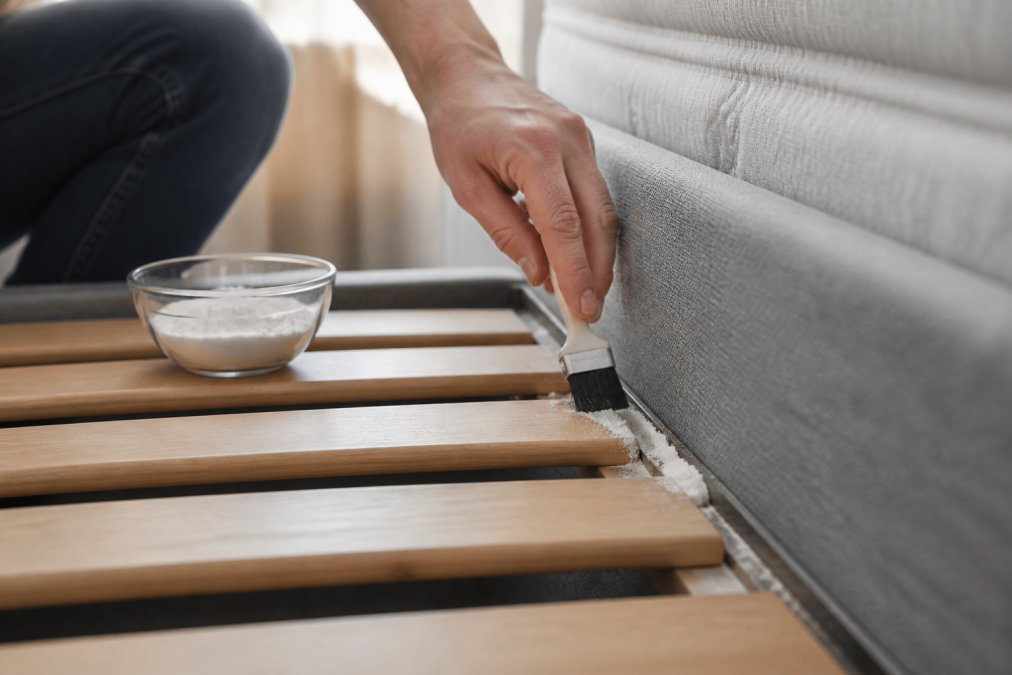
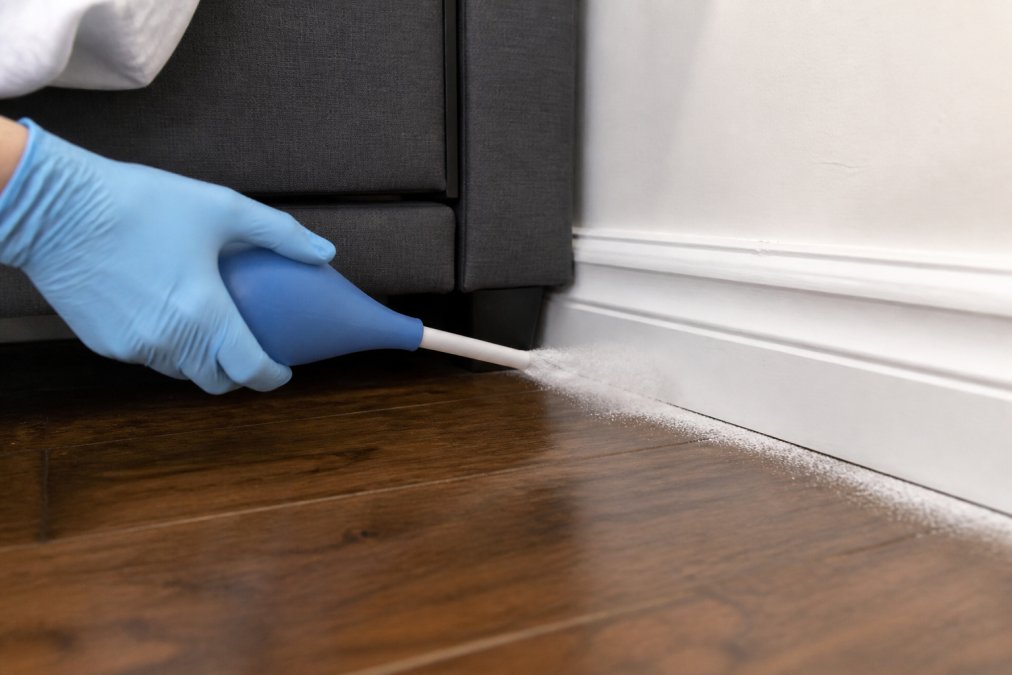
Gathering the right tools makes the application cleaner and more effective. You will need food grade diatomaceous earth, a handheld duster or a small paintbrush, and a vacuum cleaner. A bulb duster or a bellows duster is the best tool for forcing powder into deep cracks and crevices, while a soft brush works well for sweeping a thin layer along baseboards and seams. Avoid using a spoon or a sock filled with powder, as these methods create uneven, clumpy applications that are less effective.
The Precision Application Method
- Prepare the Room: Declutter the area. Remove items from under the bed and from the floor. This reduces the number of hiding spots and gives you clear access to the treatment zones.
- Vacuum First: Thoroughly vacuum the entire room, paying special attention to the mattress seams, box spring, baseboards, and carpet edges. This removes bed bugs, eggs, and debris that would otherwise block the DE from making contact. Dispose of the vacuum bag or empty the canister in a sealed plastic bag immediately after.
- Apply a Thin Film: Using your duster, apply a very thin layer of powder. You should be able to see the dust, but the wood or fabric underneath should still be visible. A heavy coating is a deterrent, not a treatment.
- Target the Harborages: Focus on the dark, protected areas where bed bugs hide during the day:
- Bed Frame: Treat all joints, screw holes, and the underside of the frame.
- Box Spring: Dust the interior edges and the fabric-covered underside.
- Baseboards: Apply a thin line along the crack where the baseboard meets the floor and along the top edge.
- Electrical Outlets and Switch Plates: After turning off the power, remove the cover plate and puff a small amount of dust into the wall void.
- Furniture Joints: Treat the seams and crevices of nightstands, dressers, and chairs.
Integrating DE into a Full IPM Strategy
DE is most effective when it is one component of a comprehensive Integrated Pest Management (IPM) plan. A single dusting, even a perfect one, is rarely enough to eliminate an infestation. A strong IPM approach combines multiple tactics to attack bed bugs at every stage of their lifecycle.
- Heat Treatment: Before applying DE, wash all bedding, linens, and clothing in hot water (at least 60°C / 140°F) and dry them on the highest heat setting for at least 30 minutes (Health Canada). This kills all life stages, including eggs, which are impervious to DE.
- Vacuuming: Vacuuming is not just preparation; it is an ongoing control method. Vacuum the mattress seams, box spring, and baseboards daily for the first week to physically remove bed bugs and disrupt their feeding. This mechanical removal is faster than waiting for DE to work.
- Encasements: Encase your mattress and box spring in bed bug-proof encasements. This traps any bed bugs already inside and prevents new ones from establishing a harbor there, effectively removing the primary habitat.
- Interceptors: Place bed bug interceptors under the legs of your bed and furniture. These devices trap bed bugs as they try to climb up to feed, providing both a monitoring tool and a passive control method.
- Steam Treatment: For items that cannot be washed, a steam cleaner with a high-temperature nozzle can kill bed bugs and eggs on contact. Use it on upholstered furniture, curtains, and other heat-safe items.
By combining DE with these other IPM tactics, you are not just laying down a powder; you are systematically dismantling the bed bug's environment. This holistic approach addresses the infestation from multiple angles, dramatically increasing your chances of success and reducing the time it takes to achieve a bed bug-free home.
Monitoring After Treatment and Reapplication Tips
After your initial application, monitoring is essential to determine whether the treatment is working. The slow action of diatomaceous earth means you will likely still see live bed bugs for up to two weeks. Rather than assuming failure, use this time to track the infestation's progress. Place double-sided tape near the legs of your bed frame or use bed bug interceptors to catch and count insects. A decreasing number of new captures indicates the barrier is working.
Reapplication depends on whether the powder has been disturbed. Vacuuming, washing, or simply walking over a treated area will remove the dust and break the barrier. You should vacuum gently around the perimeter but avoid vacuuming up the powder itself, as this will remove your treatment. If the powder is swept away or becomes damp, you will need to reapply it. A good rule of thumb is to reapply every few weeks until you have gone at least two months without seeing any new signs of activity, including live bugs, shed skins, or new bite marks.
Professional Bed Bug Extermination vs DIY
DIY diatomaceous earth application works best for minor infestations caught early, but it struggles against established populations. If you are seeing bites in multiple rooms, finding bed bugs in various stages of the lifecycle, or have been treating for several weeks without a noticeable decline, the infestation has likely outgrown a dusting approach. Bed bugs hide in voids that are impossible to reach with a powder, such as deep inside walls, under flooring, and within the structure of furniture.
Professional extermination offers advantages that DIY methods cannot replicate. Professionals bring tools like heat treatment and targeted residual sprays that penetrate the hiding spots a powder cannot reach. They also have the experience to identify the full extent of the infestation and the equipment to apply treatments safely and effectively. This is where a specialized service provider becomes valuable.
For residents and property managers in Vancouver and the Lower Mainland, Meridian Bed Bug Treatment provides specialized solutions tailored for homes, condos, apartments, hotels, and short-term rentals. Handling an infestation discreetly and efficiently is critical for property managers who need to avoid tenant disruption and protect their reputation. If DIY efforts have failed, a professional assessment can save you weeks of frustration and prevent the infestation from spreading further.
Diatomaceous earth is a valuable tool, but it is not a standalone miracle cure. It works best as part of a comprehensive plan that includes preparation, monitoring, and often professional intervention. For infestations that persist despite your best efforts, Meridian Bed Bug Treatment offers effective bed bug management for residents and property managers across Vancouver and the Lower Mainland. Our specialized services are designed to address the full scope of an infestation, ensuring your living spaces return to being pest-free. Get started with Meridian Bed Bug Treatment and take the first step toward a bed bug-free home.
Frequently Asked Questions
Is it safe to sleep in a room with diatomaceous earth?
Yes, if you use food grade diatomaceous earth and apply it correctly. The powder is only effective when dry, so a thin layer in cracks and crevices is all you need. Heavy dusting can create airborne particles that irritate your lungs. Wear an N95 mask while applying, keep the powder out of high-traffic areas, and vacuum up any excess before sleeping in the room.
Does diatomaceous earth kill bed bug eggs?
No, diatomaceous earth does not kill bed bug eggs. The eggs have a protective shell that the powder cannot penetrate. This is why a single application rarely ends an infestation. You must wait for the eggs to hatch, then reapply DE to catch the newly emerged nymphs. Combining DE with a comprehensive treatment plan that addresses eggs is essential.
What is the difference between food-grade and pool-grade diatomaceous earth?
Only food grade diatomaceous earth is safe for use in your home. Pool grade DE undergoes different processing and contains high levels of crystalline silica, which is dangerous to inhale. Food grade DE contains less than 1% crystalline silica. Always check the label to confirm you are buying food grade, and never substitute pool grade powder for pest control.
When should I call a professional instead of using diatomaceous earth?
If you have a large or established infestation, or if DIY treatments have not worked after several weeks, call a professional. Bed bugs hide in many places, and a thorough treatment often requires specialized equipment and multiple visits. A pest control professional will also help you identify the source and provide a plan to prevent re-infestation, which is difficult to achieve with DIY methods alone.


