 how-to
How Long Do Bed Bugs Stay After Chemical Treatment?
Table of Contents
- The First 24 to 72 Hours: What to Expect After Chemical Treatment
- How Long Bed Bugs Stay After Chemical Treatment: A Week-by-Week Timeline
- Signs of Bed Bugs After Treatment: Normal Activity vs. Treatment Failure
- How Many Chemical Treatments for Bed Bugs Are Usually Needed?
- Heat Treatment vs. Chemical Spray for Bed Bugs: Which Ends the Infestation Faster?
- Monitoring, Laundry, and Re-Entry: What to Do While You Wait
- Phantom Bites and Anxiety: The Psychological Side of Post-Treatment Waiting
- Frequently Asked Questions
Last Updated: September 16, 2026
The First 24 to 72 Hours: What to Expect After Chemical Treatment
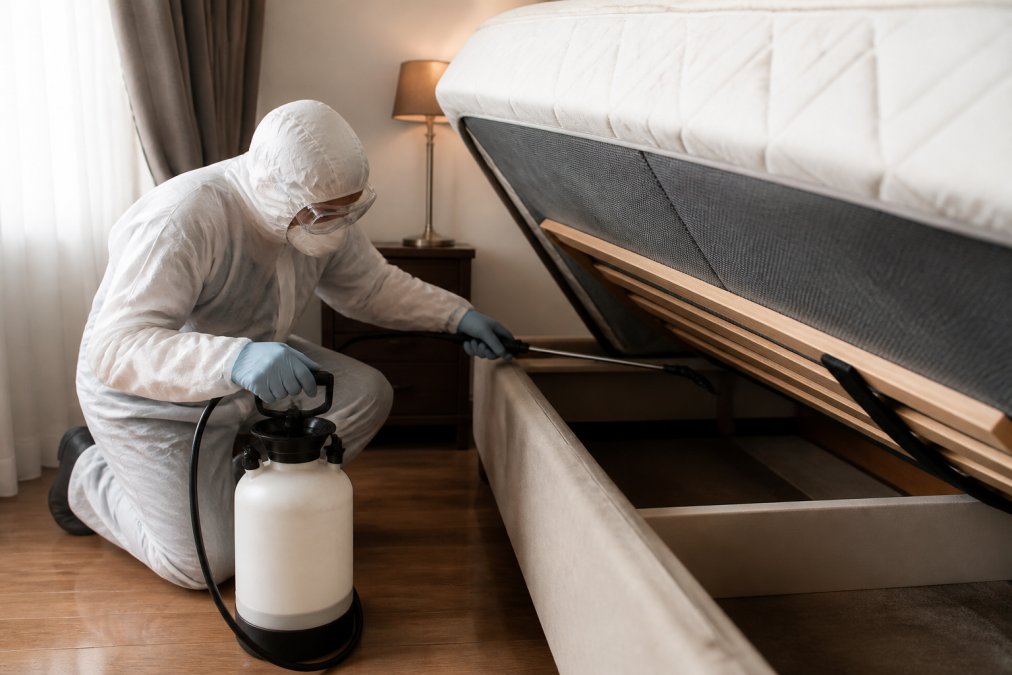
If you have just had your home sprayed, you are probably wondering how long do bed bugs stay after chemical treatment before activity stops. In most cases, you will see live bugs for the first three to five days, sometimes longer. That is normal, and it does not mean the treatment failed.
A residual insecticide does not kill bed bugs on contact the way a fly spray does.
Expect the highest activity in the first 72 hours.
Why You Might See More Activity Before It Drops
Disturbed by the application, bugs move out of harborage areas and cross treated surfaces more often. Some wander into open floor space, which is why people report seeing more bed bugs after treatment than before.
How Long Bed Bugs Stay After Chemical Treatment: A Week-by-Week Timeline
Most infestations show a sharp drop in live activity between day 7 and day 14, with stragglers until the follow-up visit. The exact timeline depends on the product, the infestation level, and how thoroughly harborage areas were treated.
| Timeframe | What You'll Typically See | What It Means |
|---|---|---|
| Days 1-3 | Live bugs, sometimes more than before | Knockdown in progress, dispersal from harborage areas |
| Days 4-7 | Fewer live adults, some nymphs | Chemical barrier working, eggs still hatching |
| Weeks 2-3 | Occasional single bugs, mostly nymphs | Newly hatched nymphs dying after crossing treated surfaces |
| Weeks 4-6 | Activity should be near zero | Follow-up treatment confirms or closes the file |
Residual Insecticide Lifespans: What's Actually Working on Your Surfaces
Residual insecticides are not one product; they are several chemical families with very different staying power, and the surface they land on matters as much as the active ingredient.
If you want to know what is actually protecting your home between visits, ask your technician for the active ingredient names on the label, not the product brand. That is the only way to know whether you have a short-lived pyrethroid, a longer-lasting neonicotinoid combination, or a desiccant supplement, and how long to expect the barrier to hold.
Signs of Bed Bugs After Treatment: Normal Activity vs. Treatment Failure
Seeing a bed bug after treatment is not automatically a failure. What matters is the trend: fewer bugs each week, smaller and paler insects, and no fresh bite patterns. Treatment failure usually announces itself between week two and week four.
Watch for these signals:
- Normal: Live adults in the first week, then a steady decline
- Normal: Small pale nymphs appearing in weeks two and three, then dying
- Failure: Activity unchanged or rising after 14 days
- Failure: New bite patterns on a different bed or sofa in the home
- Failure: Live adults in areas that were never treated, such as a neighbouring unit
Hiding vs. Dying: How to Tell the Difference
A dying bed bug is sluggish, often flipped on its back, and stays put when disturbed. A hiding bed bug moves fast and heads straight for a crack or seam. That distinction is the most useful thing you can observe between treatments.
How Many Chemical Treatments for Bed Bugs Are Usually Needed?
Two treatments are the standard for most infestations, spaced roughly 10 to 14 days apart. The gap is deliberate: it catches newly hatched nymphs after the first application's eggs have hatched, because no residual insecticide reliably kills bed bug eggs.
Heat Treatment vs. Chemical Spray for Bed Bugs: Which Ends the Infestation Faster?
Heat treatment kills faster. A properly executed heat treatment raises the entire room to a lethal temperature and can end an infestation in a single day, including the eggs. Chemical spray works more slowly and almost always requires a follow-up.
| Factor | Heat Treatment | Chemical Spray |
|---|---|---|
| Time to kill | Same day | 1-3 weeks |
| Effect on eggs | Kills eggs | Requires follow-up |
| Preparation required | Extensive | Moderate |
| Typical visits | Often one | Usually two or more |
| Best for | Fast turnarounds, single rooms | Whole-home and multi-unit work |
Monitoring, Laundry, and Re-Entry: What to Do While You Wait
Most guides tell you to "clean thoroughly," but aggressive cleaning strips the residual insecticide you just paid for. Here is the safe-cleaning protocol that keeps the barrier intact while still letting you live in the space.
Re-Entry: Follow the Label, Not the Internet
Re-entry timing depends entirely on the product applied. Your technician should tell you the re-entry interval and how long to ventilate, and that instruction overrides anything you read online. Most indoor residual sprays allow re-entry once surfaces are dry and the space has been ventilated for the period on the label, often a few hours, longer for aerosols or fogging.
The Safe-Cleaning Protocol: What to Clean and What to Leave Alone
The instinct after a treatment is to scrub everything, but the chemical barrier lives on surfaces, and scrubbing removes it.
Leave alone for at least two weeks:
- Baseboards and the lower 30 cm of walls
- Bed frame joints, headboards, and the underside of bed slats
- Mattress seams and the perimeter of the mattress (the encasement, if one was installed, can be wiped)
- Any crack or crevice the technician treated
Safe to clean normally:
- Countertops, sinks, and food-prep surfaces; these should never have been treated anyway
- Inside cabinets and drawers, if the technician did not treat them
- Floors in kitchens and bathrooms, using a damp mop rather than a soaking one
Clean with care:
- Carpeted floors: Vacuum lightly with a HEPA vacuum; avoid steam cleaning or shampooing for the first two weeks, and empty the canister outside immediately
- Hard floors in treated rooms: Dry sweep or use a barely damp mop; do not use a wet mop with detergent
Laundry: The One Place Aggressive Heat Is Your Friend
Bag everything before you move it, and do not carry loose bedding through treated rooms; that is how you re-seed a clean area. Wash bedding and clothing on the hottest setting the fabric allows and dry on high heat for at least 30 minutes, which kills all life stages including eggs. Items that cannot be washed can go into a sealed dryer bag on high heat.
Monitoring: Let the Traps Do the Judging
Monitoring devices are the only objective evidence you have between visits:
- Place interceptor traps under each bed leg. Climb-up interceptors catch bugs trying to reach the bed, and they work even when the bed is not against a wall.
- Check traps weekly and log what you find, with dates and counts, so you can see the trend rather than react to a single sighting.
- Inspect mattress encasements for tears; a torn encasement is a harborage, not a barrier.
- Vacuum lightly, and empty the canister outside.
- Keep the room uncluttered so harborage areas stay visible and the technician can inspect quickly on the follow-up.
Do not steam clean carpets, shampoo upholstery, or wet-mop treated hard floors during the first two weeks. These are the fastest ways to remove the residual insecticide that is doing the work between visits, and they can turn a two-treatment job into a three- or four-treatment job.
Phantom Bites and Anxiety: The Psychological Side of Post-Treatment Waiting
Itching after treatment is often not a bite at all. Bed bug bite patterns take time to develop, and anxiety produces a convincing imitation. Many people report phantom bites for weeks after the last live insect is gone, making it hard to judge whether the treatment worked.
Frequently Asked Questions
Is it normal to see bed bugs after the first chemical treatment?
Yes, it is common to see some activity in the first one to two weeks after a chemical treatment. The residual insecticide needs time to work, and eggs that survived the initial application will hatch and cross treated surfaces. Seeing a few live bugs early on does not automatically mean the treatment failed. However, if you are still finding multiple live bed bugs after three to four weeks, contact your pest management professional for a follow-up assessment.
How many chemical treatments are usually needed to eliminate bed bugs?
Most infestations require two to three chemical treatments spaced roughly 10 to 14 days apart. The first visit knocks down the active population, while follow-up treatments target newly hatched nymphs that were still eggs during the initial application. Heavy infestations or units with lots of harborage areas may need additional visits. Your pest management professional will set the schedule based on infestation levels and the products used.
Do I need to sleep in my bed after bed bug treatment?
Yes, you should continue sleeping in your bed unless your technician tells you otherwise. Bed bugs are drawn to the carbon dioxide you exhale while sleeping. If you move to another room, you risk spreading the infestation to a new area. Keep your mattress encasement on, follow the re-entry interval your technician provides, and resume normal sleeping habits as soon as it is safe to do so.
What is the difference between heat treatment and chemical spray for bed bugs?
Heat treatment raises the temperature of a room to a level that kills bed bugs at all life stages, including eggs, usually in a single visit. Chemical spray relies on residual insecticide applied to baseboards, seams, and harborage areas, and it typically requires follow-up treatments because it may not kill eggs. Heat offers a faster result with no chemical residue, while chemical treatments provide a lasting barrier that continues working between visits. Your technician can recommend the best option based on your situation.


