 how-to
First Signs of Bed Bugs in an Apartment
Table of Contents
- The Earliest Signs of Bed Bugs in an Apartment
- Bed Bug Bite Patterns on Skin: What They Look Like
- How to Check for Bed Bugs in a Mattress and Beyond
- How to Report Bed Bugs to Landlord and Protect Your Rights
- What to Do If You Find Signs of Bed Bugs
- Conclusion
- Frequently Asked Questions
Last Updated: September 7, 2026
Finding the first signs of bed bugs in apartment living can feel unsettling, and knowing what to look for is the most effective way to stop a small problem from becoming a full-blown infestation. These insects are parasitic and nocturnal, feeding on human blood while you sleep, which makes early detection critical for protecting your living space and your peace of mind. Meridian Bed Bug Treatment helps residents across Vancouver and the Lower Mainland address bed bug infestations. Below, we will show you exactly what to look for, where these pests hide, and the practical steps you must take to protect your rental rights and your health.
The Earliest Signs of Bed Bugs in an Apartment
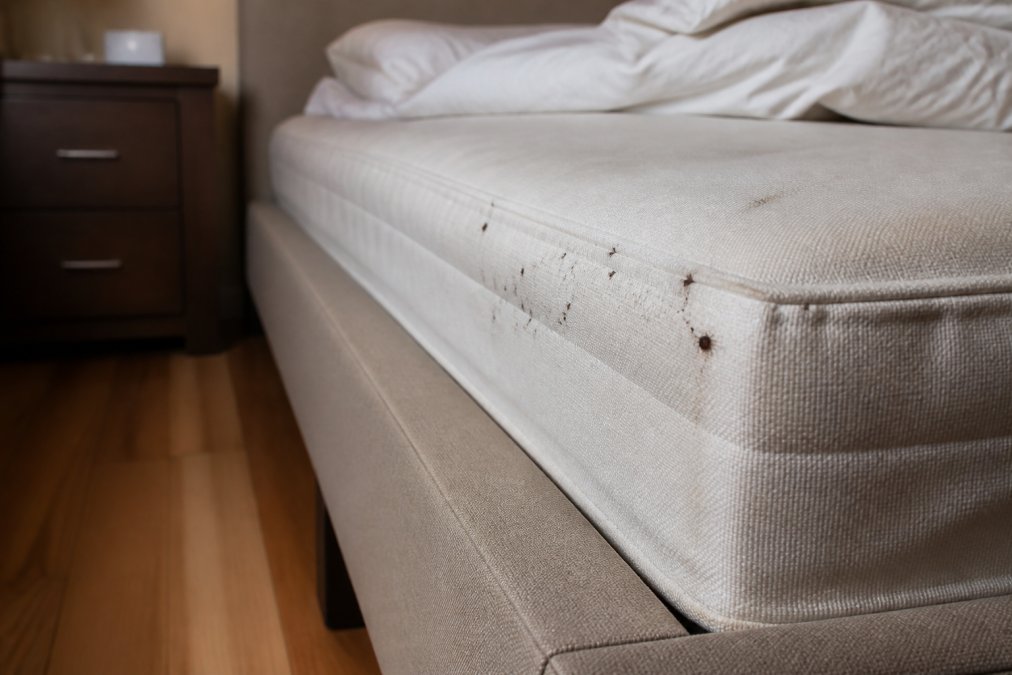
The earliest signs of bed bugs in an apartment are rarely the live insects themselves, which are small and adept at hiding. Instead, you will most often notice the evidence they leave behind: small rusty stains on your sheets, dark fecal spots, and pale yellow eggs. These signs appear before you ever see a living bug, giving you a critical window to act before the population grows.
A common mistake is mistaking these marks for dirt or lint. Bed bug fecal matter is digested blood, so it leaves distinct reddish-brown or black specks that smear when touched with a damp cloth. You might also find shed exoskeletons from molting nymphs, which look like translucent, empty shells.
Bed Bug Bite Patterns on Skin: What They Look Like
Bed bug bites often appear as small, red welts that are commonly clustered together or arranged in a zigzag pattern on exposed skin. Unlike mosquito bites, which are usually random and solitary, bed bugs tend to feed in a line as they move along the skin, producing a distinctive pattern that is easier to identify (the CDC).
The bites themselves result from a dermatological reaction to the insect's saliva, which contains an anticoagulant. While some people show no reaction at all, others experience significant itching and an allergic response. The most commonly affected areas are the face, neck, arms, and hands, as these are typically exposed during sleep.
Keep in mind that bite patterns alone cannot confirm an infestation, as reactions vary widely between individuals. The presence of bites should always prompt you to inspect your sleeping area for the physical signs mentioned earlier. If you wake up with unexplained welts in a line or cluster, treat it as a signal to conduct a thorough inspection immediately.
How to Check for Bed Bugs in a Mattress and Beyond
Checking for bed bugs in a mattress requires a systematic approach that goes far beyond a quick glance at the top sheet. Start by stripping all bedding and examining the mattress seams, tufts, and folds with a bright flashlight. You are looking for live insects, rusty spots, blood smears, and the dark specks of fecal matter that indicate an active presence.
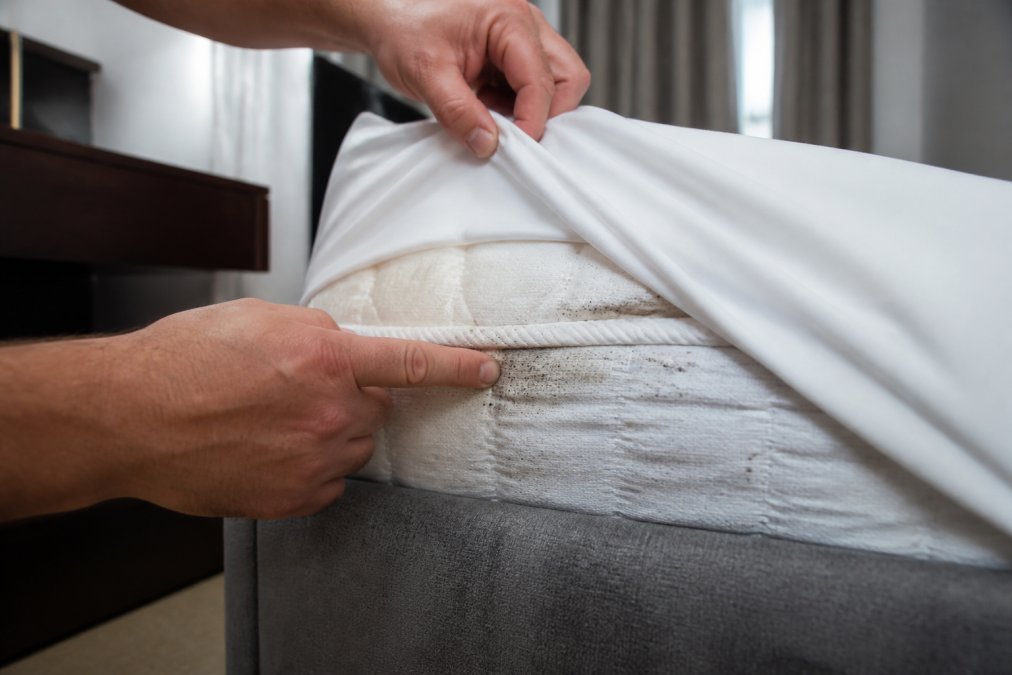
The mattress is only the beginning. These pests are experts at finding hiding places, and they spread quickly to other areas. A thorough inspection must also cover:
- The box springs and bed frame, especially any cracks or crevices
- The headboard, particularly where it mounts to the wall
- Baseboards and any peeling wallpaper or loose paint
- Upholstered furniture, including couches and chairs near the bed
- Electrical outlets, picture frames, and curtain rods
How to Report Bed Bugs to Landlord and Protect Your Rights
Finding bed bugs in a rental unit triggers a specific set of legal rights and responsibilities that differ from owning a home. This section focuses on the apartment-specific reality: your landlord has a legal duty to provide a pest-free environment, and your actions in the first 48 hours can significantly impact your liability and the speed of remediation.
Understanding the Legal Framework
In most Canadian provinces and territories, residential tenancy legislation (such as the Residential Tenancy Act in British Columbia or the Residential Tenancies Act in Ontario) implies a warranty of habitability (canada.ca). This means your landlord is legally obligated to maintain the unit in a state that is fit for living, which includes being free from pest infestations. This duty is not optional, and it cannot be waived by a clause in your lease.
Your responsibility as a tenant is to maintain reasonable cleanliness and to report any issues promptly. Failure to report an infestation quickly can, in some cases, be construed as negligence, potentially making you liable for the spread of the infestation to other units. This is why immediate and documented notification is your primary legal protection.
The Right Way to Notify Your Landlord
Oral notice is not enough. You need a written record. Here is the process to follow:
- Draft a Formal Written Notice: Clearly state the date, your address, and the specific signs you found (e.g., "dark fecal spots on the mattress seam," "live insect on the box spring"). Attach dated photographs as evidence.
- Send It via Multiple Channels: Send the notice by email for speed and by registered mail or hand-deliver a physical copy and request a receipt. This creates an indisputable paper trail.
- Request a Specific Action: Do not just ask for "help." Request a professional pest control inspection by a licensed provider within a specific timeframe (e.g., "within 5 business days").
- Keep Everything: Save copies of all correspondence, photographs, and any notes from phone calls or in-person conversations.
Navigating Neighbor-to-Neighbor Communication
In an apartment, an infestation is rarely isolated. If you suspect the source is a neighboring unit, you face a delicate communication challenge. Approaching a neighbor directly with accusations can create friction and escalate tensions. A more effective strategy is to report your findings to the building manager and let them coordinate inspections of adjacent units. This protects you from conflict and ensures the landlord addresses the problem as a building-wide issue, not just a single-unit problem.
If you do speak with a neighbor, frame it as a shared concern: "I found some signs in my unit, and since these bugs can travel, I thought you might want to check yours too. I've already notified the manager." This is collaborative, not accusatory.
What to Do If Your Landlord Fails to Act
If your landlord does not respond or refuses to schedule a professional inspection, you have legal recourse. Do not withhold rent, as this can put you in violation of your lease. Instead, contact your provincial or territorial residential tenancy branch (e.g., the Residential Tenancy Branch in BC or the Landlord and Tenant Board in Ontario). They can provide guidance on filing a dispute resolution application or a complaint about the lack of maintenance. In many jurisdictions, you can also contact your local public health authority or bylaw enforcement office, as a bed bug infestation can be considered a health hazard.
What to Do If You Find Signs of Bed Bugs
If you find signs of bed bugs in apartment units, your immediate priority is to contain the problem without spreading it further. Do not move furniture between rooms, and avoid sleeping on the couch, as this simply expands the infestation to new areas. Wash all bedding and clothing in hot water and dry on the highest heat setting, then vacuum your mattress and baseboards thoroughly.
The most effective response is to contact a pest control professional who specializes in bed bug eradication. DIY treatments rarely eliminate an infestation because they miss the hidden eggs and the insects that have already migrated into walls and neighboring furniture. Meridian Bed Bug Treatment provides specialized solutions for apartments, condos, and rental properties across Vancouver and the Lower Mainland, using methods designed to address infestations at every life stage.
For property managers, acting quickly protects other units from infestation. Bed bugs travel through wall voids and electrical conduits, so a single untreated unit can quickly become a building-wide problem. A professional integrated pest management approach, combining inspection, treatment, and follow-up, is the only reliable way to break the cycle.
Conclusion
Catching the first signs of bed bugs in an apartment early is your strongest defense against a costly and stressful infestation. From identifying bite patterns to knowing where to inspect and how to report the issue to your landlord, each step you take protects your health, your belongings, and your legal standing as a tenant. Acting fast also reduces the psychological strain that comes from living with an unwanted pest problem, a burden that many residents underestimate.
When you need a solution you can trust, Meridian Bed Bug Treatment is here to help residents and property managers across Vancouver and the Lower Mainland restore their spaces. Our specialized treatment services are designed for homes, apartments, condos, hotels, and short-term rentals, providing effective and discreet management of bed bug infestations. Get started with Meridian Bed Bug Treatment and take the first step toward a pest-free home.
Frequently Asked Questions
How easily do bed bugs spread in an apartment?
Bed bugs spread easily between units through wall voids, electrical outlets, and pipe chases. They can also travel on shared laundry or by hitching a ride on visitors' clothing and bags. Because they are nocturnal and hide well, an infestation can grow for weeks before you notice it. Early detection is critical to prevent them from spreading to neighboring apartments.
What are the earliest physical signs of a bed bug infestation?
The earliest signs are often small, rusty-colored stains on your sheets, which are digested blood spots from their fecal matter. You might also notice tiny pale yellow eggs or shed exoskeletons near mattress seams. Bites on your skin, especially in a cluster or zigzag pattern, are another common early indicator. Acting on these first signs can stop a minor issue from becoming a major infestation.
Do bed bug bites always appear in a line?
No, bed bug bites don't always appear in a straight line. While a linear or zigzag pattern of 3 to 5 bites is common, they can also appear as a random cluster or as single isolated welts. The pattern depends on how the insect feeds and moves. Bites are also a dermatological reaction, so some people may have no visible reaction at all, making physical signs like stains and exoskeletons more reliable for detection.
Can I see bed bugs with the naked eye?
Yes, adult bed bugs are visible to the naked eye. They are about the size of an apple seed, roughly 5-7 mm long, with a flat, oval-shaped body. After feeding, they become reddish and more elongated. Nymphs, or juvenile bed bugs, are much smaller and can be harder to spot. A flashlight and a magnifying glass will help you inspect dark crevices like mattress seams and baseboards effectively.


