 listicle
Bed Bug Extermination Service Vancouver 2026: Top 7 Picks
Table of Contents
- Quick Comparison: Top Bed Bug Extermination Services
- Meridian Bed Bug Treatment: Specialized Care for Complex Infestations
- Abell Pest Control: National Reach with Local Expertise
- Avon Pest Control: Guaranteed Results with Transparent Pricing
- BC Bug: Rapid Response for Vancouver Families
- Solid Rock Pro Pest Care: Community-Rated Reliability
- Elite Pest Control: Thorough Inspections and Follow-Up
- Rentokil: Advanced Technology for Large-Scale Properties
- How to Prepare for Bed Bug Extermination
- Heat Treatment vs. Chemical Treatment for Bed Bugs
- Bed Bug Treatment Cost: What to Expect
- Why DIY Methods Often Fail
- What to Do If You Find Bed Bugs
- How to Choose a Reliable Exterminator
- Frequently Asked Questions
Last Updated: September 13, 2026
Quick Comparison: Top Bed Bug Extermination Services
Finding a reliable bed bug extermination service in Vancouver starts with knowing which providers specialize in this pest. Bed bug extermination eliminates all life stages, including eggs and nymphs. This guide from Meridian Bed Bug Treatment breaks down seven providers serving the Lower Mainland.
| Provider | Pricing Model | Guarantee | Best For |
|---|---|---|---|
| Meridian Bed Bug Treatment | Quote-based | Specialized focus | Condos, rentals, hotels |
| Abell Pest Control | Quote-based | Standard service terms | Multi-unit properties |
| Avon Pest Control | $200 - $1,000 | 5-month guarantee | Homeowners |
| BC Bug | Free quote | Not specified | Families, fast turnaround |
| Solid Rock Pro Pest Care | Quote-based | Not specified | Community-rated service |
| Elite Pest Control | Quote-based | Follow-up monitoring | Thorough inspections |
| Rentokil | Quote-based | Standard protocols | Large-scale properties |
For Health Canada's pest control product guidance, consumers should confirm any provider uses registered products and holds proper licensing before treatment begins.
Meridian Bed Bug Treatment: Specialized Care for Complex Infestations
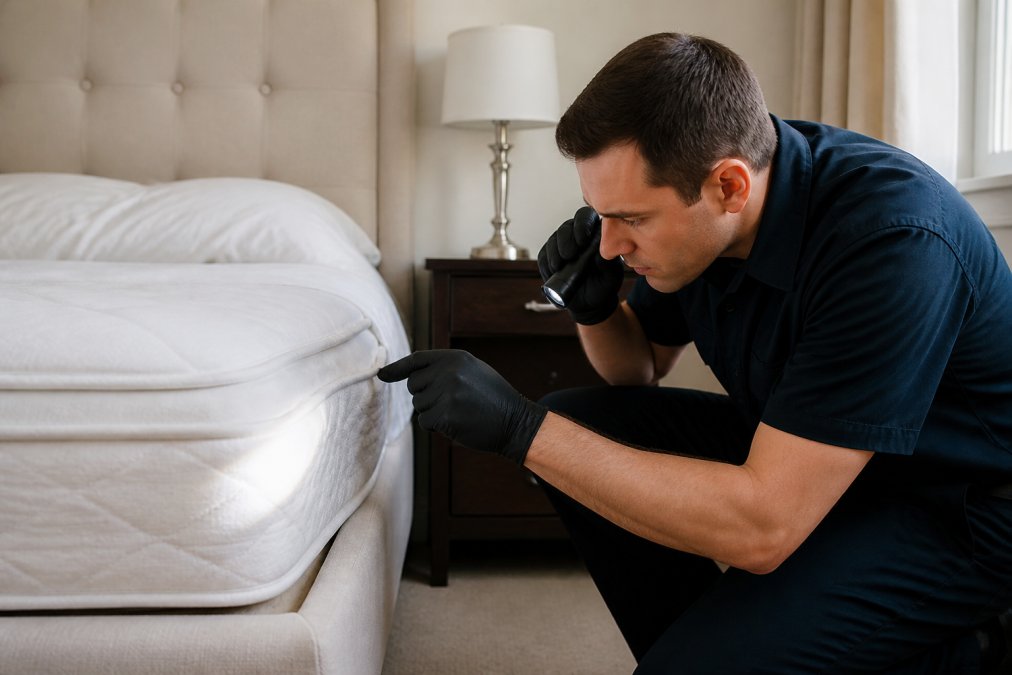
Meridian Bed Bug Treatment specializes in bed bugs. It serves homes, condos, apartments, hotels, and short-term rentals across Vancouver and the Lower Mainland, which matters when a plan must work in a shared building without tipping off neighbours.
Property managers with recurring infestations get a tailored approach rather than a generic spray. Because the team focuses on bed bugs, they understand the hiding patterns, egg placement, and re-treatment timing.
Meridian Bed Bug Treatment does not publish a price list, so you need a quote before budgeting.
Abell Pest Control: National Reach with Local Expertise
Abell brings national infrastructure to a local problem, using integrated pest management, professional inspection, and customized treatment plans for multi-unit dwellings, suiting landlords overseeing several rentals.
The trade-off is standardization. Pricing isn't published and requires a site assessment, so smaller households may find the process heavier than needed. For property managers running recurring pest management across a portfolio, that structure works in their favour.
Avon Pest Control: Guaranteed Results with Transparent Pricing
Avon stands out for one reason: it publishes a price range. Fees run roughly $200 to $1,000 depending on severity, backed by a five-month guarantee.
That guarantee matters: bed bugs reproduce quickly, and one missed egg cluster can restart an infestation weeks later. The price spread reflects reality, a single-room treatment costs far less than a whole-unit thermal job.
BC Bug: Rapid Response for Vancouver Families
Speed defines BC Bug's pitch: free quote consultations and rapid response, appealing to families who need a bedroom back before the school week starts.
Turnaround time affects cost: a fast inspection means treatment starts sooner, limiting spread to adjacent rooms. BC Bug doesn't publish pricing, so expect a quote-based conversation.
Solid Rock Pro Pest Care: Community-Rated Reliability
Solid Rock Pro Pest Care leans on local reputation, using professional-grade extermination tools, detailed property inspection, and customized treatment solutions, and it's highly rated by community members.
For anyone burned by a cut-rate operator, that track record carries weight. The catch: limited public pricing, so you'll need to call for numbers.
Elite Pest Control: Thorough Inspections and Follow-Up
Elite Pest Control treats inspection as the foundation, not an afterthought, combining integrated pest management, thorough site inspections, and follow-up monitoring, addressing the most common failure point: declaring victory too early.
Follow-up visits catch surviving nymphs before they mature and lay eggs. For commercial clients or anyone who's endured a failed treatment, that monitoring justifies the consultation-based pricing.
Rentokil: Advanced Technology for Large-Scale Properties
Rentokil operates globally with local service, bringing advanced detection technology, heat and chemical options, and ongoing monitoring to complex infestations.
Large-scale properties benefit most. Hotels and apartment complexes with multiple affected units need detection tools that find hidden harbourages fast. The trade-off is cost: Rentokil may run higher than smaller local operators, and pricing requires a quote.
How to Prepare for Bed Bug Extermination
Preparation determines whether treatment works. Most providers require tenants to reduce clutter, launder and bag bedding, and clear access to baseboards before the technician arrives. Skipping these steps leaves harbourages untreated and can void a guarantee.
A practical checklist before treatment day:
- Wash and dry all bedding on high heat, then seal in bags
- Vacuum carpets, seams, and furniture creases thoroughly
- Reduce clutter around beds and baseboards
- Pull furniture slightly away from walls
- Confirm pet and occupant arrangements with your provider
For guidance on tenant and landlord obligations, BC's Residential Tenancy Branch outlines the responsibilities each party carries when an infestation is reported.
Heat Treatment vs. Chemical Treatment for Bed Bugs
Most professional bed bug work falls into two categories: thermal (heat) and chemical (insecticide) treatment. Many providers combine them. Understanding how each kills bed bugs, and where each fails, helps you ask better questions when requesting a quote.
How heat treatment works
Heat treatment raises the temperature of the entire treated space, inside mattresses, box springs, furniture frames, and wall voids, to a level lethal to all life stages: adults, nymphs, and eggs. Eggs are the hardest stage to kill with chemicals, so a thermal kill removes the need for a follow-up visit to catch newly hatched nymphs.
What to expect in practice:
- The technician places temperature sensors throughout the unit, including inside furniture and behind baseboards, to confirm the whole space reaches the target range, not just the air near the heater.
- The space is held at temperature for a sustained period, because a mattress or wooden bed frame heats more slowly than the air.
- Occupants and pets usually need to leave for the day.
- Heat can damage aerosol cans, pressurized containers, some electronics, vinyl, and certain adhesives or waxes. Your provider should give you a removal list before treatment day.
How chemical treatment works
Chemical treatment applies registered insecticides to surfaces where bed bugs travel and rest: mattress seams, bed frames, baseboards, outlet plates, and furniture creases. Some products are contact killers; others are residual, meaning the treated surface keeps killing bed bugs that cross it after application.
Key limitations to understand:
- Residual products depend on the bed bug walking across a treated surface; those hidden deep inside a seam or wall void may never contact the residue.
- Eggs are generally not killed by residual sprays, so chemical-only treatments almost always require a follow-up visit timed to catch nymphs hatching after the first application.
- Some bed bug populations have developed resistance to certain insecticide classes, so a provider that rotates active ingredients or combines methods is a better bet than one relying on a single product.
- Re-entry time varies by product. Ask which registered products will be used and how long occupants and pets must stay out.
Side-by-side comparison
| Factor | Heat treatment | Chemical treatment |
|---|---|---|
| Kills eggs in one visit | Yes, when target temperature is reached and held | Generally no, follow-up usually required |
| Prep burden | Lower clutter reduction, but removal of heat-sensitive items | Higher, laundry, decluttering, access to baseboards |
| Occupant displacement | Usually the full day | Often a few hours, product-dependent |
| Risk to belongings | Heat-sensitive items can be damaged | Residue on surfaces; some fabrics and finishes may stain |
| Typical use case | Whole-unit, multi-room, or egg-heavy infestations | Single-room, targeted, or as a residual barrier after heat |
| Follow-up | Often not required for the thermal kill itself | Commonly required 1-2 weeks later |
Which method fits your situation
- Single room, early detection: A targeted chemical treatment with a follow-up may suffice and costs less upfront.
- Multiple rooms or a shared wall: Heat is often the more reliable primary kill because it reaches inside walls and furniture where residue can't.
- Heavy egg load or a previously failed treatment: Heat plus a residual barrier is the common combination, heat handles eggs, residue catches anything that moves afterward.
- Sensitive occupants (infants, pets, respiratory conditions): Ask about product selection and re-entry times. Some providers offer reduced-toxicity or non-chemical primary treatments; confirm what is registered for bed bugs and the re-entry requirements.
For product registration and safety information, Health Canada's pest control product guidance lists what is approved for use in Canada.
Bed Bug Treatment Cost: What to Expect
Pricing depends on infestation severity, property size, and treatment method. A single-room chemical treatment sits at the low end; whole-unit thermal treatment for a multi-bedroom home lands at the high end. Avon's published $200 to $1,000 range reflects that spread.
Meridian Bed Bug Treatment doesn't publish fixed prices because every infestation differs. Request a quote for an accurate figure, and ask whether follow-up visits are included. Canada Mortgage and Housing Corporation notes that early professional intervention typically costs less than prolonged DIY attempts.
Why DIY Methods Often Fail
Store-bought sprays kill bed bugs on contact but rarely reach eggs, nymphs, or adults hidden in mattress seams and wall voids. Foggers scatter bed bugs deeper into a room, and repeated DIY spending often exceeds the cost of one professional treatment.
Detection is the harder problem: adults, nymphs, and eggs are small enough to miss during a casual inspection, so homeowners treat the wrong areas. Professional inspection uses monitoring tools and trained eyes to find every harbourage before treatment begins.
What to Do If You Find Bed Bugs
The first 48 hours matter. Bed bugs spread through shared walls, along baseboards, and on furniture and clothing, so the longer an infestation goes unaddressed, the more rooms and units it reaches, and the higher the treatment cost.
Immediate steps
- Don't move infested items to another room. Carrying a mattress, bedding, or clothing elsewhere is the fastest way to spread bed bugs.
- Isolate the affected area. Bag bedding, pillows, and clothing in sealed plastic bags until they can be laundered and dried on high heat.
- Don't throw out the mattress yet. Discarding furniture without wrapping it can spread bed bugs through hallways, elevators, or the garbage area, and in a rental, it can create a dispute over who replaces it.
- Document everything. Photograph live bed bugs, shed skins, fecal spots, and bites, and note the date you first noticed signs. This record matters if you need to make a claim or escalate a dispute.
- Book a professional inspection. A trained inspection confirms the infestation and identifies every harbourage before treatment begins.
If you rent: who is responsible in BC
This is the question most guides skip, and it's the one renters need answered first. Under the Residential Tenancy Act, bed bug treatment in a rented unit is generally the landlord's responsibility. The Residential Tenancy Branch's position is that a landlord must provide and maintain residential property in a state of repair that is suitable for occupation, and an active bed bug infestation is treated as a repair and habitability issue, not a tenant housekeeping problem.
What that means in practice:
- Report it in writing. Notify your landlord as soon as you suspect bed bugs, and keep a copy and the date sent. A verbal hallway conversation is hard to prove later.
- The landlord arranges and pays for treatment. In most cases, the landlord hires a licensed pest control provider and covers the cost, even if the infestation started in another unit.
- You still have obligations. Tenants are generally expected to cooperate with preparation, laundry, decluttering, and access on treatment day. Refusing to prepare or blocking access can shift the analysis and, in some cases, make the tenant responsible for costs.
- If the landlord won't act, apply for dispute resolution through the Residential Tenancy Branch. Document your written requests, dates, and any response (or lack of one).
- Don't withhold rent unilaterally. Doing so without the proper process can breach your tenancy agreement. Use dispute resolution instead.
If you own the property
You're responsible for arranging treatment. Inspect adjacent rooms and shared walls immediately, bed bugs travel, and treating one room without checking neighbours usually leads to a repeat call. In a strata or condo, notify the strata council or property manager so adjacent units can be inspected; a building-wide problem rarely resolves with a single-unit treatment.
If you're a landlord or property manager
Treat the affected unit and inspect adjacent units at the same time. Notify tenants in writing, coordinate access, and keep records of the inspection, treatment, and follow-up. In multi-unit buildings, addressing one unit in isolation is the most common reason infestations recur.
How to Choose a Reliable Exterminator
Verify licensing, insurance, and bonding before booking. Ask whether the provider specializes in bed bugs or treats them as one of many pests, and confirm what the guarantee covers. A provider offering monitoring and follow-up visits will catch survivors a one-off spray misses.
Frequently Asked Questions
How much does professional bed bug extermination cost in 2026?
Pricing for bed bug extermination depends on the size of the infestation, the number of rooms affected, and the treatment method. Most companies provide quotes after a site inspection. Some providers offer transparent price ranges, while others require a consultation. Request a free quote from a licensed provider to get an accurate estimate for your specific situation. Avoid companies that give firm prices over the phone without seeing the property.
What is the most effective bed bug treatment method for apartments?
Heat treatment is often the most effective for apartments because it kills all life stages, including eggs, in a single session. Chemical treatments may require multiple visits and follow-up. For multi-unit buildings, integrated pest management that combines heat, targeted chemical application, and monitoring is recommended. A licensed exterminator can assess your building's layout and infestation level to recommend the best approach.
Are bed bug extermination services guaranteed to work?
Many professional services offer guarantees, but terms vary. Some provide a 5-month guarantee, while others offer follow-up visits if bed bugs persist. The guarantee often depends on proper preparation by the resident. Always ask about the specific guarantee policy, what it covers, and any conditions before booking. A reputable company will explain the process and what happens if bed bugs return.
How do I prepare my home for a professional bed bug treatment?
Preparation typically involves washing and drying all bedding and clothing on high heat, vacuuming thoroughly, decluttering to give technicians access to baseboards and furniture, and removing pets and plants. Some treatments require you to vacate the premises for several hours. Your provider will give you a detailed checklist. Following it exactly is critical for treatment success.
Does the Residential Tenancy Act require landlords to pay for bed bug removal?
Under the Residential Tenancy Act, landlords are responsible for maintaining rental units in a condition that is safe and habitable. This includes addressing pest infestations like bed bugs. Tenants must report the issue promptly and allow access for treatment. If a landlord fails to act, tenants can apply for dispute resolution. Always document communication and keep records of any expenses.
Bed bugs spread fast in shared buildings, and a failed DIY attempt usually costs more than starting with a specialist. Meridian Bed Bug Treatment handles homes, condos, apartments, hotels, and short-term rentals across Vancouver and the Lower Mainland, with treatment plans built for both residents and property managers. Get started with Meridian Bed Bug Treatment and resolve your infestation with a team that focuses on bed bugs exclusively.