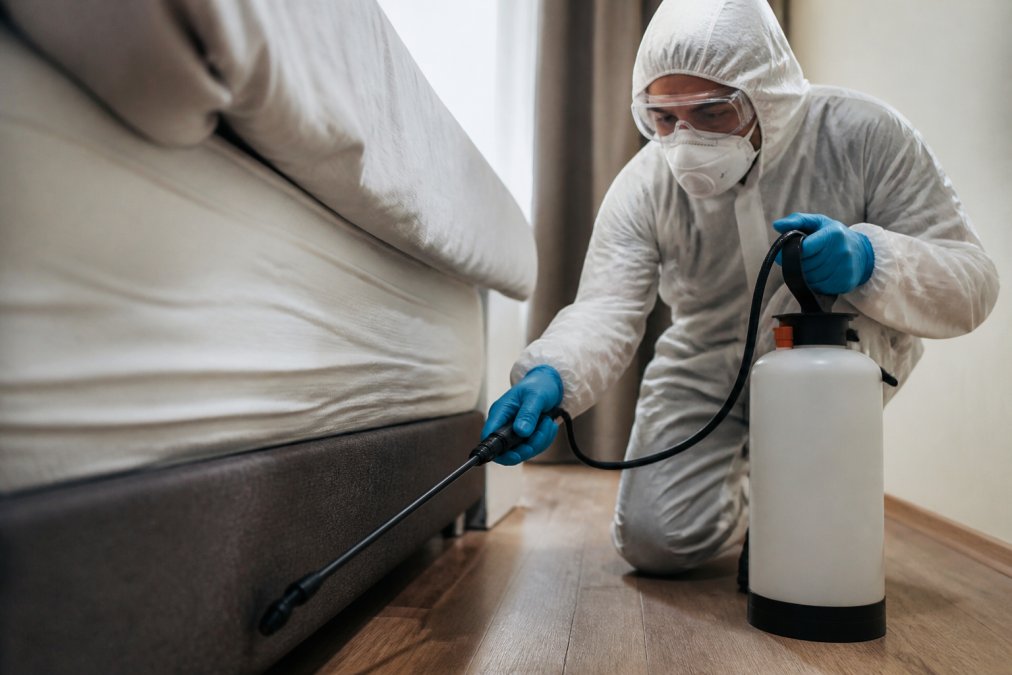
 how-to
Bed Bug Extermination Process for Homes: 2026 Guide
Table of Contents
- Professional Bed Bug Inspection Steps: How Experts Confirm an Infestation
- Bed Bug Treatment Preparation Checklist for Homeowners
- Chemical vs. Non-Chemical Bed Bug Extermination Methods
- How Long Does Bed Bug Extermination Take?
- Follow-Up Visits and Monitoring After Bed Bug Extermination
- Apartment and Multi-Unit Bed Bug Extermination Protocols
- Pet and Child Safety During Bed Bug Treatment
- Post-Treatment Maintenance Checklist to Prevent Reinfestation
- Frequently Asked Questions
Last Updated: September 14, 2026
Professional Bed Bug Inspection Steps: How Experts Confirm an Infestation
Bed bug extermination begins with a professional inspection, because treating the wrong pest wastes time and money. At Meridian Bed Bug Treatment, our technicians confirm an active infestation before recommending any treatment plan.
A common mistake is mistaking carpet beetle larvae or bat bugs for bed bugs and treating the wrong insect entirely. Inspectors check seams, folds, and dark hiding spots to confirm live activity, shed skins, and fecal spotting rather than relying on bites alone.
What Inspectors Look For in Harborage Areas
Harborage areas are the tight, dark spaces where bed bugs hide between feedings. Inspectors examine mattress seams, box spring corners, bed frames, headboards, baseboards, and the gaps behind electrical outlets.
They also look for the telltale signs of each growth stage: translucent eggs, pale nymphs, and adult bugs clustered near a food source. According to Health Canada's pest control guidance, proper identification is the foundation of any safe, effective treatment plan.
University of Minnesota Extension's bed bug resources note that inspections should cover sleeping areas first, then expand outward to furniture and wall voids.
Bed Bug Treatment Preparation Checklist for Homeowners
Preparation is the part homeowners control, and it directly affects how well treatment works. A clear, room-by-room checklist reduces clutter, exposes harborage areas, and lets technicians reach every surface that needs treating.
- Wash all bedding, pillowcases, and curtains in hot water
- Dry items on the highest heat setting the fabric allows
- Vacuum mattresses, carpets, and baseboards with a HEPA filter vacuum
- Seal washed items in clear plastic bags until treatment is complete
- Reduce clutter in bedrooms and closets
- Pull furniture slightly away from walls
- Do not move items between rooms before treatment
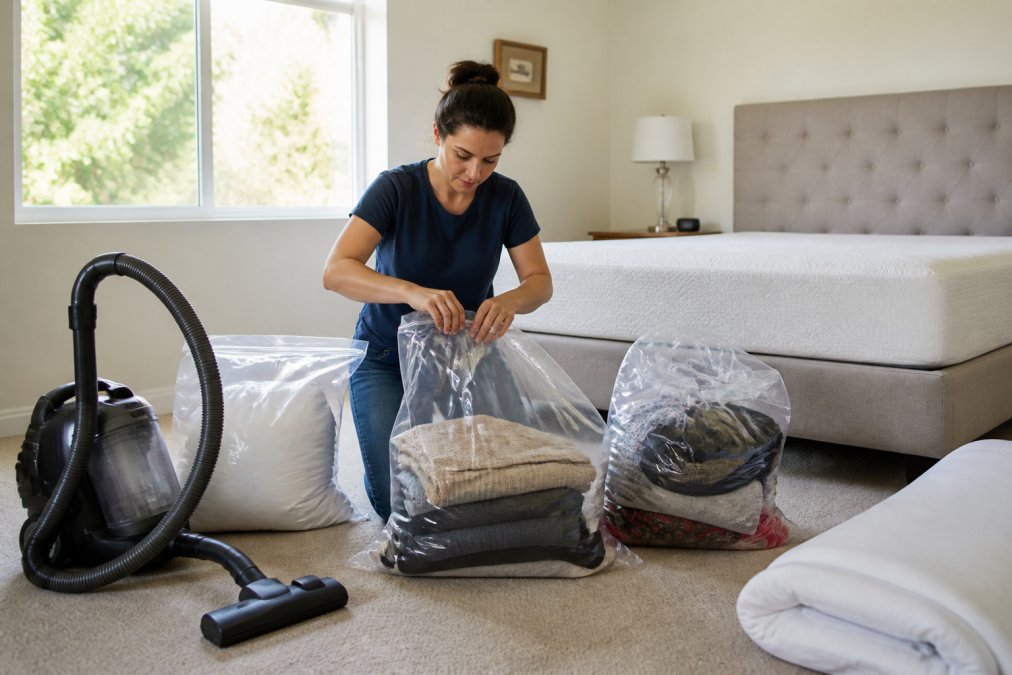
Laundering, Vacuuming, and Clutter Reduction
Laundering and high heat drying kill bed bugs and their eggs on fabrics, but only if items reach a high enough temperature for long enough. Vacuuming removes visible bugs and eggs from carpets and crevices, though it rarely eliminates an infestation on its own.
Clutter reduction matters just as much. Piles of clothing and stacked storage give bed bugs places to hide that no spray or dust can reach.
Chemical vs. Non-Chemical Bed Bug Extermination Methods
No single method clears an infestation on its own. Effective bed bug extermination combines chemical and non-chemical methods, matched to the severity of the infestation, the surfaces involved, and whether eggs are likely present in the harborage.
The decision usually comes down to three questions: How far has the infestation spread? What surfaces need treating? And are there occupants with chemical sensitivities or pets in the home? A technician who skips those questions is guessing.
How Each Method Actually Works
Residual pesticides are applied to cracks, crevices, baseboards, and wall voids where bed bugs travel. They work on contact and leave a film that keeps killing for days to weeks, depending on the active ingredient and surface. The limitation is resistance: some bed bug populations have developed tolerance to pyrethroids, which is why rotation and mixing with non-chemical methods matters.
Insecticidal dusts such as silica gel and diatomaceous earth are blown into wall voids, electrical outlets, and other dry, undisturbed spaces. They abrade the insect's waxy outer layer and cause it to dehydrate. They are slow, often taking several days to kill, but they last far longer than sprays in hidden voids.
Structural heat treatment raises the entire room or unit to a lethal temperature, typically sustained above 50°C for a period long enough to kill eggs, nymphs, and adults at every life stage. Heat penetrates mattresses, furniture, and wall voids that sprays miss. The trade-off is preparation: heat-sensitive items must be removed, and the space must be monitored so the target temperature is actually reached in the coldest corner, not just near the heater.
Steaming delivers a focused, contact kill on mattresses, box springs, and upholstery seams. It kills eggs and adults instantly at the point of contact but leaves no residual, so it is a companion method, not a standalone solution.
Diatomaceous earth is a fine powder that clings to bed bugs as they cross it, damaging their outer shell and drying them out over time. It only works when dry, so it is not suitable for bathrooms, kitchens, or damp basements.
| Method | How It Works | Best For | Key Limitation |
|---|---|---|---|
| Residual pesticides | Contact kill plus residual film | Baseboards, cracks and crevices | Resistance in some populations |
| Insecticidal dusts | Abrasion and dehydration | Wall voids, outlets | Slow acting (days) |
| Structural heat treatment | Sustained lethal temperature | Whole-room infestations, all life stages | Requires prep and monitoring |
| Steaming | Instant contact kill | Mattresses, furniture seams | No residual protection |
| Diatomaceous earth | Abrasion and dehydration | Harborage areas, cracks | Only works when dry |
Why Combining Methods Works Better
Bed bugs hide in places a single method cannot reach. A spray hits the surface; eggs tucked into a seam survive. Heat kills everything in the room; bugs that fled to an adjacent unit during treatment return. Dust sits in a void; it does nothing on a mattress.
That is why a layered plan, heat or steam for the immediate kill, residual or dust for the survivors, and monitoring to catch what hatches later, can produce more reliable results than repeating one product. University of Kentucky Entomology's bed bug management guide explains why combining methods outperforms any single approach.
What Homeowners Should Not Do
Do not fog or bug-bomb a room as a first step. Foggers scatter bed bugs into adjacent rooms and wall voids, spreading the infestation and making professional treatment harder. Do not mix your own pesticide cocktails, and do not apply dusts in damp areas where they will clump and stop working.
How Long Does Bed Bug Extermination Take?
Bed bug extermination time varies. Total time depends on infestation size, the methods used, and how well the home was prepared.
Heat treatment can sometimes take less active time than a multi-room chemical application, but both require monitoring afterward. If you still see live bugs after the first visit, that does not mean the treatment failed; it often means eggs hatched after the initial application.
That is exactly why follow-up visits exist. A single treatment rarely ends an infestation. The second visit catches newly hatched nymphs before they can lay eggs and restart the cycle.
Follow-Up Visits and Monitoring After Bed Bug Extermination
Follow-up visits confirm whether treatment worked and catch any remaining activity early. Technicians re-inspect the same harborage areas, check interceptor traps, and look for new fecal spotting or live bugs.
Monitoring between visits matters too. Bed bug interceptors placed under bed legs and along baseboards give you an early warning if activity continues. Keep monitoring for several weeks after the final visit, since eggs can survive where adults do not.
Apartment and Multi-Unit Bed Bug Extermination Protocols
Bed bugs spread through shared walls, plumbing chases, and hallways, so treating one unit in a multi-unit building rarely solves the problem. Effective protocols treat adjacent units at the same time and coordinate with building management.
Property managers should expect a written treatment plan covering each affected unit, shared spaces, and a schedule for follow-up inspections. Discretion matters here; residents understandably worry about stigma, and a coordinated plan keeps treatment contained without drawing attention.
For landlords managing several units, the priority is containment. Treating only the reported unit leaves neighboring apartments as a reservoir, and the infestation can return.
Pet and Child Safety During Bed Bug Treatment
Pets and children are the two groups most likely to be affected by treatment residues, and most guides treat their safety as an afterthought. This section is written to close that gap: what to do before, during, and after treatment so the people and animals in your home stay protected.
Before Treatment
Remove pets, their bedding, food bowls, water dishes, and toys from the treatment area. Cover aquariums and turn off their air pumps, even brief exposure to airborne residues can harm fish. If you have birds, reptiles, or amphibians, tell your technician in advance; these animals are far more sensitive to airborne chemicals than cats or dogs, and some products cannot be used in the same room at all.
Wash pet bedding on the hottest setting the fabric allows, the same way you would treat human bedding. If a pet sleeps on your bed, its bedding is part of the infestation and needs the same heat treatment.
For children, remove plush toys, stuffed animals, and any items a child puts in their mouth from the treatment area. Wash what can be washed; bag and store the rest until treatment is complete.
During Treatment
Keep everyone, pets and people, out of the treated rooms for the full re-entry period. Most residual pesticides and dusts require a set re-entry time, which your technician will specify; it is typically several hours, but it depends on the product, the ventilation, and the surfaces treated. Do not shorten it because the room looks dry.
If a child or pet has asthma, allergies, or chemical sensitivities, say so before treatment begins. Your technician can adjust the plan, for example, by relying more on heat and steam and less on residual sprays, or by choosing a product with a shorter re-entry interval.
After Treatment
Wait for the technician to confirm it is safe to return. Once you are back in the room, ventilate it by opening windows if weather permits, and wipe down food-contact surfaces such as counters and tables before use. Wash any pet bowls or toys that were left in the room, even if they were covered.
Watch pets for unusual behavior in the first 24 hours, excessive drooling, vomiting, lethargy, or difficulty breathing. If you see any of these signs, contact your veterinarian and mention the products used. For children, watch for skin irritation, coughing, or headache, and call your family doctor or a poison control center if symptoms appear.
A Note for Households With Infants
Infants crawl on floors and put hands in their mouths, so they have higher exposure risk than older children. If you have an infant, ask your technician to prioritize non-chemical methods where possible and to confirm the re-entry period in writing. Keep the infant out of treated rooms until that period has passed and the room has been ventilated.
Post-Treatment Maintenance Checklist to Prevent Reinfestation
Prevention after treatment comes down to routine and vigilance. Bed bugs return most often through travel, secondhand furniture, or an untreated neighboring unit, not because the original treatment failed.
- Keep mattress and box spring encasements on
- Maintain bed bug interceptors under bed legs
- Vacuum weekly, especially along baseboards
- Inspect luggage and clothing after travel
- Avoid bringing in secondhand furniture without inspection
- Report any new bites or spotting immediately
Bed bug infestations are stressful. Meridian Bed Bug Treatment specializes in bed bug extermination for homes, condos, apartments, hotels, and short-term rentals across Vancouver and the Lower Mainland, with customized treatment plans built around inspection findings. Our team handles multi-unit protocols for property managers and offers fast turnaround for short-term rental hosts. Get started with Meridian Bed Bug Treatment and put a confirmed, monitored treatment plan behind you.
Frequently Asked Questions
How do professionals get rid of bed bugs in homes?
Professionals use a customized treatment plan that combines inspection, chemical application, and non-chemical methods like heat treatment or steaming. They target harborage areas such as cracks and crevices, mattress seams, and baseboards. Many also apply residual pesticides and insecticidal dusts. Follow-up visits confirm the bed bug extermination worked and catch any surviving eggs or nymphs before they spread.
What should I do to prepare my home for professional bed bug extermination?
Follow a bed bug treatment preparation checklist: launder all bedding and clothing in high heat drying, vacuum thoroughly with a HEPA filter, reduce clutter, and dismantle bed frames if possible. Remove pets and children during chemical application. Do not move items between rooms, as this spreads the infestation. Your pest control provider will give specific instructions based on the treatment method.
How long does bed bug extermination take?
The duration of a single treatment session varies depending on home size and infestation level. Complete bed bug extermination often requires two or more follow-up visits to address newly hatched nymphs. Structural heat treatment can sometimes finish faster but requires longer preparation and monitoring.
Do I need to leave my home during bed bug treatment?
For chemical treatments, you and your pets usually need to stay away until sprays and dusts dry. Heat treatment requires vacating the unit for the full session and cool-down period. Your provider will confirm the exact re-entry time based on the products used and ventilation.


