 comparison
Best Orkin Alternatives for Bed Bugs: 2026 Guide
Table of Contents
- Why Homeowners and Property Managers Seek Orkin Alternatives for Bed Bugs
- Meridian Bed Bug Treatment: Specialized Bed Bug Remediation
- Greentech Heat Solutions: Thermal Remediation Equipment and Training
- Terminix Canada: National IPM-Based Bed Bug Control
- PestPro Thermal: Rapid Heat Treatment for Severe Infestations
- Heat Treatment vs Chemical Treatment for Bed Bugs: Which Works Better?
- How to Prepare for Bed Bug Extermination: A Room-by-Room Checklist
- Professional Pest Control Cost: What Drives the Price in Canada
- Frequently Asked Questions
Last Updated: September 11, 2026
Why Homeowners and Property Managers Seek Orkin Alternatives for Bed Bugs
Bed bugs are among the hardest pests to eliminate in multi-unit housing, and national pest control contracts often fall short when infestations are severe or recurring. This guide from Meridian Bed Bug Treatment examines the best Orkin alternatives for bed bugs, specialized providers, thermal remediation, and what drives treatment success, for condo owners, landlords, and short-term rental hosts across the Lower Mainland.
The core problem isn't skill, bed bugs demand specialization that general pest control contracts don't prioritize. A technician who spends most of their week on ants and rodents treats bed bugs occasionally; a specialist treats them daily.
Meridian Bed Bug Treatment: Specialized Bed Bug Remediation
Meridian Bed Bug Treatment focuses exclusively on bed bug remediation for homes, condos, apartments, hotels, and short-term rentals across Vancouver and the Lower Mainland.
Each unit gets a tailored strategy based on infestation severity, building layout, and whether neighboring units are at risk. For property managers with one affected apartment, the approach accounts for how bed bugs move through shared walls and how to contain them quietly. Meridian Bed Bug Treatment can handle this discreetly without making it obvious to neighbors that there is a bed bug problem.
For short-term rental operators, the appeal is turnaround speed and discretion: a host who finds bed bugs on a Sunday needs the unit cleared before the next booking.
Meridian also serves landlords managing multiple units, where the priority is preventing spread to unaffected apartments, the process is built around shared buildings, not single-family homes alone.
Greentech Heat Solutions: Thermal Remediation Equipment and Training
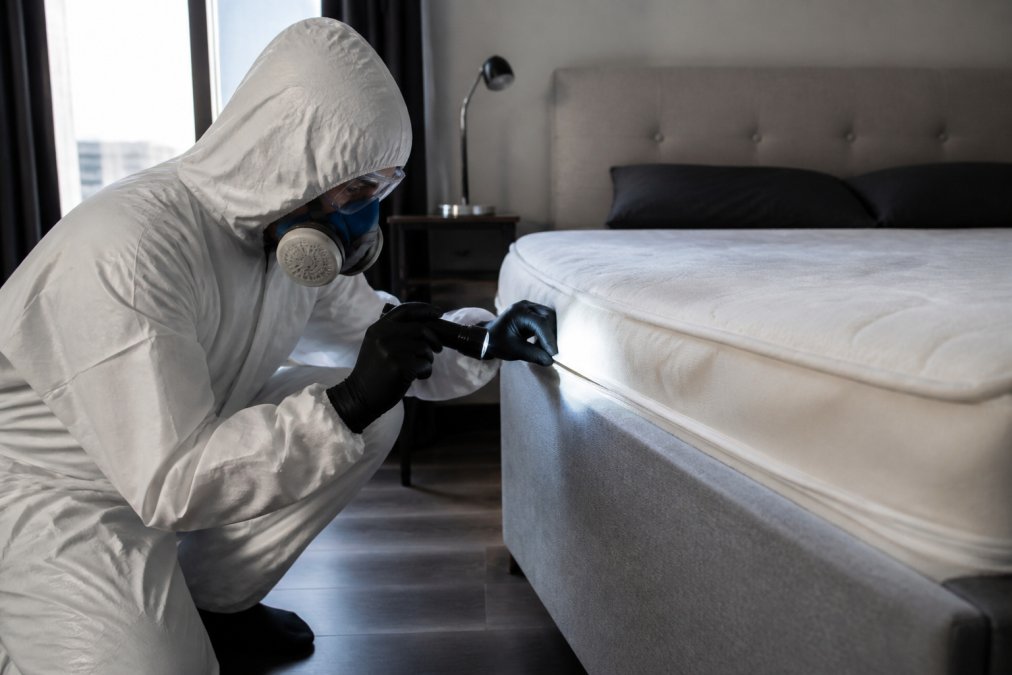
Greentech Heat Solutions supplies professional-grade thermal remediation equipment and training rather than direct consumer treatment. Pest control operators and property managers who want to run heat treatments in-house can purchase or lease the heaters and monitoring sensors needed to raise a room to lethal temperatures.
Heat penetrates furniture, wall voids, and mattress seams where residual sprays may not reach, and because it uses no chemical insecticide, it suits environments where chemical sensitivity is a concern.
The catch is operational: heat treatment requires technical expertise. Equipment must be positioned correctly, temperatures monitored throughout, and the space prepared so heat reaches every harborage. This isn't a DIY option.
Terminix Canada: National IPM-Based Bed Bug Control
Terminix Canada is a national provider using an integrated pest management (IPM) approach, combining inspection, monitoring, sanitation, and targeted chemical application rather than a single method. Plans are customized by infestation severity, with follow-up inspections to confirm eradication.
For homeowners who value a recognizable national brand with standardized protocols, this is a reasonable route. The trade-off is cost: national providers can price higher, and because they handle every pest category, bed bug specialization varies by branch and technician.
If you go this route, ask specifically how many bed bug treatments the assigned technician performs per month. That single question tells you more than the brand name on the truck.
PestPro Thermal: Rapid Heat Treatment for Severe Infestations
PestPro Thermal focuses on thermal remediation for bed bugs, offering site assessment, preparation guidance, rapid eradication of all life stages including eggs, and post-treatment monitoring. Heat is often faster than repeated chemical applications because it can resolve an infestation in one intensive visit rather than several rounds spaced weeks apart.
That speed is the main draw for severe infestations, where chemical treatments may need multiple follow-ups as eggs hatch. The trade-off is upfront cost, which can be higher than chemical-only treatments.
| Provider | Approach | Best For | Pricing Model |
|---|---|---|---|
| Meridian Bed Bug Treatment | Specialized bed bug remediation | Condos, rentals, multi-unit buildings | Contact for quote |
| Greentech Heat Solutions | Thermal equipment and training | Operators running in-house heat treatment | Equipment purchase or lease |
| Terminix Canada | National IPM-based control | Homeowners wanting a national provider | Service contract |
| PestPro Thermal | Thermal remediation | Severe infestations needing one-visit resolution | Project-based, $900-$3,800 |
Heat Treatment vs Chemical Treatment for Bed Bugs: Which Works Better?
Most guides frame this as a simple choice between two methods. In practice, they fail for different reasons, and understanding those failure modes tells you which fits your situation.
How each method actually kills bed bugs
Heat treatment raises the ambient temperature until every harborage reaches a lethal threshold. Bed bugs and their eggs die when held at approximately 50°C to 55°C for a sustained period; the exact duration depends on the equipment and how well the space is prepared (the EPA). The critical detail is that the coolest point in the room, not the hottest, determines success, inside a closed dresser drawer, behind a baseboard, or in a stacked mattress, temperatures climb more slowly than the open air, which is why professional protocols place sensors at multiple points and hold the space at temperature.
Chemical treatment works differently. Contact insecticides kill on direct exposure, while residual sprays leave a film that kills bed bugs crossing it later. Desiccant dusts such as silica gel abrade the insect's waxy outer layer and dehydrate it, and insect growth regulators disrupt molting and reproduction. Because eggs are largely unaffected by many contact insecticides, chemical protocols are scheduled as a series: an initial application, then a follow-up timed to catch newly hatched nymphs before they lay eggs.
Success rate: what actually determines the outcome
There is no single published success rate, because results depend on preparation, infestation severity, and whether neighboring units are treated. What is observed is a pattern:
- Heat treatment resolves a properly prepared, contained infestation in a single visit in the large majority of cases. Failures usually trace to one of three causes: the space was not prepared so heat could not reach a harborage, the treatment was not held long enough at the coolest point, or bed bugs were reintroduced from an untreated adjacent unit.
- Chemical treatment succeeds when the protocol includes follow-up visits and the technician uses products that address pyrethroid resistance. Failures cluster around single-application treatments, consumer-grade sprays, and infestations larger than the initial inspection estimated.
- Steam treatment kills all life stages on contact, including eggs, but only where the steam actually reaches. It is a precision tool for seams, tufts, and cracks, not a whole-room solution on its own.
The method matters less than the completeness of the protocol: a well-executed chemical program with proper follow-up outperforms a poorly executed heat treatment, and vice versa.
Pyrethroid resistance and why DIY sprays fail
Many bed bug populations have developed resistance to pyrethroid insecticides, the active ingredient class in most consumer sprays. A single application of a store-bought spray is unlikely to eliminate an established infestation. Professional products include alternatives and combinations that address resistance, plus growth regulators that break the reproduction cycle, a large part of why DIY chemical treatments fail and why infestations often spread during the attempt.
Decision framework: which method fits your situation
| Situation | Recommended approach | Why |
|---|---|---|
| Single room, light infestation, contained | Targeted chemical with follow-up, or steam plus residual | Lower upfront cost, precision application is sufficient |
| Multiple rooms or whole unit | Heat treatment | Single-visit resolution, reaches harborage that sprays miss |
| Multi-unit building with shared walls | Heat plus coordinated adjacent-unit inspection | Prevents reintroduction from untreated units |
| Chemical sensitivity in the household | Heat or steam | No insecticide residue |
| Severe infestation with visible spread | Heat, followed by monitoring | Fastest path to resolution, then verify |
According to Health Canada's pest control product information, only pesticides registered under the Pest Control Products Act may be legally applied, which is one reason professional-grade treatments differ from store-bought options.
How to Prepare for Bed Bug Extermination: A Room-by-Room Checklist
Preparation determines whether a treatment succeeds. Professionals can't reach harborage behind clutter, inside unwashed linens, or beneath furniture that hasn't been moved, preparation is part of the treatment.
Here's a room-by-room checklist to work through before your appointment:
- Bedroom: Strip all bedding, including mattress pads and pillowcases. Wash in hot water and dry on high heat. Do not move items to other rooms before washing.
- Bed frame: Disassemble if possible. Vacuum seams, joints, and screw holes. Dispose of the vacuum bag immediately in a sealed bag.
- Mattress and box spring: Do not discard unless instructed. Vacuum seams and edges, then encase both in bed bug proof mattress encasement.
- Closets: Remove clothing, wash or dry on high heat, and store in sealed bags until treatment is complete.
- Furniture: Pull all furniture away from walls. Empty drawers and nightstands. Vacuum crevices.
- Baseboards and outlets: Clear the floor along walls so the technician can treat baseboards and remove outlet covers.
- Clutter: Reduce clutter in every room. Bed bugs hide in stacks of paper, clothes, and boxes.
- Pets: Arrange for pets and their bedding to be treated or removed per the technician's instructions.
Professional Pest Control Cost: What Drives the Price in Canada
Most cost sections list the same variables: size, severity, method, building type. That's accurate but not useful when deciding whether to hire a professional or attempt DIY. The number that actually matters is the total cost of failure.
What drives the quote
Professional bed bug treatment pricing in Canada depends on several variables:
- Affected area and room count. A single bedroom costs far less than a whole unit. Multi-room treatments scale roughly with the number of rooms and the amount of furniture that must be treated or disassembled.
- Infestation severity. A light, recently introduced infestation is faster to treat than one that has spread to multiple rooms, closets, and baseboards. Severity also affects whether a single visit is realistic.
- Treatment method. Heat treatment requires specialized equipment, more technician time, and careful monitoring, so it prices higher upfront than chemical-only approaches. Chemical treatments may cost less initially but can require multiple visits.
- Building type. Treating one apartment in a multi-unit building requires containment planning, coordination with adjacent units, and sometimes treatment of shared walls. A detached home does not carry those requirements.
- Follow-up and monitoring. Some quotes bundle inspection, treatment, and post-treatment monitoring; others charge separately for follow-up visits. This difference can be larger than the difference between providers.
Because pricing varies this much, most providers quote per project after an inspection. When comparing quotes, ask whether follow-up visits are included, whether the price covers inspection and monitoring, and what happens if bed bugs reappear.
The total cost of failure: DIY vs professional
DIY looks cheaper because the visible cost is a few hundred dollars at a retailer or online. The hidden cost is the cost of failure, and it compounds:
- Initial DIY attempt. Consumer sprays, diatomaceous earth, and encasements. Cost is modest, but the infestation is rarely eliminated because eggs survive and resistance limits the sprays.
- Spread during the attempt. Bed bugs move to adjacent rooms, closets, and furniture as the treated area becomes inhospitable. The problem is now larger than when it started.
- Repeat attempts. More products, more time, more laundering and disposal. Each round adds cost and delay.
- Professional treatment, now more expensive. The infestation is larger, so the quote is higher than it would have been at the start. In severe cases, heat treatment becomes the only realistic option, which carries a higher upfront price.
- Secondary costs. Replacing discarded furniture and mattresses, lost rental income for short-term rental hosts, and in multi-unit buildings, the risk of treating adjacent units.
The pattern is consistent: DIY rarely saves money when it fails, and it fails often enough that its expected cost is frequently higher than hiring a professional at the first sign of an infestation. The calculation changes only for a confirmed, contained, single-room infestation caught early, where a targeted professional treatment is often the more reliable path.
Vetting checklist for a local pest control provider
Price is only one variable. Use this checklist before booking any provider:
- Bed bug specialization. Ask how many bed bug treatments the assigned technician performs per month. A technician who treats bed bugs daily will outperform one who treats them occasionally, regardless of brand.
- Inspection method. Ask whether they use visual inspection, K9 detection, or both. K9 inspections can locate low-level infestations that visual inspection misses, which matters in multi-unit buildings.
- Treatment protocol. Ask what method they recommend and why, and whether follow-up visits are included. A single-visit promise without monitoring is a red flag.
- Preparation guidance. Ask what they require you to do before treatment. A provider that does not give detailed preparation instructions is more likely to need a second visit.
- Follow-up and warranty. Ask what happens if bed bugs reappear after treatment. A written warranty or a defined follow-up protocol is a sign of confidence in the result.
- Monitoring after treatment. Ask how success is verified. Interceptors or a scheduled follow-up inspection two to four weeks later are the standard.
- Licensing and insurance. Confirm the provider is licensed to apply pesticides in your province and carries liability insurance.
- References in similar buildings. For condos and multi-unit buildings, ask for references from comparable properties. Shared-wall containment is a different skill from single-family treatment.
According to the Canadian Mortgage and Housing Corporation's guidance on pest control in rental housing, landlords have a responsibility to maintain habitable units, which means addressing infestations promptly rather than delaying treatment.
Frequently Asked Questions
Is Orkin good at getting rid of bed bugs?
Orkin is a large national provider that uses Integrated Pest Management (IPM) and follow-up inspections. Its size means standardized protocols and wide availability, but some customers report it can be pricier than local specialists and less flexible for urgent, one-off treatments. For bed bugs specifically, success depends on the technician's experience with the pest and your preparation. If you prefer a company that focuses only on bed bugs, a specialized Orkin alternative may be a better fit.
What should I look for when hiring a professional bed bug exterminator?
Ask about their treatment methods (heat, chemical, or both), success rates, and whether they offer a warranty or follow-up visit. Verify they are licensed and insured in your province. For bed bugs, experience matters: a company that handles bed bugs daily will know where to look and how to prepare you. Also ask if they use K9 detection, monitoring tools, and non-toxic options. Local specialists often provide more tailored service than national chains.
How much does professional bed bug treatment cost in Canada?
Professional pest control cost varies by infestation size, treatment type, and region. Heat treatment can be a significant investment, and chemical treatments may cost less initially but often require multiple visits. Always request a written quote and ask about follow-up fees. Meridian Bed Bug Treatment offers project-based pricing; contact them for a quote specific to your situation.
Is heat treatment more effective than chemical treatment for bed bugs?
Heat treatment can kill all life stages, including eggs, in a single visit when done correctly, and it reaches cracks where sprays may miss. Chemical treatments often need repeat applications and may not kill eggs, requiring a follow-up. However, heat requires specialized equipment and preparation to avoid damage. Many professionals combine both methods for best results. The right choice depends on infestation severity, budget, and whether you want a chemical-free option.
How do I prepare for bed bug extermination?
Preparation is critical. Wash and dry all bedding and clothing on high heat, then seal them in bags. Vacuum thoroughly and dispose of the vacuum bag immediately. Clear clutter, pull furniture away from walls, and remove items from closets and drawers. For heat treatment, remove electronics, medications, and anything that could melt. Your provider should give a detailed checklist. Following it exactly helps ensure the treatment reaches every hiding bed bug.